Category: English

  • AI receptionist GCC: Arabic and English answers for hotels, malls and service centres

    AI receptionist GCC: Arabic and English answers for hotels, malls and service centres

    Arabic AI receptionists: a practical guide from Nplay. This article covers what matters about Arabic AI receptionists, from the first idea to delivery.

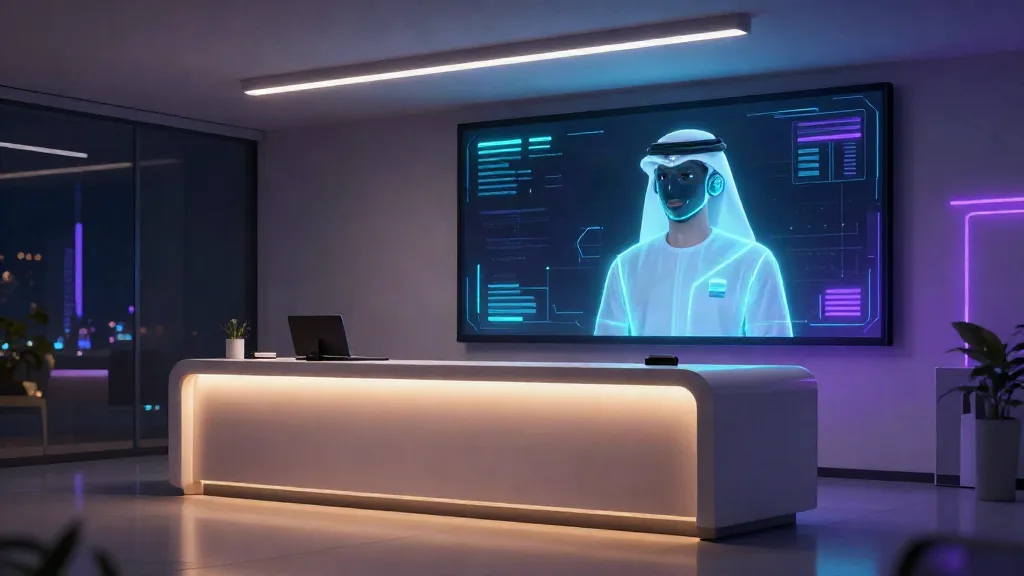
    Arabic AI receptionists can welcome visitors at GCC venues in Arabic and English. A front desk in the Gulf serves visitors who speak Arabic, English and several other languages, often in the same hour. An AI receptionist can answer the repeatable questions in the visitor’s language, every hour the door is open, and hand the rest to a person. This post is for hotels, malls and government service centres weighing an AI receptionist UAE operators or AI receptionist Kuwait offices might deploy. It sets out what our AI receptionist is, what to prepare, how to test Arabic, and where it should stop.

    AI receptionist GCC: Arabic and English answers for hotels, malls and service centres

    A multilingual desk that cannot be in two places

    Watch any reception in the Gulf for an hour. A visitor stops at the door and looks for a desk, a sign or a face. The questions repeat: where is this office, who do I tell that I have arrived, where is the department, what are the opening hours, is my appointment confirmed. They arrive in Arabic, English and often a third language, from visitors who are not always comfortable asking a stranger.

    A human receptionist is good at this and cannot be everywhere. The desk empties at lunch, at prayer time and at shift change, and a queue forms behind the one visitor who needs a long answer. An AI receptionist GCC venues deploy does not replace the person. It absorbs the repeatable questions so that the person can spend time on the visitors who need one.

    Our earlier posts cover the first thirty seconds in a lobby and the Saudi market case. This one looks at three kinds of venue and at what Arabic demands.

    An avatar with a knowledge bank and a job description

    The AI receptionist is an AI avatar. You customise its appearance, persona and animations, set its language and voice, teach it the organisation’s information, and publish it. That is the three-step workflow our avatar system follows: customise the avatar, teach it knowledge, publish it and interact with it. The avatar learns and responds in real time, and it answers in multiple languages.

    The knowledge bank is what makes it a receptionist and not a chatbot. The venue writes and maintains it, so what the avatar says is authorised. Nothing goes in unless someone at the venue approved it.

    It can be published on a Nplay Halo Box, where it stands life-size behind a transparent screen, on the 21.5-inch Mini for counters, on kiosks or on mobile devices. Because the same avatar system is already part of our hologram products, the core is tested in the field. We have not published GCC deployments and will not suggest any.

    By venue

    Three venues, three knowledge banks

    VenueWhat visitors askWhat the knowledge bank holdsHand-over to a person
    HotelCheck-in, facilities, restaurants, taxis, local adviceServices, opening times, room types, policies, nearby guidance approved by the hotelComplaints, billing, special requests
    MallWhere is this store, parking, events, lost child or propertyStore directory, facilities, event calendar, visitor policiesSecurity matters, lost children, disputes
    Government service centreWhich service, which documents, which counterService descriptions and requirements, approved by the authorityCase-specific and sensitive questions

    What Arabic demands of an AI receptionist

    Arabic is not an English feature with a language switch. Gulf visitors may speak in dialect, in Modern Standard Arabic, or move between Arabic and English within a sentence. Names, numbers, dates and department titles need to be pronounced properly. Some visitors prefer to touch a screen rather than speak in a public hall.

    An AI receptionist Kuwait ministries or an AI receptionist UAE hotels might run will meet all of these. We do not claim to cover every dialect, and we suggest you test the claim of any supplier, ours included. Ask for a demonstration with your own staff speaking naturally. Use your real department names and real visitor names.

    Check that the Arabic on screen reads right to left and that mixed Arabic and English lines display correctly. Listen to the voice at lobby volume, not through headphones. The avatar’s language and voice are configurable, and the answers come from the knowledge bank, so if your source documents exist only in English, the answers will reflect that. Decide which documents need an Arabic version first.

    What the Halo Box adds in a busy public space

    A receptionist on a tablet is a form; at life-size in a lit cabinet it is a presence. The Halo Box has an 86-inch transparent LCD, anti-glare glass rated at 400 cd/m², a built-in 4K camera, an eight-microphone array, two 18-watt speakers and 40-point infrared touch. The camera and microphones let the avatar see and hear in a busy hall, and the touchscreen lets visitors tap instead of speak. It ships complete: connect power and internet and it runs. Content can be managed from our cloud platform.

    Where wayfinding or a service menu is needed on the same screen, it can be shown as content through the platform. We scope any link to a queue or appointment system case by case, and we do not assume one.

    Preparing the knowledge bank: the work that decides success

    The avatar is the visible part; the knowledge bank does the work. Preparation takes a few working sessions and needs nobody technical. List the questions your desk hears most, in every language your visitors use. Collect the documents that answer them and check that they are current.

    Write down what the avatar should say when it does not know: name a person, give a contact or say where the human desk is. Note the terms that must be pronounced a particular way, such as department names, brand names and local place names. Decide which documents need both an Arabic and an English version. For a hotel that means room types and facilities; for a mall, the store directory and event listings; for a service centre, the descriptions of each service and what a visitor must bring.

    With that package a pilot is a matter of weeks. Without it, the best avatar produces confident answers to the wrong questions. We run the first workshop remotely and leave the venue with a template to keep the knowledge bank current, because questions change when a mall adds a store, a hotel opens a restaurant or a service centre changes its requirements.

    Start with one desk and one month of questions

    The safest first project for an AI receptionist UAE mall, a Kuwait service centre or any hotel is one desk in one venue. Run it alongside the human reception, not instead of it, and read what visitors ask. Some questions will be ones you expected; others will reveal what your signage does not explain. Measure what matters to the venue, by observation and staff feedback: how many visitors the avatar answered without help, where it handed over, and what staff say about their day. After a month, extend to a second location or a second language set, or change the knowledge bank and run again.

    A pilot is also the fair way to test Arabic. The people who use the desk every day will know within an hour whether the voice, the wording and the names sound right.

    What it should not do, and how it hands over

    An AI receptionist should answer the repeatable and recognise the rest. It should not attempt complaints, disputes, medical or legal questions, identity checks that need a person, or anything a visitor is visibly upset about. Each needs a designed hand-over: a named person, a call, a ticket, or a clear instruction on where the human desk is. For government centres, the authority controls the information bank and decides the boundaries. The avatar should also be introduced as a digital receptionist, because visitors forgive that, and do not forgive finding out later.

    Data policy is the venue’s decision: what the receptionist may collect, for how long and who reads it. Write it before the unit arrives.

    How a GCC project runs from Amman and Riyadh

    We serve the Gulf from Amman and Riyadh. The work is mostly remote: a workshop to choose the persona, languages and voice; a knowledge-bank exercise with your team; testing with your staff; then a complete unit shipped to site. Installation and commissioning are arranged with your team or a local integrator, and we support the platform remotely afterwards. An AI receptionist Kuwait offices consider follows the same route as an AI receptionist GCC hotel or mall group. For venues in the UAE, Qatar, Kuwait, Bahrain or Oman, see our GCC hub and UAE page.

    FAQ

    Arabic AI receptionists: frequently asked questions

    Does the AI receptionist speak Arabic?

    Yes. The avatar supports multilingual interaction, including Arabic and English, with configurable language and voice. We recommend testing natural speech with your own staff before signing.

    Is it deployed in the UAE, Kuwait or elsewhere in the GCC?

    We do not list GCC deployments. We serve the region remotely from Amman and Riyadh and arrange installation with the client or a local integrator.

    Can it replace reception staff?

    It is designed to absorb repeatable questions and hand the rest to a person. Venues keep staff for complaints, sensitive matters and anything that needs judgement.

    Who controls what it says?

    The venue. The avatar answers from a knowledge bank that the organisation writes, approves and maintains.

    Further reading: NIST AI Risk Management Framework

    Quick questions about Arabic AI receptionists

    Who is Arabic AI receptionists for? Companies and institutions that want a clearer, faster experience for their customers and visitors.

    How long does Arabic AI receptionists take? It depends on the size of the project and the content needed. We confirm the timeline after a short discovery call.

    How do I start with Arabic AI receptionists? Contact the Nplay team in Amman or Riyadh and we will suggest a clear first step.

    Does Arabic AI receptionists work in Arabic and English? Yes. We prepare the content in both languages from day one.
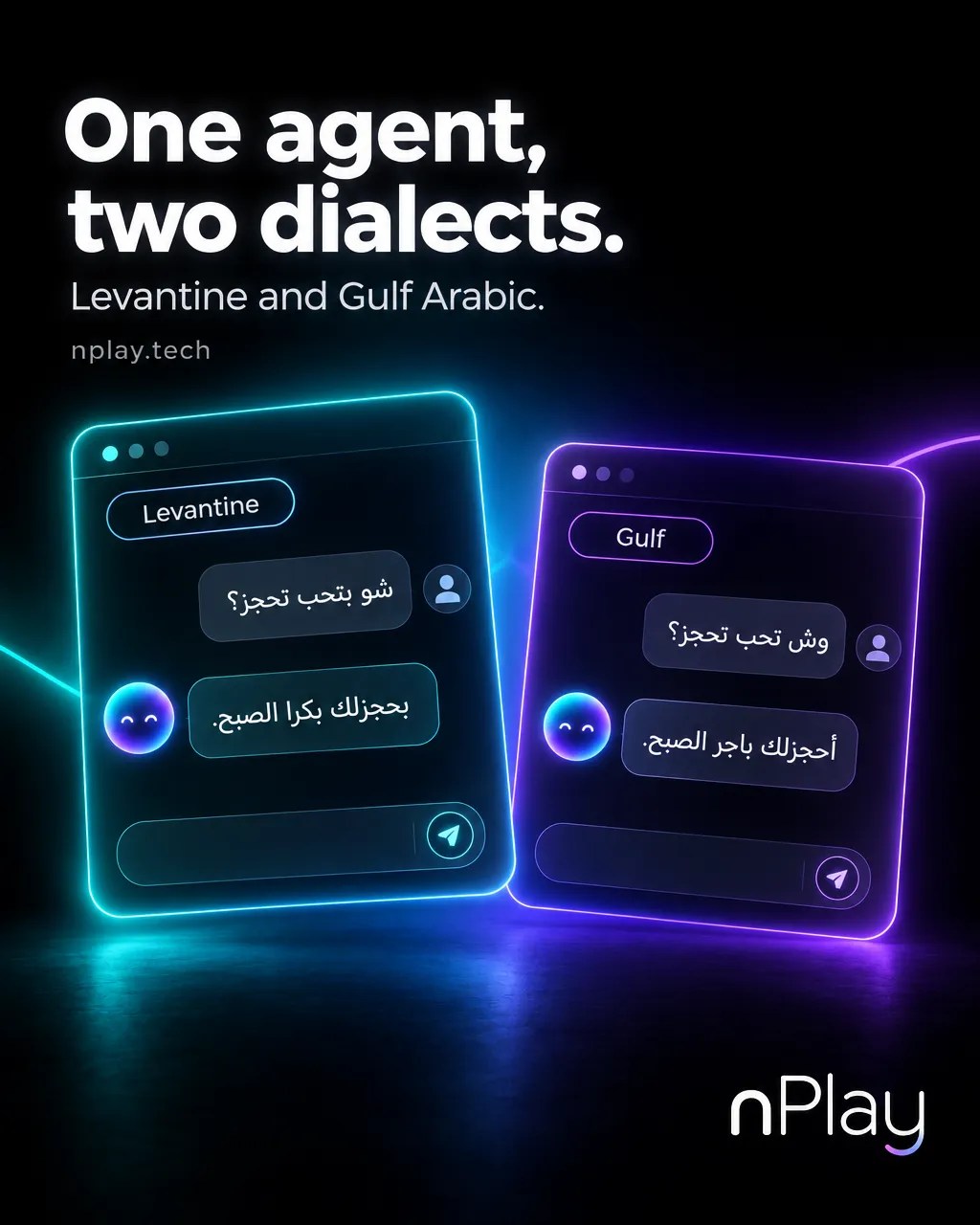
    One AI agent that answers in two dialects, by Nplay
    One AI agent that answers in two dialects, by Nplay
    AI agents for customer service by Nplay
    AI agents for customer service by Nplay

    In short, Arabic AI receptionists works best when it starts from a clear goal. Nplay plans Arabic AI receptionists around your audience, your space and your budget. If you are comparing options for Arabic AI receptionists, ask for a live demo before you decide. We are happy to answer any question about Arabic AI receptionists.
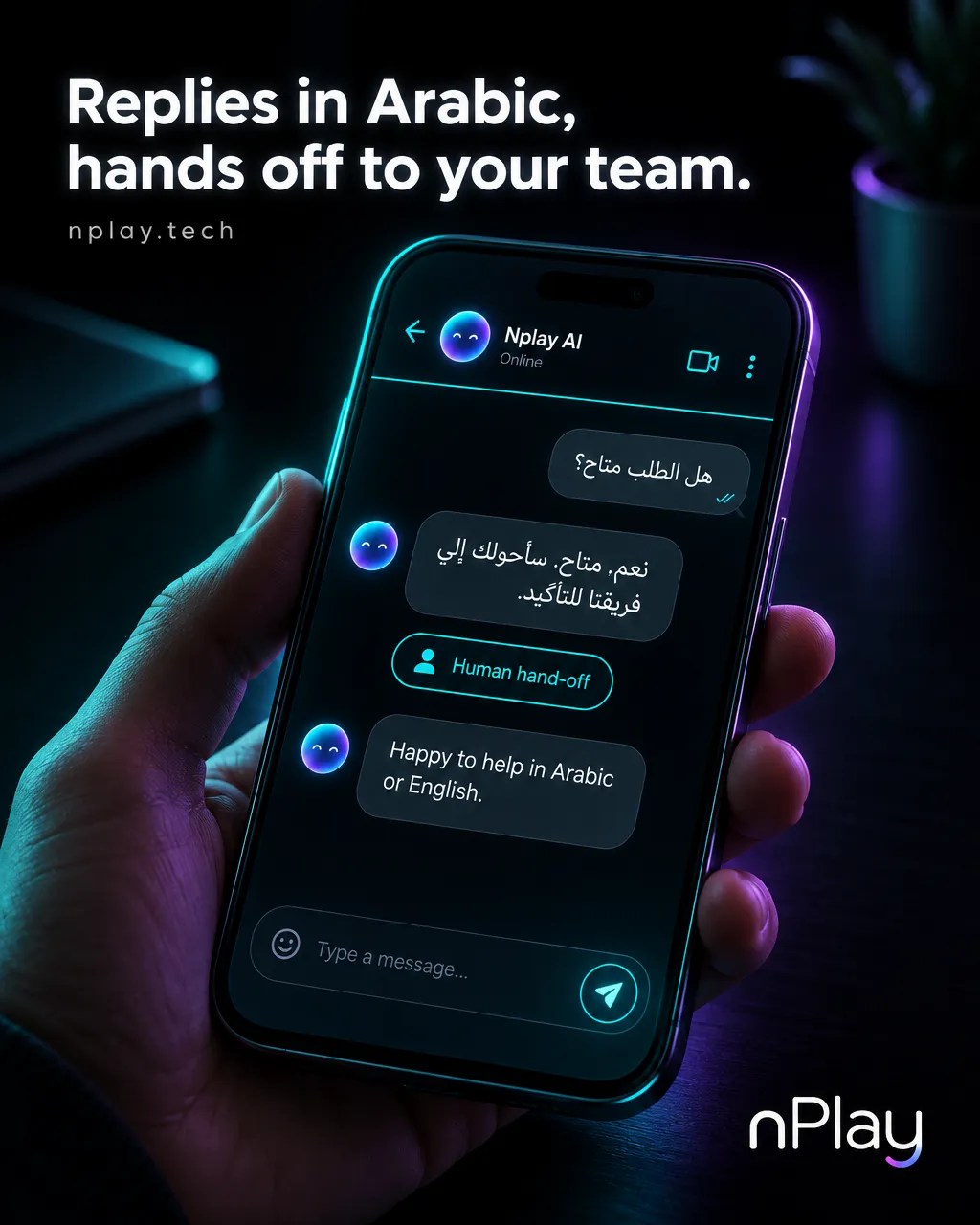
    Arabic AI receptionists: AI agent handing a conversation to the team, by Nplay
    AI agent handing a conversation to the team, by Nplay
  • AI toys for kids: a parent’s and buyer’s safety guide (Arabic and English)

    AI toys for kids: a parent’s and buyer’s safety guide (Arabic and English)

    Ai toys for kids: a practical guide from Nplay. This article covers what matters about ai toys for kids, from the first idea to delivery.

    A toy that talks back is no longer science fiction, and the choice in shops and online is growing. A talking toy is also a microphone in a child’s bedroom, linked to software you cannot see. This guide is for parents, schools and retail buyers in Arabic- and English-speaking homes. It explains what an AI toy is, why Arabic makes the job harder, and ten questions to put to any maker before you buy. We are designing one ourselves, Nplay Pal, so we have tried to hold ourselves to the same list. It is a concept, not a product.

    AI toys for kids: a parent's and buyer's safety guide (Arabic and English)

    What an AI toy is, and what it is not

    An AI toy is a physical toy, often a soft figure or a small robot, that can hold a conversation. Inside are a microphone, a speaker and a connection to software that turns speech into text, decides what to reply and speaks the answer. Some tell stories, some play word games and some aim to be a friend. The label ai companion toy usually means the last.

    It is not the same as a toy with recorded phrases, which says the same things in the same order. An AI toy produces new sentences, which is both the appeal and the risk: a recorded toy cannot say anything you have not heard, but an AI toy can, unless its makers have limited it on purpose.

    So when you look at ai toys for kids, the plastic or fabric matters less than three things: what the toy is allowed to talk about, what happens to what the child says, and what the parent can see and control.

    Why Arabic makes an AI toy harder

    What follows is our view, based on building Arabic and English conversational products, not a study. A child in Amman or Riyadh may speak a local dialect at home, hear Modern Standard Arabic in books and cartoons and mix in English words from school. A toy that understands only one of these will misunderstand the child some of the time.

    • Dialects. Speech recognition that handles formal Arabic well can stumble on everyday Levantine or Gulf speech. Ask which varieties were tested, and by whom.
    • Children’s speech. Young children pronounce sounds differently from adults, so systems tuned on adult voices need extra care.
    • Stories and values. A story library translated from another language carries its own world. Families often prefer stories that feel local and respectful of how they raise their children.
    • Content gap. In our view there is far less curated Arabic children’s content prepared for AI than there is in English. Publishers who own good Arabic stories are in a strong position, and a safe arabic ai toy depends on them.

    None of this makes an Arabic AI toy impossible. It makes testing with native speakers essential, which is why we treat Arabic and English as equals in our own design.

    Ten questions

    Ten questions to ask before you buy

    Put these to the maker or the seller. A good answer is specific. “We take privacy seriously” is not an answer.

    • How does the microphone switch on: a wake word, a button, or always on? Is there a light that shows when it is listening?
    • Is anything recorded or stored? If so, what, for how long and where?
    • Who can listen to recordings, inside the company or at partner firms?
    • Can a parent see and delete the history, and can the toy be used with the microphone off or the internet disconnected?
    • What topics is the toy limited to, and what does it say when a child raises something outside them?
    • Does it answer from a curated library, or from the open internet?
    • Does it show adverts, ask for personal details or encourage purchases?
    • Which Arabic varieties and which English accents were tested, and with children or only with adults?
    • What independent testing or certification does the market require for toys sold here, and does the maker hold it, rather than claim it?
    • What happens to the toy if the company or the service closes?
    Quick reference

    Feature, what good looks like, red flag

    FeatureWhat good looks likeRed flag
    MicrophoneButton or wake word, visible light, physical muteAlways on, no indicator
    Stored dataMinimal, explained in plain language, parent can deleteRecordings kept with no clear reason or deletion route
    ContentCurated stories and games, topics listedOpen chat on any subject
    Sensitive subjectsGentle refusal and “ask a grown-up”Improvised advice on anything
    Parent viewApp with limits, summaries and settingsNo controls or no visibility
    CommerceNo ads, no purchases by the childIn-toy upsells or sponsored replies
    ArabicTested dialects, native-speaker review, names and numbers handledMachine translation of an English product
    ClaimsPlain description of what it does and does not doPromises about treating conditions or boosting intelligence

    Privacy and recordings, in plain language

    When a child speaks to a connected AI toy, the sound usually travels over the internet to a service that turns it into text and works out a reply. That is normal. What matters is what happens next. The service may discard the sound at once, keep the text, or keep the audio. Each choice has a different risk.

    Children cannot judge these things, so the adults must. Look for a policy written for parents, not lawyers, a setting that deletes history and a toy that still works when the microphone is off.

    Laws on children’s data differ from country to country, and we are not going to summarise them here. The safe rule is to choose the maker that behaves as if the strictest rules applied, and then check what the law in your own market requires.

    Where screen-free play fits

    Many parents like the idea of an AI toy because it is not a tablet. The child looks at the toy, or at nothing, while imagining the story. That is a real difference, and it is why we think the category is worth building. It does not make the toy a babysitter. A voice that answers every question can stop a child asking a parent, and a story told by a toy is not one read together.

    Treat an AI toy as one play option among books, drawing, outdoor play and time with family. Set the session length, listen in at first and read the summary if the toy offers one. In schools, keep the teacher in charge. Our note on 3D interactive learning versus textbooks makes the same point: technology supports teaching and does not replace it.

    What Nplay is designing, and what we are not claiming

    Nplay Pal is our concept for a soft companion that tells stories and plays language and number games in Arabic and English. On paper it follows the list above: the microphone listens only after a wake word or a button press with a visible light, content comes from a curated library, sensitive subjects get an “ask a grown-up” reply, and a parent app offers limits, summaries and deletion.

    The technology underneath is the conversational approach we already deliver in our AI Receptionist. Pal itself is in design. There is no prototype, sale, price, release date, pilot or safety certification, and we make no claim about a child’s development. If you are a publisher, school or brand that wants a custom companion for your own story world, you can brief us on it as a project, and our AI agents service explains the method.

    FAQ

    AI toys for kids: frequently asked questions

    Are AI toys safe for children?

    It depends on the toy. Safety comes from design choices: how the microphone works, what is stored, what the toy may talk about and what the parent controls. Use the ten questions above, and treat a safety claim without specifics as a warning.

    What age is an AI toy suitable for?

    Makers differ and we cannot give a universal answer. Follow the product’s own age guidance and your judgement of your child. Our Nplay Pal concept has a design target of roughly 4 to 10, which is a planning assumption and not an age rating.

    Can an AI toy speak Arabic well?

    Some can manage formal Arabic and some manage a little dialect, but quality varies. Ask which dialects were tested and try the toy with your own child’s speech before relying on it.

    Can I buy Nplay Pal?

    Not yet. It is a concept in design. If you want to brief us on an AI toy for your brand or school, use the request form.

    Further reading: NIST AI Risk Management Framework

    Quick questions about ai toys for kids

    Who is ai toys for kids for? Companies and institutions that want a clearer, faster experience for their customers and visitors.

    How long does ai toys for kids take? It depends on the size of the project and the content needed. We confirm the timeline after a short discovery call.

    How do I start with ai toys for kids? Contact the Nplay team in Amman or Riyadh and we will suggest a clear first step.

    Does ai toys for kids work in Arabic and English? Yes. We prepare the content in both languages from day one.

    One AI agent that answers in two dialects, by Nplay
    One AI agent that answers in two dialects, by Nplay
    AI agents for customer service by Nplay
    AI agents for customer service by Nplay
  • Arabic voice AI agents for customer calls in Jordan, Saudi Arabia and the GCC

    Arabic voice AI agents for customer calls in Jordan, Saudi Arabia and the GCC

    Arabic voice AI agents: a practical guide from Nplay. This article covers what matters about Arabic voice AI agents, from the first idea to delivery.

    Most customer calls in Jordan, Saudi Arabia and the wider Gulf are not in textbook Arabic. They are in dialect, often with English words in the middle, from a car, a shop floor or a busy street. A voice agent for those calls has to cope with that, look up the caller’s real record, and hand over to a person with a summary when it should. This guide explains what makes Arabic voice hard, what a good agent does on a call, which channels fit, and how to test with real recordings before you switch anything on. It builds on our AI agents service and on the conversational approach behind our AI Receptionist.

    Arabic voice AI agents for customer calls in Jordan, Saudi Arabia and the GCC
    Why it is hard

    Four reasons Arabic voice is harder than it looks

    If you are searching for a voice AI agent Arabic speakers can actually talk to, these are the conditions to test first. A demo in a quiet room with careful speech hides all four.

    Dialect

    Standard Arabic versus everyday speech

    Modern Standard Arabic is the language of news and writing. Callers speak Levantine in Jordan and Gulf dialects in Saudi Arabia and the Gulf, and these differ even within one country. A system that copes with formal speech can still mishear an ordinary sentence.

    Code-switching

    Arabic and English in one sentence

    Callers say “booking”, “invoice” or a brand name in the middle of an Arabic sentence, or answer an Arabic greeting in English. The agent has to follow both and reply in the language the caller prefers.

    Names and numbers

    The details that must be exact

    Arabic names have several spellings in Latin letters. Phone numbers and order references are spoken digit by digit or as whole numbers, in either language. A wrong digit does more harm than a polite request to repeat.

    Noisy lines

    Calls from cars, markets and speakerphones

    Phone audio is compressed and real callers are rarely in quiet rooms. Test on the actual telephone line with the background noise your customers produce, not through a laptop microphone.

    On the call

    What a good voice agent does, in order

    1. Greets and sets expectations

      It says who it is, states that it is an automated assistant, speaks the caller’s language and offers a person at any point.

    2. Finds the reason for the call

      It asks one question at a time, listens for the intent and confirms what it understood before acting.

    3. Looks up the real record

      It checks the order, booking, ticket or appointment in your systems, with read-only access at first.

    4. Answers or takes a small approved action

      It gives the answer from the knowledge base or books a slot. Anything involving money, exceptions or complaints goes to a person.

    5. Hands over with a summary

      When it transfers, it passes the caller’s name, the reason, what was already tried and what the caller wants, so nobody asks again.

    Phone, WhatsApp voice notes and the lobby avatar

    Phone. This is the obvious channel for an Arabic AI call center: inbound calls about opening hours, bookings and status checks, and call routing to the right team. It needs a connection to your telephony, which we scope project by project.

    WhatsApp voice notes. Across Jordan and the Gulf many customers send a voice note rather than type. It is an easier first step than a live call, because the agent can transcribe and think before replying, in text or in voice, and there is no real-time delay to manage.

    In-venue avatar. Our AI Receptionist and the AI avatar on Nplay Halo Box already speak Arabic and English in lobbies, from a knowledge bank you teach, with a language and voice you choose. We describe that setting in AI receptionists for the GCC. For anyone searching for an AI receptionist Arabic Saudi Arabia venues can trust, the same testing advice applies.

    To be clear about status: the AI Receptionist and avatar are products. Phone and WhatsApp agents are built as projects with you, and we do not show a named phone deployment. Keeping one knowledge source behind all three channels keeps the answers consistent.

    Call types

    Which calls the agent handles and which go to a person

    A starting allocation for a customer service line. Adjust it with your team after you have listened to real calls.

    Call typeAgent handlesGoes to a person
    Opening hours, location, directionsYes, from the knowledge baseOnly if the caller is lost or needs help on site
    Appointment or table bookingYes: checks the calendar, books, confirms by messageGroup, special or changed requests
    Order or ticket statusYes, by read-only look-upLate or lost items that need a decision
    Price or quote enquiryShares approved list prices and records the requestCustom quotes and discounts
    ComplaintAcknowledges, records and transfers at onceAlways
    Refund, payment or contract changeCollects details only; never decidesAlways
    Medical, legal, safety or emergencyGives the emergency number and transfers immediatelyAlways
    Caller asks for a humanTransfers without argumentAlways

    A testing plan built on real recordings

    Any claim that a voice AI agent Arabic callers can use will work should be tested, including ours, and the same goes for an AI agent for customer service Arabic speakers rely on. Here is a plan that works for any supplier:

    1. Collect a few dozen real or staff-acted calls for each language mix you expect: dialect, Standard Arabic, English and mixed. Include noisy ones.
    2. Write the correct outcome for every call before the test: the intent, the record that should be found and the right hand-off.
    3. Run the agent on the same telephone line your customers use.
    4. Score each call on four points: did it understand the reason, did it find the right record, did it read back names and numbers correctly, and did it hand over when it should?
    5. Fix the knowledge bank and prompts, then retest with the same calls plus new ones.
    6. Pilot on after-hours or overflow calls first, with a person reviewing every transcript, before widening.

    Recordings contain personal data. Use them under your own consent and retention policy, and limit who can listen.

    Consent, recording notices and honesty on the line

    Rules on call recording and on automated calls differ between countries and sectors, and they change. In general terms, we recommend four habits. Tell callers at the start that they are speaking to an automated assistant. Say whether the call is recorded and why. Keep recordings and transcripts only as long as you need them, with access limited to named people. Do not take card numbers or identity documents by voice unless the flow was designed and approved for it.

    We design to the strictest applicable rules and let each market’s law decide the details, so please check your obligations in Jordan, Saudi Arabia or any other country with your own legal adviser before launch.

    Escalation

    When the agent must hand over to a person

    • The caller asks for a human, at any point, in any words
    • The caller sounds angry, distressed or frightened
    • The call is a complaint, dispute, refund, payment or contract matter
    • The topic is medical, legal, safety or an emergency
    • The agent has misheard twice, or cannot confirm a name or number after one retry
    • The request needs identity verification the agent is not approved to do
    • The answer is not in the knowledge base, or the agent is unsure
    FAQ

    Arabic voice AI agents: frequently asked questions

    Does a voice agent understand Jordanian and Gulf dialects?

    Arabic, in Modern Standard and Gulf and Levantine dialect, and English are first-class in our design, but we do not claim every dialect. Test with recordings of your own callers before you sign.

    Can it replace my call centre team?

    No. It takes the repetitive calls and hands the rest to people with a summary. Complaints, money and judgement calls stay human.

    Is it live in the UAE, Qatar, Kuwait, Bahrain or Oman?

    We do not show installations in those countries. We serve the GCC from Amman and Riyadh, design and produce remotely, and arrange any on-site work with you or a local integrator.

    Do I have to tell callers it is an AI?

    We recommend it in every case, and some markets and sectors require it. Open with a short statement, offer a person, and check your local obligations.

    Further reading: NIST AI Risk Management Framework

    Quick questions about Arabic voice AI agents

    Who is Arabic voice AI agents for? Companies and institutions that want a clearer, faster experience for their customers and visitors.

    How long does Arabic voice AI agents take? It depends on the size of the project and the content needed. We confirm the timeline after a short discovery call.

    How do I start with Arabic voice AI agents? Contact the Nplay team in Amman or Riyadh and we will suggest a clear first step.

    Does Arabic voice AI agents work in Arabic and English? Yes. We prepare the content in both languages from day one.

    One AI agent that answers in two dialects, by Nplay
    One AI agent that answers in two dialects, by Nplay
    AI agents for customer service by Nplay
    AI agents for customer service by Nplay
    AI agent handing a conversation to the team, by Nplay
    AI agent handing a conversation to the team, by Nplay
  • Arabic AI agent dialects: how an agent handles Levantine, Gulf and Modern Standard Arabic

    Arabic AI agent dialects: how an agent handles Levantine, Gulf and Modern Standard Arabic

    Arabic ai agent: a practical guide from Nplay. This article covers what matters about arabic ai agent, from the first idea to delivery.

    Before a shop owner in Amman or a clinic manager in Riyadh signs for an Arabic agent, they ask one question: will it understand how my customers really write? This article explains how Arabic AI agent dialects work in practice. We cover the difference between understanding a message and answering it, how tone changes between Jordan and Saudi Arabia, what to do with English words and Latin-letter Arabic, and how to test an agent with your own messages. It supports our WhatsApp AI agent service for Jordan and Saudi Arabia.

    Arabic AI agent dialects: how an agent handles Levantine, Gulf and Modern Standard Arabic

    Understanding and answering are two different jobs

    Arabic is a family of spoken varieties sitting beside a shared written standard. A customer in Irbid, a customer in Riyadh and a customer in Jeddah can all want the same thing, an appointment tomorrow, and write it three different ways. The first job of an agent is to map all three to one intent.

    The second job is the reply, and that is a business decision, not a language-model accident. Some brands want clear Modern Standard Arabic with a warm greeting. Others want a lighter local voice. Either is fine if it is chosen deliberately and written into the agent’s persona.

    That is why Arabic AI agent dialects need a plan rather than a promise. We configure what the agent should understand, how it should sound, and where it must stop and ask. Then we test it. For the broader context, see our guide to AI agents for business in Jordan and Saudi Arabia.

    The varieties

    Modern Standard, Levantine and Gulf: what changes for an agent

    VarietyHow customers often writeWhat the agent should doWatch for
    Modern Standard ArabicFormal requests such as أود حجز موعد, common in emails, official enquiries and written noticesReply in clear, polite standard Arabic and use it as the base for all knowledge contentCan sound stiff in a chat if it is the only register
    Levantine (Jordan)Phrases such as بدي موعد, شو عندكم, هلأUnderstand fully; reply in a light, courteous register that Jordanian customers find naturalSpelling varies, for example هلأ, هلق and هلا, and some words change by city or by family background
    Gulf, Najdi (Riyadh)Phrases such as أبغى موعد, وش عندكم, الحينUnderstand fully; greet and phrase politely in the way Saudi customers expectSame word, different meaning between regions; do not assume
    Gulf, Hejazi (Jeddah)Phrases such as أبغى, إيش, دحينUnderstand the variants; Jeddah is served from Riyadh, so test with Hejazi messages before launchMixing Najdi and Hejazi forms in one reply sounds odd
    English and mixedArabic sentences with English nouns, or whole messages in EnglishReply in the language the customer started with unless your house rule says otherwiseBrand and product names that must stay in Latin letters

    Choosing your house voice for Jordan and Saudi Arabia

    Customers forgive a plain reply. They rarely forgive one that sounds as if it came from another country. A forced attempt at slang can read as mockery, and a very formal reply to a casual message can feel cold.

    Our approach is simple. We pick one house voice per market, write it down as the persona, and keep it steady through the conversation. The agent greets in the way your customers greet, uses respectful forms for names and titles, and moves to precise, formal wording when the topic is a commitment, such as a booking confirmation, a delivery date or a quote.

    If you serve both Jordan and Saudi Arabia, one knowledge base can feed two voices. The facts stay the same. Only the wording changes. We run both from our offices in Amman and Riyadh.

    English words, Arabizi and voice notes

    Real WhatsApp messages are untidy. Customers write “بدي أعمل booking”, paste an English product name inside an Arabic sentence, or type Arabic in Latin letters with digits standing in for sounds, so that 3 stands for ع and 7 for ح. This Latin-letter Arabic is often called Arabizi.

    A well-built agent normalises all of this before it acts. It reads the mixed message, identifies the intent, and replies in the script and language your rules specify. Many businesses reply in Arabic script even when the customer wrote Arabizi, because it is clearer and keeps the brand voice consistent. Others mirror the customer. Both are valid. The mistake is leaving it undecided.

    Voice notes add another layer, with noise, speed and regional accents. If voice is important to you, read our note on Arabic voice AI agents for customer calls, and treat voice notes as a separate test.

    Testing

    How we test Arabic AI agent dialects with your own messages

    1. Collect real messages

      With your permission, we gather past customer chats and remove names, numbers and other personal details.

    2. Sort by variety and topic

      We group them by dialect, by topic and by whether the customer mixed English or Arabizi, so we can see where the agent is weakest.

    3. Write the expected action

      For each message we note what a good employee would do: answer, ask a question, or hand over.

    4. Run, then read every miss

      A native-speaking reviewer from your team checks each reply. Every misread becomes a fix in the knowledge base, the glossary or the instructions.

    5. Add your own vocabulary

      Shops and clinics use their own words for products and services. We build a glossary so the agent uses and understands them.

    6. Re-test when things change

      New campaigns, new products and new branches bring new wording. We repeat the test rather than assume.

    Guardrails

    Four rules that protect you from dialect mistakes

    Ask, do not guess

    If a word could mean two things, the agent asks one short clarifying question. A polite question costs less than a wrong booking.

    Confirm back

    Before acting on a date, an item or a place, the agent repeats it in the customer’s own words, so a misunderstanding surfaces at once.

    Hand over on doubt

    Repeated confusion, an upset customer or a sensitive topic goes to a named person with a summary of the chat.

    Log and review

    Every conversation is recorded for your team, so misreads are found and fixed instead of repeated.

    Honest limits

    Where an Arabic agent can still struggle

    • Very local slang, family or youth expressions, and words that mean different things in different towns.
    • One-word messages with no context, such as a single word with no history.
    • Voice notes recorded in noise or at speed, and strong regional accents.
    • Humour, sarcasm and idiom. A joke can be read as a literal request.
    • Courtesy phrases used as filler, for example blessings and thanks, which are not questions and must not be treated as one.
    • We do not claim every dialect. We claim a method: configure, test with your messages, add guardrails and hand over when unsure.
    FAQ

    Questions we hear from Arabic-speaking teams

    Do I need a separate agent for each dialect?

    Usually not. One agent and one knowledge base can understand several varieties, with the voice set per market. The test with your own messages tells us whether anything needs special handling.

    Can one agent serve both Jordanian and Saudi customers?

    Yes. The facts stay the same and the wording is tuned for each market. We test with messages from both, because a phrase that is natural in Amman may read differently in Riyadh.

    What if customers write in English or in Latin-letter Arabic?

    The agent reads it, works out the intent and replies in the language and script your rules choose. You decide whether it mirrors the customer or always answers in Arabic script.

    How will I know it understood a customer correctly?

    It confirms the key detail back in a short line before acting, and every chat is logged. Your team can read the conversation and see what the agent did.

    Further reading: NIST AI Risk Management Framework

    Quick questions about arabic ai agent

    Who is arabic ai agent for? Companies and institutions that want a clearer, faster experience for their customers and visitors.

    How long does arabic ai agent take? It depends on the size of the project and the content needed. We confirm the timeline after a short discovery call.

    How do I start with arabic ai agent? Contact the Nplay team in Amman or Riyadh and we will suggest a clear first step.

    Does arabic ai agent work in Arabic and English? Yes. We prepare the content in both languages from day one.

    One AI agent that answers in two dialects, by Nplay
    One AI agent that answers in two dialects, by Nplay
    AI agents for customer service by Nplay
    AI agents for customer service by Nplay
    AI agent handing a conversation to the team, by Nplay
    AI agent handing a conversation to the team, by Nplay
  • Hologram project brief: the 12 questions we ask before we quote

    Hologram project brief: the 12 questions we ask before we quote

    Hologram project brief: a practical guide from Nplay. This article covers what matters about hologram project brief, from the first idea to delivery.

    A quote for a hologram display is only as good as the information behind it. Before we price anything, we ask the same twelve questions about the venue, the light, the audience and the content. This guide gives you those questions in advance, so your hologram project brief is complete the first time and your hologram rental in Amman enquiry reaches a useful quote sooner. You do not need technical language. Plain answers and a few photos are enough.

    Hologram project brief: the 12 questions we ask before we quote

    Why a hologram project brief gets you a better quote

    Most hologram enquiries we receive start with one line: “How much for a hologram?” We understand why. Buyers search for a hologram quote in Jordan, see no prices, and send the shortest message possible. But the word hologram covers a transparent display in a lobby, a projection hall and a filmed presenter on a stage. We cannot price three different jobs with one sentence.

    A written brief fixes that. It lets us propose the right format on the first reply, so you compare real options instead of waiting through a round of questions. It also protects you. A quote built on guesses grows later, when the venue turns out to have a narrow door or a bright window. This is the same reason our guide on what drives a hologram display quote lists scope first and price second.

    The 12 questions

    The twelve questions, and why we ask each one

    Copy the left column into a message and answer in your own words. The right column shows what a useful answer looks like.

    QuestionWhy we askWhat a good answer looks like
    1. Where will it stand?Decides the format and the route inVenue, city, floor, and a photo of the exact spot
    2. What is the light like?Bright halls and dark halls need different displaysWindows, spotlights, daytime or evening, indoors or covered outdoors
    3. Who will see it?Sets content tone, language and viewing distanceShoppers, delegates, patients or guests; whether they walk past or queue
    4. What should visitors do?Gives the content one jobWatch, touch, ask a question, scan a code or visit your stand
    5. Where does the content come from?The largest hidden part of a projectYour videos or 3D files, or a request that our studio produces them
    6. Which languages?Each language is written and tested separatelyArabic, English or both; right-to-left layout if Arabic
    7. For how long?Separates rental from purchaseSingle event, a season, a pilot, or a permanent fixture
    8. How does it get in?The unit and cabinet must pass doors and liftsLoading route, lift size, stairs, parking and permitted delivery hours
    9. Where is the power?A socket must be within reachWhere the nearest outlet is and whether an extension is allowed
    10. What about internet?The cloud platform and AI avatar need a connectionWi-Fi, a LAN cable, or none; whether content must also play offline
    11. Who runs it on the day?Decides training and supportA named person at the venue, or a request for Nplay staff on site
    12. How will you judge success?Sets what we should help you captureA goal such as enquiries, dwell, leads at a stand or visitor questions logged

    How your answers choose the format

    Once we have the brief, three answers do most of the choosing. Light comes first. The Nplay Halo Box uses a transparent LCD behind anti-glare glass, so it works in lit halls and malls. A projection hologram needs controlled, low light and a survey. Our comparison of the box and projection holograms explains the trade-off in more detail.

    Size and access come second. The full Halo Box has an 86-inch portrait panel and arrives as one unit, so we check doors, lifts and the loading route. For a counter or a showroom shelf, the 21.5-inch Halo Box Mini is the usual choice. For a hall or a stage, we design a projection screen instead.

    Content and interaction come third. If visitors should ask questions, we add the AI avatar and agree the knowledge it can answer from. If the display should simply play a film, a filmed presenter or 3D scene is enough. Your answer to question 4 tells us which.

    Illustrative scenario

    A brief in three short lines

    Illustrative scenario, not a real client. Three lines are enough to start the conversation.

    Place and light

    Showroom in Amman

    Ground-floor showroom, large front window, evening visits. The display will stand beside the entrance. Photo attached.

    Audience and goal

    Walk-in customers

    Customers browsing alone. We want them to see one product in Arabic and English and ask questions without staff.

    Time and support

    Rental for a season

    A short pilot first, then we decide whether to buy. The showroom manager is the contact and can be on site for setup.

    Content and success

    Existing files, one measure

    We have product photos and a brand film. We will count enquiries mentioning the display.

    After you send it

    What happens next

    1. Brief

      You send the answers by WhatsApp or the quote form. If something is missing we ask only for that.

    2. Concept and sample

      We propose a format, explain why, and show a sample scene or storyboard so you can react to something concrete.

    3. Quote

      We price the agreed scope line by line: display, content, delivery, setup and on-site support. We do not publish rates, and we do not guess.

    4. Build, install and handover

      Our studio produces the content, we deliver and test the display on site, and your team learns to run it. Projection installs add a survey first.

    Attach these

    What to send with your brief

    • A photo or short video of the spot, taken from where visitors will stand
    • A floor plan, or at least the distance from the entrance to the position
    • Your logo and any product images, brand film or 3D files you want to use
    • The questions visitors ask most, if you want the AI avatar to answer them
    • The dates, including setup and dismantling if it is an event
    • A contact name and a number we can call at the venue

    If you do not know the answers yet

    Many buyers cannot answer the twelve questions on day one, and that is fine. Write “not sure” next to the ones you cannot fill and tell us the goal. We will suggest what to check, and where it helps we can arrange a visit to the venue in Amman or Riyadh. For other cities we serve from Riyadh, and on-site installation is arranged with the client or a local integrator.

    We will also tell you when a hologram is the wrong tool. If a plain screen suits your room and message better, we say so. A good hologram project brief makes that conversation quick for both of us. If you want to see delivered work first, read about our memorial hologram halls in Jordan.

    FAQ

    Frequently asked

    Do I need a full hologram project brief before I contact you?

    No. Send what you have: the venue, the date and the goal. We will ask only for the missing pieces. A complete brief just shortens the path to a quote.

    Can you quote from a hologram project brief without visiting?

    Usually yes for a self-contained unit such as the Halo Box, if you send photos and the access details. A projection install normally needs a survey first, which we arrange.

    What if the content does not exist yet?

    Tell us. Our 3D content studio in Amman can produce scenes, filmed presenters and AI avatar material, and we list that as its own line in the quote.

    Do you publish prices for hologram rental?

    No. Price depends on the format, the number of units, the period, the content and delivery. We quote after a short brief, in Amman or Riyadh.

    Further reading: Holography (Wikipedia)

    Quick questions about hologram project brief

    Who is hologram project brief for? Companies and institutions that want a clearer, faster experience for their customers and visitors.

    How long does hologram project brief take? It depends on the size of the project and the content needed. We confirm the timeline after a short discovery call.

    How do I start with hologram project brief? Contact the Nplay team in Amman or Riyadh and we will suggest a clear first step.

    Does hologram project brief work in Arabic and English? Yes. We prepare the content in both languages from day one.

    Holographic display in a mall atrium by Nplay
    Holographic display in a mall atrium by Nplay
    Hologram display box showcase by Nplay
    Hologram display box showcase by Nplay
    Life-size hologram museum guide by Nplay in Jordan
    Life-size hologram museum guide by Nplay in Jordan
  • How to choose digital signage software in Jordan and Saudi Arabia

    Digital signage software jordan: a practical guide from Nplay. This article covers what matters about digital signage software jordan, from the first idea to delivery.

    Buying screens is easy. Keeping them useful for three years is the hard part. Most disappointment with digital signage comes from the software: content that is slow to change, branches that drift out of step, screens that go blank when the internet drops. This guide lists the ten criteria we would use to compare digital signage software Jordan buyers shortlist or cloud digital signage Saudi Arabia operators consider, and shows how we built Nplay Beam against them, with two real deployments.

    Screens fall out of date long before they break

    A display lasts years. The content on it lasts days. Most digital signage fails quietly: a promotion runs after it has ended, a menu shows last season’s dishes, and the only person who knows how to update it has left. Rigid platforms make changes across many screens slow, so nobody makes them.

    That is why the software decides whether a network works. The right question when evaluating digital signage software Jordan or cloud digital signage Saudi Arabia is not how good the demonstration looks. It is how easy the hundredth update will be, and who does it.

    The criteria below come from deployments we have delivered: retail, healthcare, a national museum, cafés and restaurants. Use them to compare us with anyone.

    Criteria

    Ten criteria to compare

    CriterionWhy it mattersHow Nplay Beam approaches it
    Central controlOne dashboard for users, access, devices, storage and performanceCentralised management across all screens, from one browser dashboard
    SchedulingCampaigns should run themselvesPlaylists, automated schedules and instant multi-screen publishing
    Offline playbackA dropped connection must not blank a screenPlayers keep showing the last synced content and update when the link returns
    Live monitoringSee what each screen is showingA live monitor and the ability to push unscheduled content at once
    Player choiceReuse screens you already ownBeam set-top box, an 8K player, Android TV and Apple TV apps
    Video walls and layoutsMenus and feature walls need more than one screen2×2 and 3×3 controllers, a 7×1 portrait wall, split layouts and overlays
    AudioStores and cafés run music and announcementsA music layer, and amplifiers connected to the player by our technicians
    Content typesSignage is more than videoVideo, images, audio, web links, satellite channels, HDMI feeds, widgets and 3D models
    SecurityA stolen player should not expose contentCloud object storage, server TLS, player lock-down and storage encryption
    ServiceSomeone must install it and stand behind itInstallation by Nplay technicians; support and maintenance included in the first year

    What 32 branches taught us

    A national hypermarket chain in Jordan asked for one system to show offers to shoppers, deliver training and announcements to staff, and play music radio through each store’s sound system. The requirement covered 32 branches across the Kingdom.

    We connected 32 Beam players to all requested screens, shared 10 GB of cloud media storage across the network, and wired each branch’s switches and amplifiers to the players, so audio follows the dashboard. Head office publishes promotions, training and radio from one place and sees device status centrally. The full story is in the hypermarket case study.

    What that deployment taught us is worth repeating for any chain. Decide centrally who can publish what. Keep customer and staff content on separate playlists. Include the sound system in scope from the start, because it is the piece a screen-only vendor will not touch. And choose software that shows you which screen is offline before a customer does.

    What four screens taught us

    An integrated healthcare hub in Amman has specialty clinics, an emergency centre, a laboratory and radiology, and had no easy way to tell waiting patients about the rest of its services or its partner providers. We installed four Beam displays across waiting and circulation areas with 5 GB of cloud storage. The hub’s own team uploads and schedules the content; nothing is loaded on site. See the clinic case study.

    The lesson is different from the retail one. For healthcare digital signage, the platform is the same but the content is calmer and the editorial control matters more. The hub decides what patients see, including partner material. The deployment is small, which shows that good software is not only for chains. The same approach works for a café or a restaurant, with features such as a music layer, a prayer-time mode and a restaurant video wall, described in our article on cloud digital signage for cafés and restaurants.

    Market context

    A market still growing

    8.2%Forecast compound annual growth of the digital signage software market, 2024 to 2030Industry research cited in Nplay’s market brief
    45.98BProjected market size in USD by 2030, up from 26.78 billion in 2023Industry research cited in Nplay’s market brief

    How to compare the commercial terms

    Two quotations for signage can look far apart and turn out to be the same thing presented differently. Ask each supplier to state, for every screen: the player hardware, the software subscription, the storage allowance that comes with it, who installs it, and what support and maintenance cover in year one and year two.

    With Beam, players are sold per unit and the cloud software is an annual subscription per device with a storage allowance, sometimes bundled into café or video-wall packages. Delivery for chain proposals is quoted at two to four weeks from payment confirmation. We do not publish prices, because the number of screens, the storage and the audio integration change the answer. Our guide to budgeting for immersive tech explains the models.

    The best test is a short pilot on one site. If you can run it, change it and monitor it yourself, the next thirty-one sites are straightforward.

    FAQ

    Digital signage software Jordan: frequently asked questions

    Is Nplay Beam available in Jordan and Saudi Arabia?

    Yes. Beam is our cloud digital signage platform, delivered and supported in both markets, with installation by Nplay technicians.

    Do I need to buy new screens?

    Not necessarily. Beam runs on Android TV and Apple TV apps, or through a Beam set-top box connected to an HDMI screen. Video walls use our 2×2, 3×3 or 7×1 controllers.

    What happens if a branch loses its internet connection?

    The player keeps showing the last synced content from local storage and updates automatically when the connection returns.

    Can the software control music as well as video?

    Yes. Beam has a music layer, and our technicians can connect a sound system’s amplifiers to the player so that audio is controlled from the dashboard.

    Further reading: Digital signage (Wikipedia)

    Quick questions about digital signage software jordan

    Who is digital signage software jordan for? Companies and institutions that want a clearer, faster experience for their customers and visitors.

    How long does digital signage software jordan take? It depends on the size of the project and the content needed. We confirm the timeline after a short discovery call.

    How do I start with digital signage software jordan? Contact the Nplay team in Amman or Riyadh and we will suggest a clear first step.

    Does digital signage software jordan work in Arabic and English? Yes. We prepare the content in both languages from day one.

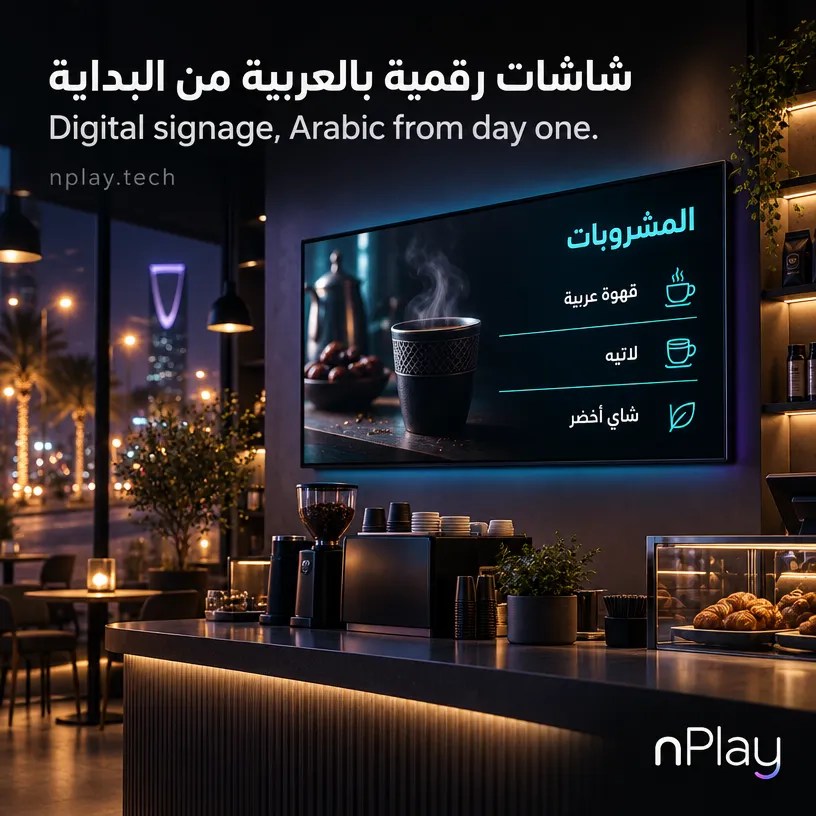
    Arabic digital signage by Nplay
    Arabic digital signage by Nplay
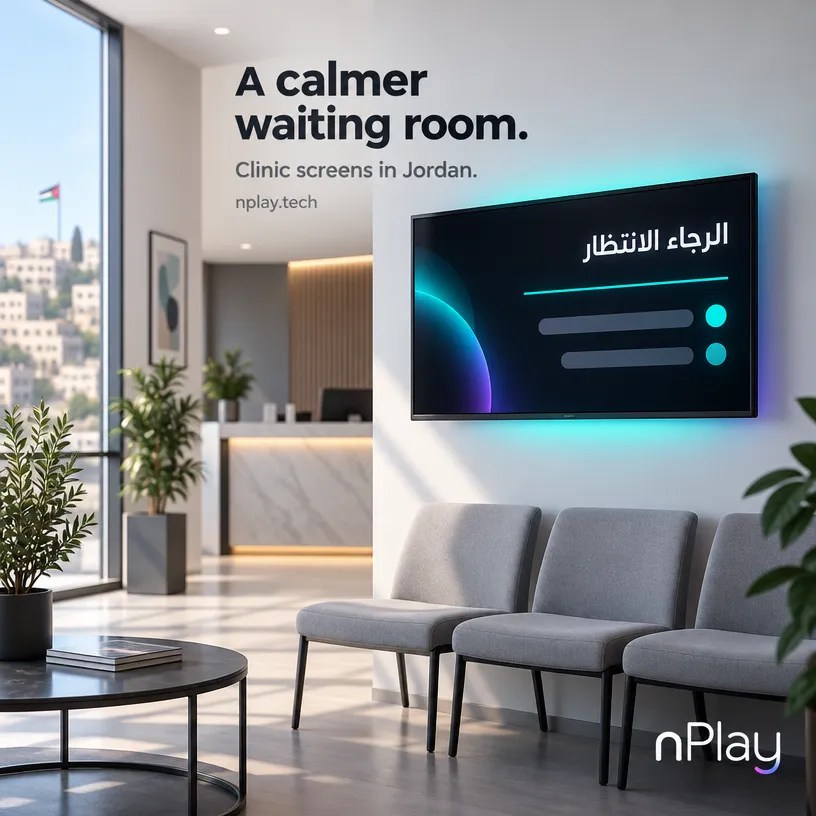
    Digital signage for a calmer waiting room by Nplay
    Digital signage for a calmer waiting room by Nplay
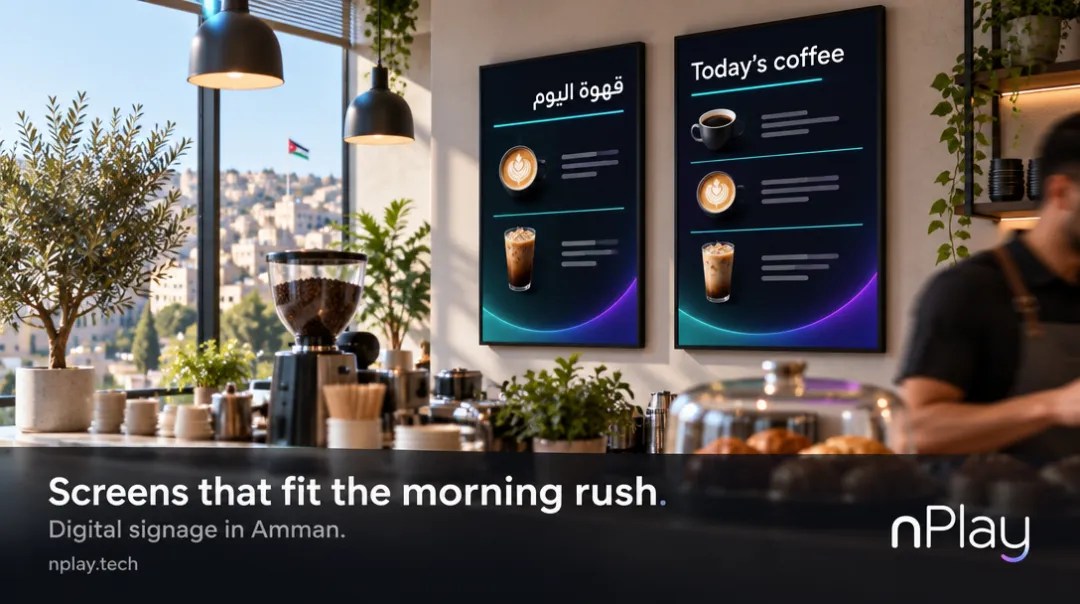
    Digital signage menu boards by Nplay
    Digital signage menu boards by Nplay

    In short, digital signage software jordan works best when it starts from a clear goal. Nplay plans digital signage software jordan around your audience, your space and your budget. If you are comparing options for digital signage software jordan, ask for a live demo before you decide. We are happy to answer any question about digital signage software jordan.

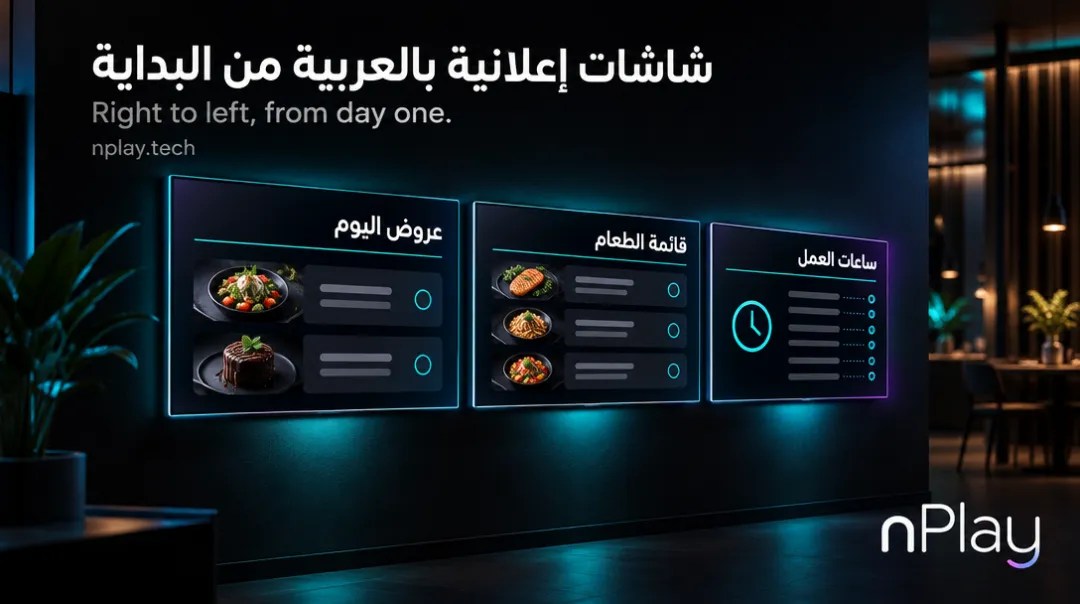
    digital signage software jordan: Arabic advertising screens by Nplay
    Arabic advertising screens by Nplay
  • Clinic digital signage in Jordan: what to show in the waiting room, and what never to

    Digital signage: a practical guide from Nplay. This article covers what matters about digital signage, from the first idea to delivery.

    A waiting-room screen is the one piece of communication every patient actually sees. Used well, it tells people about services and partner providers they did not know existed. Used badly, it shows a stale poster, a stray internal notice or, worst of all, someone’s personal information. This guide to clinic digital signage in Jordan covers what belongs on reception and waiting-room screens, how to keep them queue-neutral and private, and a simple approval flow. We deliver this on our digital signage service in Amman, and the principles hold for any supplier.

    What a waiting-room screen is for

    People in a waiting room have time and little to do. That makes the screen valuable, and also makes mistakes visible, because nobody is hurrying past it. A good clinic digital signage plan starts by deciding what the screen is for, rather than by filling it with whatever is available.

    For most clinics and medical centres in Jordan the answer is three jobs: tell patients what the building offers, orient them in a multi-clinic site, and give general information that suits a public room. That is exactly the brief we met in an integrated healthcare hub in Amman, where a large portfolio of clinics and services had no way to reach the patients already on site. Read how it works in practice in our medical hub signage case.

    Content

    What belongs on clinic screens

    Keep it informative and calm. If a slide would look at home on a billboard, ask whether it belongs here.

    Services

    New services and departments

    Announce a new clinic, a new service or extended opening hours with a short, factual slide. Patients waiting for one clinic often learn about another this way.

    Partners

    Partner providers

    A hub with laboratory, radiology or specialty partners can introduce them on a rotating playlist, with the partner’s name, what they offer and how to book.

    Orientation

    Where things are

    Floor and department directions, reception hours, payment and booking points, and which door to use for which clinic.

    Information

    General health information

    Approved, general-purpose material such as hygiene reminders or seasonal notices, supplied or signed off by your own clinical team. We do not write medical content for you.

    Practical

    Contact and booking details

    A phone number, a WhatsApp contact and a QR code to book or ask a question keep the screen useful after the slide has gone.

    Internal

    Staff notices in a separate playlist

    Keep staff announcements away from patient screens. If the same system serves both, use separate groups so an internal notice never reaches reception.

    Keeping the screen queue-neutral

    A waiting-room screen sits in an emotional place: people are anxious about time. Information that looks like a queue can create disputes. If a slide implies that a number, a name or a clinic comes next, patients will read it as a promise.

    Our rule for clinic digital signage is simple. Do not show waiting positions, estimated waits or call-out lists on a general content screen. If your clinic uses a queue or appointment system, let that system own those displays, on its own device, with its own rules. Information such as opening hours, where to pay and how to book is fine, because it is the same for everyone and it does not rank anyone. We can place queue information beside the general content in later phases if you have a queue system that exposes it, but we would treat it as a separate project, not as a slide.

    Privacy: no patient data on a public screen

    Anything on a waiting-room screen is seen by everyone in the room. Treat it as a public notice, and keep out of it:

    • patient names, ID numbers, appointment lists or telephone numbers;
    • test results, diagnoses, treatments or any individual medical detail, even without a name;
    • photographs or video in which a patient can be recognised, unless you hold clear written consent for that exact use;
    • screenshots of internal systems, spreadsheets or emails that happen to contain such details;
    • testimonials that identify a person or reveal a condition.

    Staff photos and doctor profiles need the person’s agreement too. We also advise keeping screen sound off by default in a waiting area, with audio only where the clinic has chosen it. Privacy rules differ and change, so check your obligations with your own legal or compliance adviser; we design the screen not to carry personal data, which keeps the question simple.

    Multilingual loops and calm design

    Patients in Jordan read Arabic, English or both. Write every important slide in Arabic and English, put the dominant language first on the slide, and keep sentences short. Use plain words for services; do not use internal department codes. Where a language other than these two is common among your patients, ask us about adding it to the loop.

    Design for a quiet room. Prefer slow, steady transitions, generous white space, large text and limited colour. Avoid flashing graphics, loud video and anything that reads like a sales pitch. If you want to see how bilingual layouts behave on a real screen, our bilingual signage guide sets out the layout rules we apply, and the same rules suit a reception wall. With Nplay Beam, your team can schedule the Arabic and English versions together and group screens by clinic area, so that a message reaches one waiting room or the whole site.

    Approval flow

    A content approval flow that fits a clinic

    1. Draft

      A named staff member prepares the slide in Arabic and English from a template, using only approved material and no patient information.

    2. Clinical check

      A medical lead or manager checks the wording, the names and the dates. If the slide contains anything health-related, this step is not optional.

    3. Privacy check

      The reviewer asks one question: could anyone in this room be identified by anything on the slide? If yes, it is removed.

    4. Schedule

      An administrator, not the author, uploads and schedules the slide to the right screen group and sets an end date.

    5. Review and expiry

      Each playlist is reviewed regularly. Expired promotions come off automatically at their end date, and old slides are archived, not left on screen.

    How we would start in Amman

    We keep the first phase small. The reference we can point to is the integrated healthcare hub in Amman: four distributed displays in waiting and circulation areas, a shared cloud media library, and the hub’s own team trained to upload and schedule. Clinics and medical centres of any size can follow the same shape.

    The sequence is brief, then placement and sample, then installation, then handover. You tell us the layout, the clinics and the services to promote. We propose screen positions and a content plan, set up the players, connect them to your cloud account, set up dashboard accounts for the people who prepare content and the people who publish it, and train your team. After that you run it yourselves; we stay on hand for support. Beam keeps playing the last synced content if the internet drops, which matters in a room where a blank screen looks like a fault.

    For a quote, send us the layout of your waiting areas and the services you want to feature, through the Amman signage page, or message us on WhatsApp at +962 78 185 5552.

    FAQ

    Clinic digital signage: frequently asked questions

    Can clinic digital signage show appointment or queue numbers?

    We advise against it on a general content screen. A queue or appointment system should own that display, with its own rules. Your content screens carry services, partners, orientation and general information.

    Is it safe to put patient testimonials on the screen?

    Only with clear written consent, and never in a form that identifies a person or reveals a condition. Many clinics choose not to use testimonials in the waiting room at all.

    Who should be allowed to publish to the screens?

    A small, named group. Keep one set of accounts for people who prepare content and another for people who publish, so a second pair of eyes checks everything before it goes live.

    Do you write the health information for us?

    No. We design the layouts and manage the delivery; the health content comes from, or is approved by, your own clinical team.

    Further reading: Digital signage (Wikipedia)

    Quick questions about digital signage

    Who is digital signage for? Companies and institutions that want a clearer, faster experience for their customers and visitors.

    How long does digital signage take? It depends on the size of the project and the content needed. We confirm the timeline after a short discovery call.

    How do I start with digital signage? Contact the Nplay team in Amman or Riyadh and we will suggest a clear first step.

    Does digital signage work in Arabic and English? Yes. We prepare the content in both languages from day one.

    Arabic digital signage by Nplay
    Arabic digital signage by Nplay
    Digital signage for a calmer waiting room by Nplay
    Digital signage for a calmer waiting room by Nplay
    Digital signage menu boards by Nplay
    Digital signage menu boards by Nplay
  • Your café screens are a channel, not a TV

    Cafe digital signage: a practical guide from Nplay. This article covers what matters about cafe digital signage, from the first idea to delivery.

    Most cafés have a screen. Most of those screens show a muted news channel or a sports match nobody asked for, next to a speaker playing a streaming playlist from someone’s phone. That is two things competing for the same customer. Cafe digital signage done properly turns the screens and the speakers into one channel that you programme — with Nplay Beam, from a browser, for one café or fifty.

    The TV nobody is watching and the playlist nobody chose

    Walk into ten cafés in Amman or Riyadh and you will see the same setup in eight of them. A television on the wall, muted, showing whatever channel the morning shift found. A speaker, connected to somebody’s phone, playing a streaming playlist that changes character every time the shift changes. Somewhere near the till, a printed A4 sheet with this week’s offer, slightly curled.

    None of this is wrong, exactly. It is just three separate things that nobody is running. The screen belongs to a broadcaster, the music belongs to a streaming service and the offer belongs to a printer. The café — the brand that people actually came for — is nowhere on any of them.

    Now consider the audience. A café customer sits in front of that screen for forty minutes on average, sometimes two hours. They are relaxed, they are looking around, and they are about to decide whether to order a second drink and a dessert. There are very few advertising environments in the world with a captive, comfortable audience of that duration. Most cafés use it to show the weather in another country.

    The point of cafe digital signage — the real point, not the “put a menu on a screen” version — is to take that screen and that speaker back, and run them as one channel that belongs to you.

    Your own café channel: music, video and offers on one timeline

    With Nplay Beam the café’s screens become a private audio-visual channel. You upload your own music playlists, your photos and videos, your promotions and your brand story, and the platform plays them together on one timeline. The music keeps playing while photos and videos show on the screen; the screen shows your offers without stopping the music. The café sounds and looks like itself from opening to closing.

    Smart playlists are what make the two layers coexist. You mix music tracks and video clips in a single playlist. When a video with its own sound plays — a short film about your roastery, say — the system automatically pauses the music layer, and when the video ends the music resumes without a gap. Screens and speakers stop competing.

    Streamed playlists with overlays cover the cafés that want a video-platform playlist or a live satellite channel on the screen. Beam plays the stream and lets you add your own layer on top: a promotional corner, a scrolling text bar, a photo. The sports match is on for the customers who want it; your Ramadan offer is in the corner for everyone.

    External HDMI input does the same for anything plugged in locally — a match on a receiver, a presentation at a private event — with your overlays and messages on top, managed from the cloud rather than by finding the remote.

    Split the screen, layer the message

    A single screen can do more than one job if the layout is designed for it. Beam’s screen layout control divides the display into sections so several content types run at once: a video in the main area, a rotating set of product images down one side, a text bar with today’s offers along the bottom. Layouts are customised to the café’s branding — fonts, colours, logo position — so the screen looks like a designed channel rather than a slideshow.

    Layers work on top of any of this. A promotional pop-up in a corner during the afternoon lull. A text bar announcing that the kitchen closes in fifteen minutes. A static image of the loyalty card while the music plays. Each layer has its own schedule, so the offer that makes sense at 4 p.m. does not appear at 8 a.m.

    For most cafés we recommend starting simple: one full-screen video-and-image playlist with the music layer, and one text bar for offers. Add sections once you have seen how customers react. A screen that is too busy is worse than a muted TV, because at least the TV is calm.

    Schedule the day once — including prayer time

    The feature café owners value most is the one they stop noticing: the day runs itself. Campaign scheduling lets you set a morning music list that starts at opening, an automatic switch to a livelier evening playlist, and promotions that appear at set times — breakfast until eleven, the afternoon dessert offer, the late-night shisha menu where it applies. Set it once and the screens follow the schedule every day until you change it.

    Prayer-time mode is the feature that customers in Jordan and Saudi Arabia notice immediately. When enabled, Beam pauses music and video automatically at each prayer time and resumes afterwards. No staff member has to remember, no customer has to ask, and the café signals respect for its customers’ traditions without a word. It is optional, and for the cafés that use it, it is the reason they chose the system.

    Group screen management means the owner of three branches, or the manager of a café with a terrace and an indoor room, controls each area separately or all together. Play, pause, mute or unmute any screen or every screen from anywhere — including from a phone in the car. A national hypermarket chain runs Beam across 32 branches in Jordan with the same dashboard; the café version is the same platform at a smaller scale, which is why we describe it as digital signage software for Jordan and Saudi Arabia that fits a single shop as well as a chain.

    Walls

    From one screen to a seven-screen restaurant wall

    SetupScreensWhat one Beam device does
    Single café screen1Music layer + video/image playlist + text bar; streamed or HDMI content with overlays; prayer-time mode
    Multi-area café2–4 separate screensDifferent content per area (counter menu, seating, terrace), controlled as a group or individually
    Restaurant 2×2 video wall4, portrait or landscapeOne synchronised canvas or four independent playlists; instant switch to full-wall content; built-in music layer like an in-house radio station
    Restaurant 7×1 portrait wall7 vertical screens, 7560×1920Unified canvas or seven menus; fully synchronised playlists with music overlay; one device, one subscription
    Larger wallsUp to 9 (3×3)Videowall controller option; player variants handle up to seven Full HD videos simultaneously or a single 8K stream

    Restaurant video walls: menus, ambience and one device

    Restaurants have a different problem from cafés. They need menus that change between breakfast, lunch and dinner, they need promotions that do not look like a supermarket, and they increasingly want a wall of screens that sets the mood of the room. A restaurant video wall built the old way needs a media player per screen, a technician to synchronise them and a manager who knows where the USB sticks are.

    Beam’s multi-screen layout replaces that with one device. The 2×2 experience puts four screens in a grid, portrait or landscape, driven by a single Beam player. Each screen can show its own content — four menu categories, say — or all four combine into one synchronised video wall for a film about the kitchen. Playlists per screen switch instantly to full-wall content when you want the whole room to look at one thing, and the built-in music layer runs underneath like an in-house radio station.

    The 7×1 portrait wall manages up to seven vertical screens from one hub, at a combined resolution of 7560×1920. Use it as one long canvas above the counter or as seven independent menu panels, with fully synchronised playlists and music overlay. One device, one subscription, total control — that is the whole pitch, and it is why restaurant owners who were quoted a separate player and installer per screen tend to call us back.

    Behind both sits the same cloud dashboard as the café package, so a group with two cafés and a restaurant runs all three from one login. Our cafés and restaurants page has the layouts in detail.

    What it takes: a player, a subscription and an afternoon

    The installation is deliberately unglamorous. Each screen or wall gets a Beam player — a small Android-based set-top box or, for walls, the multi-output player or videowall controller. Our technicians connect it to the screen and, where the café wants the music through its own speakers, to the amplifier, so the sound system is controlled from the same dashboard. The player is paired to your cloud account, your first playlist is loaded, and the schedule is set. Most single-café setups are done in an afternoon.

    Content plays from the player’s local storage, so a dropped internet connection does not black out the screen; when the connection returns, the player picks up any updates automatically. The dashboard shows every screen live, so you know from your phone whether the terrace display is on before a customer tells you.

    Beam is the same platform we deploy in retail chains, a clinic hub in Amman and a national memorial museum, which means the café package benefits from features built for much larger clients — security, device management, campaign reporting — at café scale. See the hypermarket case study for the large end and the clinic hub for a four-screen deployment closer to a café’s size.

    If your screen is currently showing the weather in another country, that is the afternoon to reclaim it.

    FAQ

    Cafe digital signage: frequently asked questions

    Can we keep showing a sports channel and still run our own content?

    Yes. Beam plays satellite channels or an external HDMI feed on the screen and lets you add your own overlays — a promotional corner, a scrolling offer bar, a static image — on top, all scheduled from the cloud dashboard.

    How does prayer-time mode work?

    When enabled, the system automatically pauses music and video at each prayer time and resumes afterwards. It is optional and configured per location, so a chain can set it differently in different cities.

    Do we need a player for every screen in a video wall?

    No. A single Beam device drives a 2×2 wall (four screens) or a 7×1 portrait wall (seven screens) as one canvas or as independent playlists, with synchronised playback and a music layer. Larger walls use a videowall controller.

    Is Nplay Beam available for cafés in both Jordan and Saudi Arabia?

    Yes. Beam is deployed across Jordan, including a 32-branch hypermarket chain, and is offered as cloud digital signage in Saudi Arabia with installation by our technicians in both markets.

    Further reading: Digital signage (Wikipedia)

    Quick questions about cafe digital signage

    Who is cafe digital signage for? Companies and institutions that want a clearer, faster experience for their customers and visitors.

    How long does cafe digital signage take? It depends on the size of the project and the content needed. We confirm the timeline after a short discovery call.

    How do I start with cafe digital signage? Contact the Nplay team in Amman or Riyadh and we will suggest a clear first step.

    Does cafe digital signage work in Arabic and English? Yes. We prepare the content in both languages from day one.

    Arabic digital signage by Nplay
    Arabic digital signage by Nplay
    Digital signage for a calmer waiting room by Nplay
    Digital signage for a calmer waiting room by Nplay
    Digital signage menu boards by Nplay
    Digital signage menu boards by Nplay

    In short, cafe digital signage works best when it starts from a clear goal. Nplay plans cafe digital signage around your audience, your space and your budget. If you are comparing options for cafe digital signage, ask for a live demo before you decide. We are happy to answer any question about cafe digital signage.

    cafe digital signage: Arabic advertising screens by Nplay
    Arabic advertising screens by Nplay
  • Safe VR pod design: the door, the air and the light

    Safe VR pod design: the door, the air and the light

    Safe vr pod design: a practical guide from Nplay. This article covers what matters about safe vr pod design, from the first idea to delivery.

    An enclosed space is only restful if the person inside never has to wonder how to get out, whether the air is clean, or what the equipment is doing. This post sets out the checklist we use for safe VR pod design on SAKINA Pod, our sealed, single-person VR relaxation capsule. SAKINA Pod is a concept in design development, so every figure here is a design target, not a delivered specification.

    Safe VR pod design: the door, the air and the light

    A closed door changes what design has to do

    Most conversations about VR focus on the headset and the content. Inside an enclosed rest space the headset is the smallest of the problems. The person is alone, the door is closed and their vision is covered, so for a few minutes they rely on the design of the space for the air, the light, the sound and the way out.

    That is why we treat safe VR pod design as a discipline in its own right. SAKINA Pod is a sealed, single-person, climate-controlled VR relaxation capsule. It is a concept in design development: we have no price, availability date, pilot, certification or clinical result to report, and we claim none. What we have is a design brief, and its most useful part is a short list of what the pod must never do.

    We write that list as three promises. No trapped feeling. No unclear state. No hygiene doubt. Every decision that follows exists to keep one of them. SAKINA Pod is intended as a calm, rest-focused space for short guided VR relaxation sessions, and is not presented as a treatment for anything.

    The door: four independent provisions, none optional

    The door is where “no trapped feeling” is won or lost. SAKINA Pod is designed with a smoked acrylic sliding door and a fail-safe lock: when something goes wrong, the person must end up safe, not stuck.

    Our brief calls for that lock to be backed by four independent safety provisions. We are not listing the mechanisms here, because they stay indicative until we freeze the design with a fabricator. These are the kinds of provisions we design around:

    • The door can always be opened from inside, without help.
    • The door can always be opened from outside, by staff or a bystander.
    • The door opens on power loss, so a failed supply never holds anyone in.
    • The release is obvious, found by instinct with no instructions to read.

    The word “independent” matters. If four provisions depend on the same power supply or controller, they are one provision with four labels. Safe VR pod design assumes any single part will eventually fail, and asks that the door still opens when it does.

    The air: HEPA ventilation and a purge between users

    A sealed pod without good air is a small closed room, and nobody relaxes in one. SAKINA Pod is designed with HEPA-filtered active ventilation: air is moved and filtered, not left to stand. Between sessions the pod runs a purge, a deliberate air change before the next person comes in.

    The purge does two jobs. A space used by many people in a day should not carry one session into the next. And “hygiene doubt” is a perception as much as a fact, so the design makes the purge visible: the pod shows when it is purging and when it is ready.

    Cleaning materials, procedures and intervals belong to the fabrication stage and to each operator. Filtration and a purge are design provisions, not a claim that the pod is a medical device or prevents infection.

    The light

    Five light states, one question answered

    StateWhat it means to the userWhat it means to staff
    ReadyThe pod is clean and free. You can go in.Available. The purge is complete and there is no fault. Nothing to do.
    OpeningThe door is moving. Keep clear and wait for it to finish.The door is in motion. Do not start another action until it settles.
    OccupiedA session is under way and a person is inside.One person is in a session. Leave it undisturbed unless there is a reason to open it.
    PurgingThe air is being changed. The pod is not ready yet.A purge cycle is running. Do not send the next person in.
    FaultSomething is not working. Do not start a session.Take the pod out of use and check it. A fault must never look like ready.

    Why the set is small, and why meaning beats colour

    Anyone approaching a closed pod asks: can I use it? Staff ask: is it safe to open? The light system answers both without a screen. We kept the set small on purpose: with more states, people stop learning them, and with fewer, two situations look alike.

    We are not fixing colours or patterns here; those belong to the finished design. What we do fix is the rule: no two states may be mistaken for each other, and a fault may never read as ready. In safe VR pod design, a light that is easy to misread is a safety problem, not a styling one.

    The surroundings stay calm: a black anodised aluminium shell, black, graphite and warm grey with electric blue and magenta accents, and warm-white light inside, so the state signals are the one thing that changes.

    Sound, session length and one occupant

    Sound. Our acoustic target is below 28 dBA. It is a number we design and test towards, not a measured result. Active ventilation and silence pull in opposite directions, so the target constrains the fan and airflow design from the start.

    Time. Sessions are capped at 15 minutes. That keeps rest focused, availability predictable for staff and gives the purge a place between users. We make no claim about what a session does for anyone.

    Occupancy. One person at a time, in a private space sized for a single occupant, which keeps the door, air and light logic simple enough to trust.

    Checklist

    The checklist we design SAKINA Pod against

    Use the same questions on any enclosed VR space you evaluate.

    • Can the person always open the door from inside, unaided?
    • Can staff or a bystander always open it from outside?
    • Does the door open when power is lost?
    • Is the release obvious to a first-time user?
    • Do the safety provisions fail independently of one another?
    • Is the air HEPA-filtered, with a purge between users?
    • Does the light show one of five states (ready, opening, occupied, purging, fault), and is a fault never mistaken for ready?
    • Is the acoustic target below 28 dBA, the session capped at 15 minutes and the occupancy limited to one?

    Indicative until frozen with a fabricator

    SAKINA Pod is a concept in design development. The family we are sketching includes the Pod, Pod Clinical, Pod Open and a Cart. Every specification here is indicative until frozen with a fabricator, who will test the door, airflow, noise and lights against these requirements. Numbers can still change.

    For what the capsule is, read SAKINA Pod explained. For where it could sit, see VR rest pods in hospitals, airports and workplaces. For wellbeing context, see From Calm to Care. Published research reviews on VR for procedural pain and anxiety exist, but SAKINA Pod makes no claim to treat, cure or help any condition.

    If you run a hospital, airport, workplace or hotel, or design and fabricate enclosed spaces, we would like to hear from you.

    FAQ

    Safe VR pod design: frequently asked questions

    Can a person be locked inside a SAKINA Pod?

    The design goal is that they cannot. The door has a fail-safe lock backed by four independent safety provisions. SAKINA Pod is a concept, so these are design requirements to prove with a fabricator, not a certified result.

    How is the air kept clean between users?

    Through HEPA-filtered active ventilation and a purge between sessions. The purging light state shows that the air change is under way.

    How long is a session in the pod?

    The design caps a session at 15 minutes, for one occupant.

    Is SAKINA Pod available, certified or a medical device?

    No. It is a concept in design development. We claim no price, release date, pilot, certification or clinical result, and it is not presented as a treatment.

    Further reading: Virtual reality (Wikipedia)

    Quick questions about safe vr pod design

    Who is safe vr pod design for? Companies and institutions that want a clearer, faster experience for their customers and visitors.

    How long does safe vr pod design take? It depends on the size of the project and the content needed. We confirm the timeline after a short discovery call.

    How do I start with safe vr pod design? Contact the Nplay team in Amman or Riyadh and we will suggest a clear first step.

    Does safe vr pod design work in Arabic and English? Yes. We prepare the content in both languages from day one.

    Virtual 3D event space built by Nplay
    Virtual 3D event space built by Nplay
    VR training for your team, by Nplay
    VR training for your team, by Nplay
    VR training demo by Nplay at an exhibition
    VR training demo by Nplay at an exhibition
  • Arabic digital signage design: a right-to-left checklist for Saudi retail

    Arabic digital signage design: a practical guide from Nplay. This article covers what matters about arabic digital signage design, from the first idea to delivery.

    Most retail screens in the region are designed in English and translated afterwards, and it shows: punctuation on the wrong side of a sentence, a price that drifts to the wrong edge, an Arabic headline set in a font too thin to read from the aisle. This is a working checklist for Arabic digital signage design in Saudi retail, from the first layout decision to the weekly schedule. We use it when we prepare loops for digital signage in Riyadh, and it applies to any player or content system you choose.

    Why Arabic-first is a design decision, not a translation job

    Translating a finished English slide into Arabic rarely works. Arabic text is read from the right, usually needs more vertical space than Latin text at the same size, and carries its own rhythm of long and short words.

    For good Arabic digital signage design, we reverse the order. Build the Arabic slide first, with the reading path starting at the right edge, then adapt the English version. Latin text is more forgiving of a mirrored layout, so the English usually adapts without trouble. For the wider Gulf picture, see our guide to Arabic and English on one signage network covers it; this article stays on layout and Saudi retail.

    Right-to-left layout: what flips and what does not

    A right-to-left layout is more than right-aligned text. The whole reading path mirrors. Logos and headlines sit at the right, the call to action sits at the left end of the line, lists run from the right, and the focal point of a split screen moves with them. Check each on a proof, not in your head.

    • Things that mirror: text alignment, bullet and number positions, the placement of a logo and headline, split-screen regions, progress bars, scrolling tickers and slide transitions that slide in from one side.
    • Things that stay as they are: product photography, video footage, clocks, brand logos in Latin letters and any map or floor plan the customer must read as drawn.
    • Things that break quietly: brackets, quotation marks, full stops and hyphens placed next to Latin words or numbers inside an Arabic sentence. The text can look correct in your editor and flip on the player, so proof on the player.

    Check arrows too: “next” and “this way” must point the way an Arabic reader expects, usually opposite to the English slide.

    Mixed Arabic and English loops

    Most Saudi shoppers read both languages, but a given screen has a primary audience. One branch may lead with English, another with Arabic, and the loop should say so openly.

    There are three workable patterns. The first is alternating slides, one fully Arabic and the next fully English, which is easy to schedule. The second is a bilingual slide with one dominant language and a smaller line of the other beneath it, which suits short promotions. The third is two playlists, one per language, scheduled to different time bands or different screens. Avoid equal-weight two-column slides on a small screen; both languages become too small to read.

    Whichever pattern you pick, keep each slide’s direction consistent. A scrolling text bar should run in the direction of the language it shows, and a bilingual slide should not switch direction halfway through.

    Numerals, fonts and legibility from a distance

    Numerals. Arabic readers in Saudi Arabia meet both Eastern Arabic numerals and Western numerals daily. Neither is wrong; mixing them without a rule is. Write a short numerals policy and apply it to every slide: for example, one style for dates, one for phone numbers and one for any figure that sits beside a product. Keep one style inside a slide, and check how your content system treats numbers typed inside Arabic text.

    Fonts. Choose an Arabic typeface designed for screens, in a medium or bold weight, and avoid very thin or ornate styles. Give Arabic more line height than English so marks above and below the line do not touch the next one, and keep strong contrast against the background.

    Distance. A laptop proof lies. Stand where the customer stands, in the real store lighting, and read the slide; anything you cannot read in one pass needs to be larger or shorter. Keep text live in the system rather than baked into an image, so an offer change needs no new render.

    Reading time per slide and screen orientation

    We give no fixed number of seconds, but there is a reliable method. Read the Arabic aloud at the pace of a customer who is walking, add a little time for the image, and use that as the minimum. Arabic usually takes longer than English for the same message, so do not copy the English timing across. Move fine print to a shelf label or a QR code.

    Orientation matters as much as language. A landscape slide will not fit a portrait panel, and Arabic in a narrow column wraps differently from English. Decide orientation per screen before design begins. Nplay Beam supports landscape screens and portrait video walls, and splits one screen into regions, such as a promotion in one corner and a text bar along the bottom, so you can keep the main message large while the secondary information stays readable.

    Checklist

    The checklist to print and pin up

    Run this list on every new template, then again on every branch before launch.

    CheckWhat to look forWhere it goes wrong
    Reading pathArabic slide reads from the right; call to action at the end of the lineLayout copied from the English master and only the text swapped
    Mirrored elementsAlignment, lists, bars, transitions and arrows follow the languageTickers or arrows still moving in English direction
    Mixed textBrackets, hyphens and Latin brand names sit correctly inside Arabic sentencesPunctuation jumps to the wrong side on the player
    NumeralsOne written policy; same style on every branchTwo styles inside one slide
    Font and weightScreen-friendly Arabic face, medium or bold, generous line heightThin or ornate style that breaks up at distance
    Reading timeSlide stays long enough to read once, aloud, at walking paceEnglish timing reused for Arabic
    OrientationA layout built for each screen shapeLandscape slide stretched onto a portrait panel
    Real screen testNative Arabic reader checks at viewing distance, in store lightingApproval given from a laptop
    Text as live contentOffers and hours typed in the system, not baked into imagesA price change needs a new render

    Many branches, local hours and a calm schedule

    Retail chains must run one design in different cities, with different opening hours and local offers. Treat that as scheduling, not editing. Group screens by branch or region, publish the shared loop once, and add the local layer on top: an opening-hours overlay, a regional offer or a different language order. If playlists start and stop by date and time, nobody touches a screen at closing time or before a seasonal change.

    Keep opening hours in the schedule rather than in a design file, because they differ by branch and season. If a venue wants audio to pause at prayer times, Beam has an optional mode that can be set per site; decide branch by branch. We also suggest one named person owns the Arabic review of each campaign, so a late change does not slip through with an error.

    If you are shortlisting suppliers, the same questions apply to all of them. Our guide to choosing digital signage software turns them into a ten-point test, and our retail chains use case shows how multi-branch networks are usually organised. Our delivered signage work is in Jordan, including a national hypermarket chain; we serve Saudi retailers from our Riyadh office. When you are ready, tell us your screen types and branches through the Riyadh signage page, or message us on WhatsApp at +962 78 185 5552 (Amman) and we will propose a sample loop for one branch.

    FAQ

    Arabic digital signage design: frequently asked questions

    Can the same slide serve Arabic and English readers?

    It can, with one dominant language and a smaller line of the other, which suits short promotions. For anything longer, make two slides or two playlists. Equal-weight two-column slides tend to make both languages too small.

    Should we use Eastern Arabic or Western numerals on screens?

    Either can be correct. What matters is a written rule per type of content, applied on every branch, and a check of how your content system displays numbers inside Arabic text before launch.

    How long should an Arabic slide stay on screen?

    Long enough to read once at walking pace. Read the Arabic aloud, add time for the image, and treat that as the minimum. Do not reuse English timings, and move fine print to a shelf label or QR code.

    Can Nplay prepare the Arabic layouts for us?

    Yes. We design right-to-left templates and test them on your real screen before launch. If your own team provides the artwork, we review it against the checklist above and report what needs changing.

    Further reading: Digital signage (Wikipedia)

    Quick questions about arabic digital signage design

    Who is arabic digital signage design for? Companies and institutions that want a clearer, faster experience for their customers and visitors.

    How long does arabic digital signage design take? It depends on the size of the project and the content needed. We confirm the timeline after a short discovery call.

    How do I start with arabic digital signage design? Contact the Nplay team in Amman or Riyadh and we will suggest a clear first step.

    Does arabic digital signage design work in Arabic and English? Yes. We prepare the content in both languages from day one.

    Arabic digital signage by Nplay
    Arabic digital signage by Nplay
    Digital signage for a calmer waiting room by Nplay
    Digital signage for a calmer waiting room by Nplay
    Digital signage menu boards by Nplay
    Digital signage menu boards by Nplay

    In short, arabic digital signage design works best when it starts from a clear goal. Nplay plans arabic digital signage design around your audience, your space and your budget. If you are comparing options for arabic digital signage design, ask for a live demo before you decide. We are happy to answer any question about arabic digital signage design.

    arabic digital signage design: Arabic advertising screens by Nplay
    Arabic advertising screens by Nplay