NPLAY BLOG · 2026-07-22 · By Hani Alhaj, Founder & CEO
How Much Does a Hologram Cost in Jordan & MENA? (2026 Buyer’s Guide)
“How much does hologram cost in Jordan and the wider MENA region?” is the question we’ve answered most often since 2018 — holograms are where Nplay began. The honest answer: from a few hundred dinars to six figures, depending entirely on what you’re building. This guide breaks down the real categories so you can budget before you call anyone (including us).
Table of contents
Hologram cost in Jordan: four categories and their budgets
1. Hologram fan displays — entry level
Spinning-LED “fans” that float a 3D product or logo in mid-air. Perfect for retail windows, mall kiosks and exhibition stands. Single units are the cheapest way into holograms; walls of synchronized fans scale the wow factor and the price. Content production (a proper 3D animation of your product) often costs as much as the hardware — and matters more.
2. Pyramid and showcase holograms — mid range
Glass-pyramid or showcase displays that float products inside a case: watches, jewelry, prototypes, artifacts. Museum and luxury-retail favorites. Budget for the display case plus custom 3D content per product.
3. Life-size holographic presenters — the showstopper
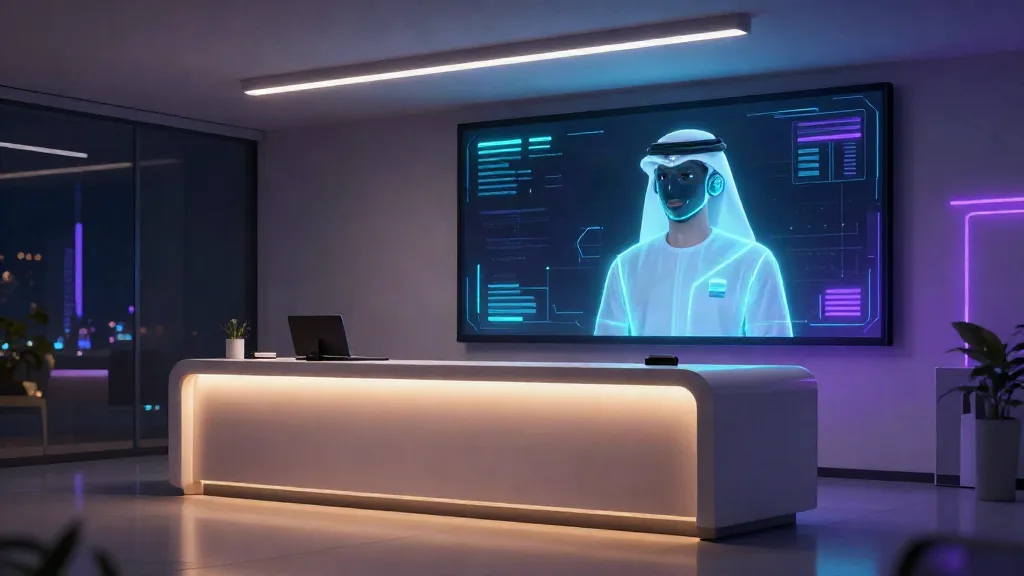
A human-scale figure that presents your brand on stage, in a lobby or at a national pavilion. This is a custom project: staging, optics, filming or 3D character production, and installation. Pair it with conversational AI — our AI Hologram — and it answers visitors’ questions live in Arabic and English.
4. Projection-mapped rooms and buildings — flagship
Entire walls, rooms or building facades become the display. These are landmark projects — museums, ceremonies, tourism activations — priced by surface area, projector count and content minutes. They’re also the projects people photograph and share for years.
What actually drives the price
Five factors move every hologram quote: size (bigger optics and brighter projectors cost more), content (custom 3D animation is the soul of the display), interactivity (sensors, touch and AI add engineering), duration (event rental vs permanent installation), and support (maintenance contracts for public installations). Beware quotes that skip content and support — a hologram with weak content is an expensive fan.
Budget honestly: allocate roughly half your budget to hardware, half to content and integration. The display draws the eye; the content keeps it.
Rental vs purchase
For a single launch event or exhibition, rental with on-site technicians is usually smarter. For lobbies, museums and showrooms, purchase with a maintenance contract pays for itself within a few events’ worth of rentals. We offer both across Jordan, the GCC and Egypt — see our hologram services.
Frequently Asked Questions
What is the cheapest way to get a hologram for my shop?
A single hologram fan display with a professionally produced 3D animation of your product is the most affordable entry point — visible from the street and easy to update with new content.
Do you rent holograms for one-day events in Jordan?
Yes. Nplay provides event rentals with delivery, setup, custom content and on-site technicians across Jordan, and can ship pre-configured systems across the GCC and MENA.
Can a hologram talk to my customers?
Yes — our AI Hologram combines a holographic presenter with conversational AI, so it greets visitors and answers questions by voice in Arabic and English.
How long does a hologram project take?
Fan and pyramid displays with custom content: typically 2–4 weeks. Life-size presenters and projection rooms: 6–12 weeks depending on content and installation complexity.
Work with Nplay: we design and build VR, AR, MR and hologram experiences in-house, in Arabic and English, from our offices in Amman and Cairo.
Talk to us →
Hologram advertising uae: a practical guide from Nplay. This article covers what matters about hologram advertising uae, from the first idea to delivery.
Table of contents
Buyers in Dubai and across the UAE ask us for the same three things: a hologram display for an exhibition stand, hologram advertising for a retail floor, and a life-size presence in a corporate lobby. The hardware is similar; the brief is not. This guide explains which kind of hologram fits each setting, what to specify before you order, and how we work with UAE clients from Amman and Riyadh without claiming a presence we do not have. Our UAE page has the wider picture.
What a hologram display means in Dubai
Buyers who search for a hologram display Dubai suppliers can ship, or in Arabic for شاشة هولوجرام دبي, usually mean one of two pieces of engineering, and most disappointment comes from buying the wrong one. A hologram box is a transparent LCD panel in a lit cabinet with anti-glare glass. Content rendered on black appears to float inside the cabinet, and a real product can stand behind the glass as part of the scene. A projection hologram is a projector throwing an image onto a dark screen, film or silhouette. It can be as big as the wall, but it needs controlled light and a proper installation.
Neither is a true light-field hologram. Both work without glasses, and visitors and clients call both of them holograms. That is fine, as long as the buyer knows what they are buying. Our box versus projection comparison goes through the trade-offs in detail.
For the settings most UAE enquiries describe, events, retail floors and lobbies, the box wins more often than not, for one reason: light. Malls, atriums and glass-fronted lobbies are bright, and projection fights ambient light and usually loses.
By setting
Which format suits which UAE venue
Setting
Recommended format
Why
Exhibition or conference stand
Halo Box, hired or bought
Arrives complete, movable, draws a queue; touch and avatar engage visitors
Retail floor or mall atrium
Halo Box with a product behind the glass
Reads in bright light; real product sits inside the scene
Corporate or hotel lobby
Halo Box as a life-size greeter
Sees and hears visitors; works in glass-fronted entrances
Showroom or counter
Halo Box Mini, 21.5 inch
Portrait or landscape; same software at counter scale
Ceremony, museum hall or facade
Projection hologram
Scale and atmosphere; needs a survey, structure and dark room
Events and retail: what the box actually does
At an exhibition the box is a magnet. A life-size figure on a stand draws people across the aisle, and the touchscreen and avatar keep them there long enough for a conversation. Product demonstrations work well because the real product can sit behind the transparent panel while the 3D scene plays around it. For small items our 3D scanning service turns a physical product into holographic content.
In retail the same idea becomes a virtual shop window. The box can show a product, rotate it, answer questions through the avatar and connect to a 3D viewer and store for online ordering. We have also described the concept of virtual stores in malls and metro stations, where shoppers browse without a traditional shop; read more in our post on hologram stores.
Not every retailer needs interaction. If the goal is a bright, silent, attention-grabbing loop near an entrance, a box on autoplay does that too, and Beam can change the loop from a browser the moment a promotion changes.
What the Halo Box gives a venue
The Nplay Halo Box uses an 86-inch transparent LCD in portrait, rated at 400 cd/m² with a 178-degree viewing angle and anti-glare glass. It has 40-point infrared touch, a built-in 4K camera, an eight-microphone array and two 18-watt speakers. The frame measures 2071 × 600 × 1242 mm, and the unit weighs 119 kg in the aluminium chassis or 240 kg in the metal one. It runs on AC 110 to 240 V, about 650 W depending on the processor, which matters for planning a site.
Nothing needs building. The box ships as a complete unit; connect power and internet and it runs. The smaller 21.5-inch Mini uses the same software for counters and reception desks. Both run a platform with an AI avatar and knowledge bank, a cloud content system, live streaming, a 3D viewer and store, and a content library.
The avatar matters in a market where visitors arrive speaking several languages. It supports multilingual interaction, including Arabic and English, and you choose its persona, voice and what it knows. Our AI hologram page explains how it is taught.
Hologram advertising in the UAE: what makes it work
Hologram advertising UAE brands ask about is really three disciplines at once, and a hologram display Dubai venues install for it has to serve all three: hardware, scheduling and content. The hardware is the box. Scheduling is handled by Nplay Beam, our cloud content system, which plays campaigns on a timetable and can sell time in short slots; our hologram advertising service page sets out the model. Content is where most campaigns succeed or fail.
Content for a transparent screen has to be designed for it. Backgrounds are black, because black becomes transparent. Loops are short, because people pass in seconds. Type is large and bilingual, with Arabic and English given equal weight and a right-to-left layout. A single call to action, such as a QR code or a stand number, does more than a paragraph. Good hologram advertising UAE retailers can measure respects the passer-by’s time. Our 3D content studio builds the models, animation and filmed presenters; a filmed presenter can be cut out and shown life-size.
We should be clear about scale. We supply boxes, content and cloud management for venues and campaigns that our clients run. We do not operate a hologram screen network in the UAE, and we do not sell placements in one.
Remote by design, local where it must be
Our offices are in Amman and Riyadh. We have no office, client, licence or installation in the UAE, and a UAE project works like this instead. We brief remotely by video and agree the script, the languages and the loop. Our studio produces the content and sends previews for approval. The unit ships complete. On site, installation and commissioning are arranged with the client’s own team or a local integrator, and we support the platform remotely after launch.
For an event, plan the content well before the show, because approvals usually take longer than rendering. For a permanent lobby, send us a photograph of the space, the ceiling height and the power position, and we will say what fits. Our founder has spoken at events in Dubai, which is how many UAE conversations began; see this post. Costs depend on unit, content and support, and our cost guide lists the drivers.
Six things to settle before you order
Power and internet. The box needs a socket and a connection at the exact position, not near it.
Floor and route. At 119 kg in aluminium or 240 kg in metal, the unit needs a safe route from the loading area and a floor that takes the weight.
Light. Note windows and spotlights facing the glass; glare on the front is the usual cause of a dull image.
Languages. Decide which languages appear on screen and who approves the Arabic.
Content. Choose ready-made assets, commissioned 3D content or your own files.
Support. Name who will install, who powers it on each morning and who we call.
What the published figures say
Forecasts are a background, not a reason to buy. Our market brief cites research that values the global holographic display market at USD 6,108.70 million in 2022 and expects USD 52,017.98 million by 2030, a compound annual growth rate of 30.7 per cent, as cited in Nplay’s market brief. The figure is global, not UAE-specific, and different research houses count the market differently.
We quote it because it matches what we see: interest is broadening from launch-night novelty to lobbies, retail floors and permanent installations. A sensible buyer judges a hologram by a measured pilot at one venue: one box, one location, one campaign, and a clear count of how many people stopped, touched the screen or asked the avatar a question. If the result is good, the second box is an easy decision, and if not, the cost of finding out was small.
Who is hologram advertising uae for? Companies and institutions that want a clearer, faster experience for their customers and visitors.
How long does hologram advertising uae take? It depends on the size of the project and the content needed. We confirm the timeline after a short discovery call.
How do I start with hologram advertising uae? Contact the Nplay team in Amman or Riyadh and we will suggest a clear first step.
Does hologram advertising uae work in Arabic and English? Yes. We prepare the content in both languages from day one.
Holographic display in a mall atrium by NplayHologram display box showcase by NplayLife-size hologram museum guide by Nplay in Jordan
In short, hologram advertising uae works best when it starts from a clear goal. Nplay plans hologram advertising uae around your audience, your space and your budget. If you are comparing options for hologram advertising uae, ask for a live demo before you decide. We are happy to answer any question about hologram advertising uae.
Hologram for exhibitions: a practical guide from Nplay. This article covers what matters about hologram for exhibitions, from the first idea to delivery.
A stand has a few seconds to win a passer-by. This checklist is for exhibitors in Riyadh who are considering a hologram for exhibitions and want to settle the practical questions before they ask for a quote: floor space, light, queue flow, how long the content loops, sound, lead capture and delivery. It is written from what we ask every client before we recommend a unit. If you want the product and the Riyadh office first, start with our hologram display page for Riyadh.
Table of contents
What the hologram is for on your stand
Walk any exhibition hall and you will see two kinds of stand: those that make you slow down and those that do not. A hologram for exhibitions is worth its place only if it changes that first second. So before you compare units, write one sentence: the display is there to stop visitors, or to answer questions while your team is busy, or to show a product that is too large or too new to bring.
When we say hologram we mean a transparent screen in a lit cabinet, such as the Nplay Halo Box. Content on a dark background appears to float in the glass, and a real product can stand behind it. It needs no glasses and, unlike a rear-projection hologram, does not need a dark room, which matters because most halls are bright. Our comparison of hologram box and projection hologram explains the trade-off in detail.
It is not right for every stand. If your pitch is a long technical conversation, spend the budget on people and seating; if the aisle is narrow, a large portrait screen may crowd the visitors you want.
The checklist
Booth checklist for a hologram display
Send this table, with answers, with your first message. It removes most of the back-and-forth before a quote.
Area
What to check
Why it matters
Footprint
Floor space for the unit and for visitors standing in front of it
The Halo Box 86 is a portrait cabinet with a 2071 × 600 × 1242 mm outer frame; visitors need space beyond that
Position
Visible from the main aisle, not hidden behind a column or a counter
Passers-by decide in seconds; a unit at the back of the stand is a unit nobody sees
Hall lighting
Skylights, glass fronts and spotlights near your stand
Reflections lift the black background to grey and wash out the effect
Queue flow
Where people stop, where they wait and where staff stand
One touch screen serves one person at a time; the aisle must stay clear
Content loop
A complete idea in a glance, then a call to action
Visitors arrive at any point in the loop
Languages
Arabic and English, with captions
The audience is mixed, and sound may be off
Sound
Hall noise level, speaker direction, touch alternative to voice
A loud hall makes voice input harder, so give visitors another way to ask
Lead capture
QR code or WhatsApp link, who follows up and how fast
A conversation that ends on the screen is a lost lead
Power and internet
AC 110–240 V (about 650 W) and Wi-Fi or LAN from the organiser
Cloud content and the AI avatar need a connection; scheduled content can also play offline
The unit weighs 119 kg in aluminium and 240 kg in steel, so route and timing matter
Footprint, position and queue flow
The most common mistake is to treat the screen as the product and the visitor as an afterthought. Place the unit so it can be seen from the aisle, preferably at the front corner of the stand, angled slightly towards the flow of people. Leave a stopping zone in front so a small group can watch without pushing into the walkway. Keep staff beside the unit, not behind it.
Think about queue flow as well. A touch or voice conversation is one-to-one, so decide whether the unit is a watch station or an ask station. A watch loop can serve a crowd; an AI conversation serves one visitor at a time and works best when it is short and ends with a clear next step.
Illustrative scenario: a stand on a corner puts the unit at the aisle edge with the product behind the glass. The loop runs as an attractor. When someone steps up, the avatar offers three questions to touch. A team member joins as soon as the visitor asks for detail.
Content loop length and sound
Design for the visitor who arrives in the middle of the loop. Each scene should make sense alone: a strong shape on a dark background, a few words, one idea. Keep the loop short enough that a waiting visitor sees it repeat.
Sound needs honesty. Exhibition halls are loud, and neighbouring stands compete with you. Build every scene to work silently with Arabic and English captions, and treat audio as a bonus for the moment a visitor stops. If your unit takes voice questions, provide on-screen question buttons too. We say plainly that speech recognition in a noisy hall is harder, so the touch route must always work.
An AI avatar for lead capture: what it can and cannot do
The avatar system in the Halo Box lets you choose a persona, language and voice, and teach it a knowledge bank: your products, the show programme, where to find your team. It answers in Arabic first or in English, from the content your team approves. When it does not know, it says so and points the visitor to a person. Our guide to AI avatars in Arabic business explains the approach.
For lead capture, keep the route simple. The screen shows a QR code or a WhatsApp link, the visitor continues the conversation on their phone, and your team follows up with the context. Decide who answers those messages, on which days, and what they are allowed to promise. Collect only what the visitor offers, and follow your own data rules and the organiser’s. The avatar handles repeated questions at volume; pricing, negotiation and decisions belong to your people.
How it runs
From brief to show day
Brief
Send the show, hall, stand plan, photos if you have them, audience and the action you want: watch, touch, ask or buy.
Concept and sample
We recommend a format, position and loop, and show a sample scene or storyboard. You confirm languages, persona and the knowledge the avatar should hold.
Content and test
We produce the scenes and the knowledge bank, then test them with real questions from your sales team before the unit ships.
Delivery and install
The unit ships as one piece. Delivery, positioning and testing are arranged around the organiser’s access windows, with you or a local integrator.
Show and handover
Your team learns the controls and the content schedule. We agree who handles questions during the show and how content is updated afterwards.
Rental or purchase for a Riyadh event
We discuss rental or purchase for each project and do not publish terms here. A hologram for one exhibition is a different scope from a unit that tours several shows or stays in a showroom. What shapes the quote is the format, the number of units, the period, the content and the delivery. Our hologram cost guide lists the drivers without prices.
We work from Amman and Riyadh. For Jeddah, Dammam and other Saudi cities we serve from Riyadh: content is produced with you remotely, and on-site installation and commissioning are arranged with the client or a local integrator. You can WhatsApp or call +962 78 185 5552 (Amman) and we will connect you with the Riyadh side. For events in Jordan, see the Amman page.
FAQ
Hologram for exhibitions: frequently asked questions
Does a hologram work in a brightly lit exhibition hall?
The Halo Box is a transparent LCD in a lit cabinet with anti-glare glass, rated at 400 cd/m² with a wide viewing angle, so it holds up in a lit hall. Placement still matters: keep it away from direct sun, skylights and spotlights aimed at the glass, and test at the brightest time of day.
Do we need our own content?
We build it with you. Send the products, messages and languages; we produce 3D scenes, video or an AI avatar presenter and test them before the show. Agree early who approves wording in Arabic and English.
Can the avatar collect leads on its own?
It can answer common questions and invite visitors to continue on WhatsApp or by QR code. Your team follows up. It does not replace a salesperson, and you should tell visitors what happens with any details they share.
Who installs the unit at the venue?
The unit ships complete: connect power and internet and it works. We plan delivery and positioning around the organiser’s rules and arrange on-site installation with you or a local integrator, depending on the city.
Who is hologram for exhibitions for? Companies and institutions that want a clearer, faster experience for their customers and visitors.
How long does hologram for exhibitions take? It depends on the size of the project and the content needed. We confirm the timeline after a short discovery call.
How do I start with hologram for exhibitions? Contact the Nplay team in Amman or Riyadh and we will suggest a clear first step.
Does hologram for exhibitions work in Arabic and English? Yes. We prepare the content in both languages from day one.
Holographic display in a mall atrium by NplayHologram display box showcase by NplayLife-size hologram museum guide by Nplay in Jordan
Hologram retail display: a practical guide from Nplay. This article covers what matters about hologram retail display, from the first idea to delivery.
A hologram retail display works best when it shows a product people cannot see any other way. A store needs stock, shelves, staff and a lease. A hologram store needs a cabinet, a connection and an avatar who knows the catalogue. The concept we are developing — a Hologram Box Store on the Nplay Halo Box, placed in a mall atrium or a metro station and sold as a location on the Halo Ads network — turns a two-square-metre footprint into a virtual showroom in Saudi Arabia’s busiest places. This post explains the concept, the software that makes it work and what a brand should prepare.
Table of contents
A shop that is all window
Retail has always paid for the front of the store and hoped the back of the store paid for itself. A hologram store keeps only the front. In our concept, a Halo Box — an 86-inch transparent display in a lit cabinet — stands in a mall atrium or a metro concourse and shows a brand’s products at life size, in 3D, floating in the glass. A shopper walks up, rotates the product, asks a question, and buys — on the touchscreen or with a QR code that finishes the order on their phone.
Our brief describes the Box Store as “an integrated and smooth shopping experience for users by interactively displaying products and enhancing customer engagement”, where virtual avatars representing the brand “interact with customers, answer their questions and assist in the shopping process”. The larger idea is “creating virtual stores anywhere”: strategic locations such as metro stations or shopping malls, so that users can “shop from anywhere and at any time” without a traditional store.
We should be clear about status. The Halo Box is a product we ship; the 3D viewer and store are modules of its platform; the Halo Ads network is our model for placing boxes in high-traffic sites. The hologram store as a retail format is a concept in development, and this post is our thinking about how it should work, offered to brands who want to be first to test it.
Why would a brand want a store with no shelves? Because it puts a virtual showroom in Saudi Arabia’s highest-footfall locations at the cost of a display, not a lease.
From 3D model to checkout on the glass
The hardware is the least interesting part. The store lives in the 3D viewer and store module of the Halo Box platform, which the brief calls the immersive portal. Its pipeline has five steps.
3D creation. Each product becomes a 3D asset — modelled by our 3D content studio, or scanned from the physical product with our 3D scanning service, which exists precisely so that real products can be placed inside the box experience.
Building the customised experience. The store is laid out: which products, in what order, with what information, in the brand’s colours and typography. VFX and animation. Products turn, open, change colour, show their insides. The system auto-rotates, scales and enhances content for the holographic display, so a shoe and a refrigerator both read correctly at life size.
E-commerce. Prices, variants, stock and payment are connected so that the box takes an order rather than just showing a picture. Publish. The store goes live on one box or a network, managed through the cloud content platform with scheduling, offline copies and live monitoring.
Because the panel is transparent, a hologram retail display can also hold one physical hero product inside the cabinet while the 3D catalogue floats around it: the real bottle in the box, twelve virtual variants beside it. That hybrid is often the most persuasive version of the store.
An avatar who has read the whole catalogue
A store with no staff needs a way to answer “does this come in blue” and “is it waterproof”. That is the AI avatar: a life-size digital shop assistant that represents the brand, learns from a knowledge bank the brand writes, and responds in real time through the box’s 4K camera and eight-microphone array.
Setting one up is the same three steps as any Halo Box avatar. Customise the persona — appearance, voice, animations — to fit the brand. Teach it: product specifications, sizes, care instructions, delivery terms, current offers. Publish it to the box. The avatar then answers in multiple languages, which in a Gulf mall means Arabic and English at minimum and often more.
The avatar does three things a poster cannot. It answers, from an authorised knowledge base, so the brand controls what is said. It guides: asked for a gift under a budget, it shows three options. And it hands over: for a complex order it can pass the shopper to a human by chat or phone. The brief lists brand-ambassador avatars alongside virtual stores as the two retail uses of the box, and in a hologram store they are the same thing.
The same avatar technology runs our AI receptionist in lobbies and our destination guides in tourism; the retail version is a receptionist who can also sell.
Where the store stands: the Halo Ads network
A hologram store is only as good as its footfall, which is why the concept sits inside Nplay Halo Ads, our model for deploying interactive holographic displays at prime locations across the region’s cities — malls, airports, train and metro stations — and selling time on them.
For an advertiser, the network sells spots by the second or by the ten-second slot, with content design and campaign management included. For a hologram store, the same locations are sold as presence: a brand takes a box in a mall for a season, or a slot in a rotation of stores on a metro concourse, without owning hardware or signing a retail lease. The four pillars of the network — the hardware, the cloud content platform, the in-house 3D and XR studio, and the marketing partnerships that bring advertisers to it — are exactly the four things a shelf-less store needs.
Location choice follows the same rule as any hologram: put it where people stop, touch and ask. A metro concourse at rush hour is a poor place for a five-minute consultation but a good place for a QR code that continues the visit on the train. A mall atrium on a weekend is the reverse. The store’s content can differ by location and time of day, because it is scheduled from the cloud.
For a brand testing hologram advertising in Saudi Arabia, the store is the next step up from a campaign: instead of showing the product, it sells it.
The market
The spend the store is competing for
$3.28BSaudi Arabia digital advertising market by 2030, from USD 1.41B in 2022Market estimate cited in Nplay’s market brief
$20.21BMENA digital advertising market by 2030, from USD 6.02B in 2022Market estimate cited in Nplay’s market brief
30.7%Forecast CAGR of the global holographic display market, 2023–2030 (USD 6.1B → 52.0B)Industry research cited in Nplay’s market brief
15%Share of metaverse investment expected from retail and e-commerce by 2030Industry research cited in Nplay’s market brief
What a brand needs to prepare, and how to test
If the concept interests you, the preparation is mostly content and logistics, and it can start before any box is placed.
The catalogue. Choose ten to thirty products, not the whole range. Have them scanned or modelled; decide which one is the physical hero inside the cabinet. The knowledge base. Write the questions shoppers actually ask — sizes, materials, compatibility, delivery, returns — in Arabic and English. This is the avatar’s training material and it is the part brands underestimate. Fulfilment. Decide how an order placed on the glass is delivered: home delivery, collection from a nearby branch, or a reservation. The store sells; something still has to ship. Measurement. Agree what counts — interactions, questions asked, orders, QR hand-offs — and read it weekly from the dashboard.
Then test small. One box, one location, one season, with a rental rather than a purchase. We have written about holograms in retail before; the store is that argument taken to its conclusion. If shoppers stop, ask and buy, you have a format that opens in a new mall in the time it takes to ship a cabinet. If they do not, you have learned it for the price of a campaign.
The store with no shelves is not a replacement for the store with shelves. It is the shop window you can put in a metro station, and it talks.
The Halo Box, its 3D viewer and store module, the AI avatar and the Halo Ads locations exist today. The hologram store as a retail format is a concept in development, and we are inviting brands to pilot it.
How do shoppers pay?
The store module connects prices, variants and payment so an order can be completed on the touchscreen, or handed to the shopper’s phone by QR code to finish on the brand’s own checkout.
How do our products get into the box?
They are scanned with our 3D scanning service or modelled by our 3D content studio, then laid out in the store with animation and product information. One physical hero product can sit inside the transparent cabinet.
Do we have to buy the box?
No. Through the Halo Ads network a brand rents presence at a location for a season or a rotation, with hardware, cloud platform and content included.
Who is hologram retail display for? Companies and institutions that want a clearer, faster experience for their customers and visitors.
How long does hologram retail display take? It depends on the size of the project and the content needed. We confirm the timeline after a short discovery call.
How do I start with hologram retail display? Contact the Nplay team in Amman or Riyadh and we will suggest a clear first step.
Does hologram retail display work in Arabic and English? Yes. We prepare the content in both languages from day one.
Holographic display in a mall atrium by NplayHologram display box showcase by NplayLife-size hologram museum guide by Nplay in Jordan
In short, hologram retail display works best when it starts from a clear goal. Nplay plans hologram retail display around your audience, your space and your budget. If you are comparing options for hologram retail display, ask for a live demo before you decide. We are happy to answer any question about hologram retail display.
Hologram tour guide: a practical guide from Nplay. This article covers what matters about hologram tour guide, from the first idea to delivery.
In 2024 we proposed a national tourism-awareness programme built on one idea: a visitor arriving at an airport, a border crossing or a visitor centre should be met by a life-size hologram tour guide who speaks their language, knows the destination and can answer questions. This post explains what that guide is made of — the Nplay Halo Box, an AI avatar and our content studios — where it belongs, and what a destination marketing team actually gets from it.
Table of contents
The last thing a visitor wants at the gate is paper
Destination marketing has always had a last-mile problem. Campaigns run abroad; the visitor arrives; and the first thing that greets them is a rack of brochures, a static map and, if they are lucky, a tired human at a desk who speaks two of the visitor’s possible twelve languages.
The brochure is not useless. It is just the wrong tool for the moment. A traveller at an arrival gate has specific questions — how do I get to the old town, is the heritage site open on Friday, what is worth seeing if I have one afternoon — and a brochure answers none of them. It also cannot change. Once printed, the festival dates, opening hours and new attractions are frozen until the next print run.
Our tourism proposal put the alternative in one line: bring history to life, and let visitors “engage with historical figures, a tour guide and artefacts in a fully immersive experience” through touch, voice and AI avatars. The objectives were the ones any destination marketer would recognise — increase arrivals, drive a strong desire to visit, expand reach across languages, and build a lasting relationship with the visitor — with the difference that they were to be met by a display that talks back.
That display is a hologram tour guide, and it is less exotic than it sounds.
One box, one avatar, one knowledge base
The guide has three parts, and we ship all of them.
The Halo Box. An 86-inch transparent display inside a lit cabinet with anti-glare glass, so a life-size figure appears to stand in the box. It carries a built-in 4K camera, an eight-microphone array, 40-point touch and two 18-watt speakers, and it works in a bright arrivals hall — the panel is rated at 400 cd/m². It ships as a complete unit: connect power and internet and it runs. For smaller counters there is a 21.5-inch Mini.
The AI avatar. A digital presenter that learns and responds in real time. Setting one up takes three steps: customise the avatar’s appearance, voice and animations; teach it the destination’s knowledge; publish it to the box. The knowledge base is the destination’s own — opening hours, routes, events, history — and the avatar answers in multiple languages, so a visitor from Paris and a visitor from Jakarta get the same guide.
The cloud platform.Nplay Beam schedules what plays on every box in the network, updates content centrally, keeps content available offline and monitors each unit live. A festival announcement reaches every gate and visitor centre in minutes rather than a print cycle.
Around those three sit our production capabilities: a 3D content studio for reconstructing places and figures, a 2D studio for film and graphics, and a real-time studio that turns a box into a broadcast point. The whole solution is in-house, which for a public-sector buyer means a single point of contact for hardware, software and content.
Gates, visitor centres, roadshows and landmarks
A hologram tour guide earns its place where people stop and have questions. Four locations came up repeatedly in our proposal.
Arrival gates and border halls. The first thirty seconds in the country. The guide welcomes, orients and answers, and the touchscreen hands the visitor a route or a QR code to continue on their phone.
Visitor centres and heritage sites. Here the guide becomes a storyteller. A historical figure reconstructed in 3D can introduce the site they built or defended; an artefact can rotate at life size next to the real one in a vitrine. We did exactly this at a national memorial in Jordan, where a filmed presenter mapped onto a silhouette greets visitors at the entrance — described in our memorial case study.
Awareness roadshows abroad. Because the box is a self-contained unit, the same guide can travel to a trade fair or an embassy event in another country and give the same virtual tourism experience of Saudi Arabia to people who have not booked yet.
Live from the landmark. With the real-time studio add-on, a guide at a gate can hand over to a live presenter standing at a landmark, streamed as a hologram. The visitor sees the place as it is right now, not as it looked in the brochure photograph.
Our tourism destinations use case sets these out as a programme; the point here is that each is a location decision rather than a technology decision.
The market
Why Saudi Arabia first
$38.13BTourism spending in Saudi Arabia in the first half of 2024, with 60 million tourists in the same periodFigures from the Saudi Minister of Tourism, cited in Nplay’s market brief
100MTourists a year targeted by 2030, raising travel to around 10 per cent of GDPNational target cited in Nplay’s market brief
27.9%Forecast CAGR of the global virtual tours market, 2023–2030Allied Market Research, cited in Nplay’s market brief
22%Share of metaverse investment expected to come from travel and tourism by 2030Industry research cited in Nplay’s market brief
What the guide actually says, and who makes it
Hardware is the easy half. What makes or breaks a hologram tour guide is the content, and destination teams should plan for three kinds.
Answers. The avatar’s knowledge base. This is structured information — sites, hours, routes, transport, events, etiquette — written once and translated. It changes often, so it must be editable by the destination’s own staff, not by us. The avatar’s value is that it never runs out of patience and never forgets an update.
Stories. Filmed presenters, 3D reconstructions of historical figures and places, animated maps. These are produced by our 3D content studio and 2D studio, and they are what turn an information kiosk into a virtual tourism experience. A reconstruction of a lost city gate, narrated by the figure who commissioned it, does more for “desire to visit” than any print campaign we have seen.
Moments. Live broadcasts and scheduled campaigns: a festival countdown, a sunrise stream from a mountain site, a seasonal welcome. Scheduled through the cloud platform, these keep the guide fresh for staff who walk past it every day as well as for visitors who see it once.
Where a destination already has a heritage metaverse or virtual tour, the guide becomes its front door: explore the reconstruction on the box, then continue on your phone.
How to start, and what to count
We advise destination teams to start with one gate, one guide and one agreed metric, and to treat the first three months as research.
The box reports what it does: how many visitors interacted, what they asked, which routes and sites the avatar recommended, which languages were used, how long people stayed. That last set of numbers is often the most valuable thing a destination learns. A marketing team that has guessed for years which sites attract which nationalities gets a daily record of real questions from real arrivals.
Agree the metric before the box is switched on. For an arrivals hall it might be the share of arriving visitors who interact; for a visitor centre, the number of onward sites recommended and later visited; for a roadshow, contact details captured from people who asked to be reminded about a trip. Whatever it is, it should be a number the tourism board can put in a quarterly report, because that is what decides whether the second box is bought.
From there the roll-out is a matter of locations: more gates, visitor centres, a roadshow unit for fairs abroad. The knowledge base is shared, so each new box is a hardware decision rather than a content project.
The brochure will not disappear. But the visitor’s first conversation with the destination should be a conversation, and in 2026 that can be a life-size guide who speaks their language and knows the answer.
FAQ
Hologram tour guide: frequently asked questions
How many languages can a hologram tour guide speak?
The AI avatar system supports multilingual interaction from one knowledge base; languages are configured per avatar. In our mass-gathering proposals we specified Arabic, English and French at minimum, and more can be added.
Does the box work in a bright arrivals hall?
Yes. The Halo Box is a transparent LCD in a lit cabinet with anti-glare glass, rated at 400 cd/m², and unlike projection holograms it does not need a darkened room.
Who updates the guide’s information?
The destination’s own team, through the cloud dashboard. Opening hours, events and routes are edited centrally and pushed to every box; our studios produce the filmed and 3D content.
Can the guide travel to exhibitions abroad?
Yes. The box ships as a complete unit that needs only power and internet, so the same guide can run at a trade fair or embassy event overseas.
Who is hologram tour guide for? Companies and institutions that want a clearer, faster experience for their customers and visitors.
How long does hologram tour guide take? It depends on the size of the project and the content needed. We confirm the timeline after a short discovery call.
How do I start with hologram tour guide? Contact the Nplay team in Amman or Riyadh and we will suggest a clear first step.
Does hologram tour guide work in Arabic and English? Yes. We prepare the content in both languages from day one.
Holographic display in a mall atrium by NplayHologram display box showcase by NplayLife-size hologram museum guide by Nplay in Jordan
In short, hologram tour guide works best when it starts from a clear goal. Nplay plans hologram tour guide around your audience, your space and your budget. If you are comparing options for hologram tour guide, ask for a live demo before you decide. We are happy to answer any question about hologram tour guide.
Hologram display vs led video: a practical guide from Nplay. This article covers what matters about hologram display vs led video, from the first idea to delivery.
Retailers in Riyadh and Amman often ask us the same thing: should we put a hologram in the store or a large LED wall? The honest answer is that they do different jobs, and sometimes the right answer is neither. This guide sets out hologram display vs LED video wall in plain terms: light, viewing angle, content, upkeep and installation. It supports our hologram display in Riyadh page and ends with the cases where we would tell you not to buy a hologram.
Table of contents
What each one is actually for
An LED video wall is a large surface assembled from LED modules. It is bright, can be made almost any size and works as a backdrop that people see from across a mall or a street. It is, in effect, very large signage.
A hologram display in the sense we supply it is a lit cabinet with a transparent LCD panel. Our Nplay Halo Box is an 86-inch unit: content shot on a black background appears to float inside, and a real product can stand behind the glass. The effect is a focal point at arm’s length, and the 40-point touch and built-in 4K camera let it respond to the person standing in front of it.
So when you weigh hologram display vs LED video wall, you are really asking whether you need an object or a surface. The first draws a visitor in; the second announces to a crowd.
Side by side
A qualitative comparison
No prices and no performance claims: these are the differences we explain to retailers before a quote.
Question
Hologram display (transparent LCD box)
LED video wall
What it does best
Draws attention to one product or presenter and lets the visitor interact
Fills a large space with bright, wide video visible from distance
Bright rooms and daylight
Built for lit spaces with anti-glare glass; still best away from direct sun on the glass
Strong in bright spaces and widely used outdoors; chosen by size and viewing distance
Viewing angle and distance
Best at close and medium range, with a wide angle for people grouped around it
Suits long distances and large crowds; the fine detail depends on viewing distance
Size
Fixed: the Halo Box 86 is life-size for a person, in portrait
Almost any shape and size, limited by the wall and structure
Content
Scenes on black, 3D product models, an AI avatar, short loops; made for a close audience
Wide video and brand film, large type; can reuse campaign material
Interaction
Touch, camera and microphone built in; a presenter can answer questions
Possible with added sensors; usually a one-way message
Installation effort
Ships complete: power and internet
A built structure with modules, power distribution, calibration and a survey
Upkeep
Software updates and glass cleaning; content refreshed from the cloud dashboard
Module checks and service access to the back or front of the wall; content updated centrally
Mobility
Movable; can be rented for events
Mostly fixed; large temporary walls are a rigging job
Facades, atriums, large retail frontages, concourses
Light, viewing angle and where people stand
Light is where most disappointment starts. A transparent LCD is a lit display behind anti-glare glass, so it reads well in a mall unit or a glass-fronted showroom. Even so, a box placed where the midday sun hits the front glass will lose contrast. We ask about windows, ceiling lights and the shop’s busiest hours before recommending a position.
An LED wall copes with bright places well, which is why it appears on building faces and in large halls. Its limit is not light but distance: the nearer people stand, the more they notice the structure of the image, so the wall’s resolution has to be chosen for how close visitors will get.
Viewing angle matters differently for each. A box is meant to be seen by a person or small group, a short walk from the entrance. A wall is meant for a flow of people, many of whom will glance at it for a moment. Match the display to the path your customers actually take.
Content, installation and what it takes to keep running
Both need a content plan, and the content is not interchangeable. A campaign film made for a wide wall can look empty inside a portrait box. Hologram scenes are designed on black with a clear subject, short and readable at close range, in Arabic and English. We produce these in our studio, in Amman, with review in Riyadh over a private link.
On installation, the Halo Box arrives assembled; you provide a socket and a network connection, and we pair it to the cloud dashboard. An LED wall is a project: survey, structure, power, cabling and calibration. Our own hardware is the Halo Box and signage players. Where a project needs a large LED wall, we plan the content and scheduling and work with the client’s chosen installer or a local integrator. Scheduling uses Nplay Beam, the same cloud tool we use for retail screens.
On upkeep, ask who will clean, who will watch for faults and who will change the content. The most expensive screen in a store is the one showing last season’s offer.
Do not buy
When we would tell you not to choose a hologram
The space is very large and the audience is far away. A wall or a ceiling-hung screen carries the message better.
The location has strong direct sun on the glass all day and cannot be changed.
The message is a price or a menu. A plain screen or a printed poster is simpler and does it well.
Nobody is assigned to refresh the content. A hologram that never changes loses its point within weeks.
You expect a hologram to replace trained staff. It can greet and answer common questions; it does not handle complaints or complex sales.
You cannot test it in the shop first. Ask for a rental or a trial before committing.
Using both: the wall for the crowd, the box for the buyer
Many strong stores use both. A large screen on the frontage or in the atrium draws people in; a hologram display inside tells the story of the hero product and answers questions. In a mall unit in Riyadh, that might mean a wall managed by the landlord and a Halo Box inside the shop. We have an office in Riyadh and another in Amman, and we serve other cities such as Jeddah from Riyadh, with on-site work arranged with the client or a local integrator.
Hologram display vs LED video wall: frequently asked questions
Is a hologram display brighter than an LED video wall?
No. An LED wall is built for brightness and distance. A hologram box is built for a lit shop and a close audience, where the effect is layering content over a real product.
Which is easier to install?
The Halo Box ships as a complete unit that needs power and internet. A video wall is a built structure that needs a survey, power distribution and calibration.
Can I use the same content on both?
Not usually without changes. Wall content is wide and often shows large type; hologram content is built on black for a portrait box and a close viewer. We adapt campaign material for each.
Do you sell and install LED video walls?
Our own hardware is the Halo Box and signage players. For a large LED wall we plan content and scheduling and work with your installer or a local integrator, so you get honest advice rather than a push toward one product.
Quick questions about hologram display vs led video
Who is hologram display vs led video for? Companies and institutions that want a clearer, faster experience for their customers and visitors.
How long does hologram display vs led video take? It depends on the size of the project and the content needed. We confirm the timeline after a short discovery call.
How do I start with hologram display vs led video? Contact the Nplay team in Amman or Riyadh and we will suggest a clear first step.
Does hologram display vs led video work in Arabic and English? Yes. We prepare the content in both languages from day one.
Holographic display in a mall atrium by NplayHologram display box showcase by NplayLife-size hologram museum guide by Nplay in Jordan
Holographic displays: a practical guide from Nplay. This article covers what matters about holographic displays, from the first idea to delivery.
Industry research cited in Nplay’s market brief puts the global holographic display market at USD 6.1 billion in 2022 and USD 52 billion by 2030 — a compound growth rate of 30.7 per cent a year. We sell holographic displays, so we have an interest in that number. This post is our attempt to read it honestly: what is inside it, what it means for a brand in Riyadh or Amman, and what to do about it with products like the Halo Box and Halo Ads.
Table of contents
Eightfold in eight years
The headline figure comes from industry research cited in Nplay’s product and market brief: the global holographic display market was worth USD 6,108.70 million in 2022 and is expected to reach USD 52,017.98 million by 2030, growing at a compound annual rate of 30.7 per cent over 2023 to 2030. Round it and you have the title of this post: six billion to fifty-two billion in eight years.
It is worth pausing on what that growth rate implies. A market compounding at 30 per cent doubles roughly every two and a half years. Whatever the holographic display business looked like when you last saw one at an exhibition, it will be about twice that size by the time the next contract cycle comes round. That is the pace the manufacturers, content studios and advertisers in this category are planning for.
We are a vendor in this market, so we should be honest about the usual caveats. Market forecasts of this kind come from research houses that define “holographic display” broadly, that revise their numbers every year, and that are frequently optimistic. We do not treat the figure as a promise. We treat it as a signal about direction — and the direction matches what we see on the ground in Jordan and Saudi Arabia, where the enquiry volume for hologram displays has moved from novelty to procurement.
What a “holographic display” actually is in 2026
The word hologram carries a lot of cinema. The market being forecast is more practical. It is made up largely of two families of hardware and the content and software that run on them.
The first family is transparent-LCD displays: a transparent screen mounted inside a lit cabinet with anti-glare glass, so that 3D content appears to float in the box and can be layered over a real product placed inside it. This is what the Nplay Halo Box is — an 86-inch transparent panel with 40-point touch, a 4K camera and microphone array, and a full software stack behind it. It works in a bright mall or lobby, ships as one unit and needs power and internet.
The second family is projection holograms: rear-projection onto dark hologram screens or film, life-size virtual presenters, floor and building projection. These need controlled light and an installation crew, and they are what we used across the halls of a national military memorial in Jordan. Our hologram services page explains when each is the right choice.
Around both sits the part of the market that actually determines whether a display earns its place: the 3D content, the AI avatar that answers questions, the cloud platform that schedules what plays where. Hardware is the visible slice of the USD 52 billion. Software and content are the recurring one.
The wider picture
Advertising and signage are growing with it
30.7%Forecast CAGR for holographic displays, 2023–2030 (USD 6.1B → 52.0B)Industry research cited in Nplay’s market brief
$3.28BSaudi Arabia digital advertising market by 2030, from USD 1.41B in 2022Market estimate cited in Nplay’s market brief
$20.21BMENA digital advertising market by 2030, from USD 6.02B in 2022Market estimate cited in Nplay’s market brief
8.2%Forecast CAGR for digital signage software, 2024–2030 (USD 26.78B in 2023 → 45.98B in 2030)Industry research cited in Nplay’s market brief
Why the region is a better fit than the global average suggests
Global forecasts hide regional differences, and this region is a better fit for holographic displays than the average. Three reasons.
First, the advertising money is moving digital fast. The same research cited in our brief puts Saudi Arabia’s digital advertising market at USD 1.41 billion in 2022, USD 1.80 billion in 2024 and USD 3.28 billion by 2030; for MENA as a whole the path is USD 6.02 billion to USD 20.21 billion. Holographic screens in malls, airports and transit hubs are a category within that spend, and they are competing for budgets that are growing, not shrinking.
Second, the physical retail and events economy is unusually strong. Malls are social infrastructure in the Gulf, exhibitions and giga-project launches are frequent, and tourism authorities are actively looking for ways to bring heritage to life for visitors. All three are places where a life-size, talking, touchable display beats a poster.
Third, language. A hologram with an AI avatar that speaks Arabic and English, trained on the brand’s own knowledge base, solves a problem the region has always had with imported marketing technology. We have written about the Saudi opportunity specifically in AI holograms for Saudi events; the short version is that the demand is for displays that talk back in the visitor’s language.
Where a hologram beats a flat screen — and where it does not
A market forecast is not a reason to buy anything. The useful question for a brand is narrower: where does a holographic display do something a flat screen cannot?
In our deployments the answer is consistent. A hologram wins where people can stop, where they can touch, and where they have questions. A product launch in a mall atrium, where the product sits inside the cabinet and the story floats around it. An exhibition stand, where a presenter who never tires greets visitors and a 3D model can be pulled apart on the glass. A museum vitrine, where an artefact is joined by the person who used it. A corporate lobby, where an AI hologram receptionist answers, directs and books.
A hologram loses where people are moving fast and cannot interact — a motorway, a busy concourse ceiling — and where the content is a static poster. There a good LED screen managed through Nplay Beam is cheaper and just as effective. Part of our job is to tell clients this before they buy.
The other consideration is measurement. Because the display runs on a cloud platform, it reports what it played, what visitors touched and what they asked the avatar. That is the difference between “people stopped to take photos” and a number the marketing director can defend.
Three ways in, from a weekend rental to a network
If the forecast persuades you to try, there are three levels of commitment, and we recommend starting at the lowest one that answers your question.
Rent for an event. Halo Boxes are available for exhibitions and campaigns in Jordan and Saudi Arabia with content production included. One stand, one weekend, one clear metric — footfall converted to conversations.
Buy for a location. A flagship store, a lobby, a visitor centre. The box ships assembled, connects to power and internet, and is managed remotely; content is refreshed for each season from the cloud. The MENA hologram cost guide explains what drives the price without quoting one.
Buy inventory on a network.Nplay Halo Ads places holographic displays in high-traffic sites and sells time on them by the ten-second spot, with content design and campaign management included, so an advertiser can be on holographic screens without owning any.
Whichever level you choose, insist on a number at the end. A USD 52 billion forecast is interesting. Your own dwell time, interactions and leads from one box in one mall are the only figures that matter to your budget.
A note on how to read a forecast from a company that sells the product
We will end where we began. We sell holographic displays, and we have quoted a forecast that flatters our market. So here is how we would read it if we were the buyer.
Trust the direction, not the decimal. Different research houses put the 2030 figure anywhere from the low teens to the fifties of billions depending on what they count; all of them agree it is growing far faster than display technology in general. Watch the adjacent markets — digital advertising and signage software — because they tell you whether there will be budgets and platforms for holographic screens to plug into. And run one pilot with a measurable outcome before you believe anyone’s projection, including ours.
If it works, you will know within a month. If it does not, you will have spent the price of a weekend rental to find out, which is a great deal less than the average billboard.
FAQ
Holographic displays: frequently asked questions
Where does the $52 billion figure come from?
From industry research cited in Nplay’s product and market brief, which puts the global holographic display market at USD 6,108.70 million in 2022 and USD 52,017.98 million by 2030, a 30.7 per cent CAGR over 2023–2030. Other research houses use different definitions and arrive at different totals.
Is a transparent-LCD box a real hologram?
It is a holographic display: 3D content rendered on a transparent screen inside a lit cabinet, so it appears to float and can be layered over real objects. No glasses are needed and, unlike projection holograms, it works in bright rooms.
How big does the Saudi digital advertising market get?
Estimates cited in Nplay’s market brief put it at USD 1.41 billion in 2022, USD 1.80 billion in 2024 and USD 3.28 billion by 2030, with MENA as a whole reaching USD 20.21 billion by 2030.
What is the cheapest way to test a hologram for our brand?
Rent a Halo Box for one exhibition or a weekend campaign with content included, and agree in advance on the metric you will judge it by — conversations, leads or interactions on the screen.
Who is holographic displays for? Companies and institutions that want a clearer, faster experience for their customers and visitors.
How long does holographic displays take? It depends on the size of the project and the content needed. We confirm the timeline after a short discovery call.
How do I start with holographic displays? Contact the Nplay team in Amman or Riyadh and we will suggest a clear first step.
Does holographic displays work in Arabic and English? Yes. We prepare the content in both languages from day one.
Holographic display in a mall atrium by NplayHologram display box showcase by NplayLife-size hologram museum guide by Nplay in Jordan
Custom ai toy for brands: a practical guide from Nplay. This article covers what matters about custom ai toy for brands, from the first idea to delivery.
Table of contents
An AI toy feels like magic to a child and like a plumbing diagram to an engineer. Behind one spoken sentence there are at least six steps, and each one is a place where a toy can be safe or careless. This article walks through the pipeline in order, explains why Arabic and the choice between cloud and offline processing change the design, and lists what a brand or publisher needs to decide before briefing a toy project. We are designing Nplay Pal along these lines. It is a concept in design, and nothing here describes a product you can buy.
One sentence in, one sentence out, six steps between
When a child says something to a talking toy, the toy has very little time to work out what was said, whether it should answer and what a good answer is. People searching for how do ai toys work often picture a single clever brain. In practice it is a chain of small, separate jobs, and a good design puts checks between them.
The same chain sits behind most voice products. Our AI Receptionist and the avatars in the Halo Box follow a similar path in Arabic and English, and our AI agents service describes the method in a business setting. A toy uses the same ideas with a much stricter brief, because the listener is a child.
The pipeline
From microphone to story, step by step
1. Wake word or button
The toy should not stream sound all day. A wake word detector runs on the device and listens only for one short phrase, or a button starts the session. A light shows that the microphone is open. This step protects privacy more than any policy can.
2. Speech to text
The recorded speech is converted into written words. Children speak less clearly than adults, mix languages and use invented words, so this step is tuned and tested on the way children talk, not only on adult voices.
3. Intent and safety filter
The text is classified. Is the child asking for a story, a word game, a number game or a question? Is it on the toy’s topic list? Anything sensitive or out of scope goes to a fixed, gentle reply such as “that is a good question for a grown-up”. The filter runs before any answer is written.
4. Curated knowledge and stories
The toy looks for material in an approved knowledge bank and story library. This is the same idea as the knowledge bank in our avatars: you teach it what it may say, and it answers from that. It does not browse the internet.
5. Response generation, with limits
A language model may phrase the reply or continue a story, but inside rules: the age band, sentence length, vocabulary, forbidden subjects and a maximum session length. The reply is then checked again, because generated text can drift.
6. Text to speech, then a parent summary
The reply is spoken in a consistent, warm voice. After the session the parent app can show a short summary of topics and stories, and let the parent delete the history.
Latency, cloud and offline: the trade-offs
Children are impatient. A pause of several seconds after a question makes a toy feel broken, so designers care about latency, the gap between the end of speech and the start of the reply. Every step above adds to it, and so does a slow network.
Where each step runs is the main engineering choice. Running in the cloud gives stronger language quality and easier updates to the story library, but needs a good connection and sends speech off the device. Running on the toy gives privacy and independence from Wi-Fi, but limits how capable the language can be and makes updates harder. Most designs are a mix. The wake word and some safety rules run locally, and heavier language work runs online.
Nplay Pal is still in design, and this split is one of the questions we have not closed. Whatever the answer, parents should be told in plain words what leaves the toy and what stays.
Handling Arabic and its dialects
Arabic affects three of the six steps. At speech to text, dialect matters: a child may speak a local dialect at home and hear Modern Standard Arabic in books. At reply generation, the toy must choose a register that a young child finds natural without sounding stiff. At text to speech, the voice needs to pronounce names and numbers clearly.
The remedy is testing, not assumption. We recommend reviewing every Arabic story and reply pattern with native speakers, and treating dialect coverage as a list of what was tested, not a general promise. A toy that handles Arabic and English as equals also needs to cope with children who switch between them in one sentence. Our buyer-side safety guide for AI toys turns these points into questions parents can ask.
Briefing a project
What a brand or publisher needs to decide before briefing an AI toy
If you want a custom AI toy for brands or publishers, a custom AI companion built around your own story world, these are the decisions that shape the quote. Nplay would take this as a project to brief. It is not an off-the-shelf product.
Decision
Why it matters
What to bring
Character and story world
Sets voice, tone and what the toy knows
Character notes, existing stories, forbidden subjects
Audience and age band
Sets vocabulary, session length and safety rules
Target ages and markets
Languages and dialects
Drives testing effort at speech and reply steps
Arabic varieties, English, other languages
Content library
The toy answers only from approved material
Stories, songs, games, rights and ownership
Parent controls
Sets app scope and data decisions
Limits, summaries, deletion, language settings
Cloud or local processing
Sets quality, privacy and cost
Connectivity expectations, privacy position
Hardware and compliance route
Decides who makes the toy and what testing is required
Every step can fail. The microphone may wake by accident. Speech to text may mishear a child. The filter may block a harmless question or miss a risky one. A generated reply may be dull or simply wrong. Good design reduces these failures and plans for the rest, with limits, a summary for parents and a refusal that hands the question to a grown-up.
Nobody should promise that an AI toy is perfectly safe, or that it teaches or treats anything. A toy is something to play with. Supervision still matters, and the parent or the teacher remains in charge. If you want to see where we are heading, the Nplay Pal concept page lists the principles we are designing to and, just as important, what is not built. For the platform thinking behind interactive characters, see Nplay Core, our immersive engine and low-code platform, which is itself in development, and the wider AI work in AI agents.
FAQ
How do AI toys work: frequently asked questions
Does an AI toy need the internet?
Usually some of it does. Language quality is best in the cloud, but a wake word can run on the toy, and a design can keep pre-loaded stories available offline. Ask the maker what stops working without a connection.
Does the toy listen all the time?
It should not. A well-designed toy listens for a wake word on the device, or waits for a button, and shows a light when the microphone is open. If a maker cannot explain this, be careful.
Can a brand or publisher have its own AI toy?
Yes, as a project. You would bring the story world, the audience and the rules, and we would work on the knowledge bank, the safety filter, the voice and the parent app, with hardware and compliance planned together. It is a briefing, not a catalogue item.
Is Nplay Pal available?
No. Nplay Pal is a concept in design. There is no prototype, sale, price or certification.
Who is custom ai toy for brands for? Companies and institutions that want a clearer, faster experience for their customers and visitors.
How long does custom ai toy for brands take? It depends on the size of the project and the content needed. We confirm the timeline after a short discovery call.
How do I start with custom ai toy for brands? Contact the Nplay team in Amman or Riyadh and we will suggest a clear first step.
Does custom ai toy for brands work in Arabic and English? Yes. We prepare the content in both languages from day one.
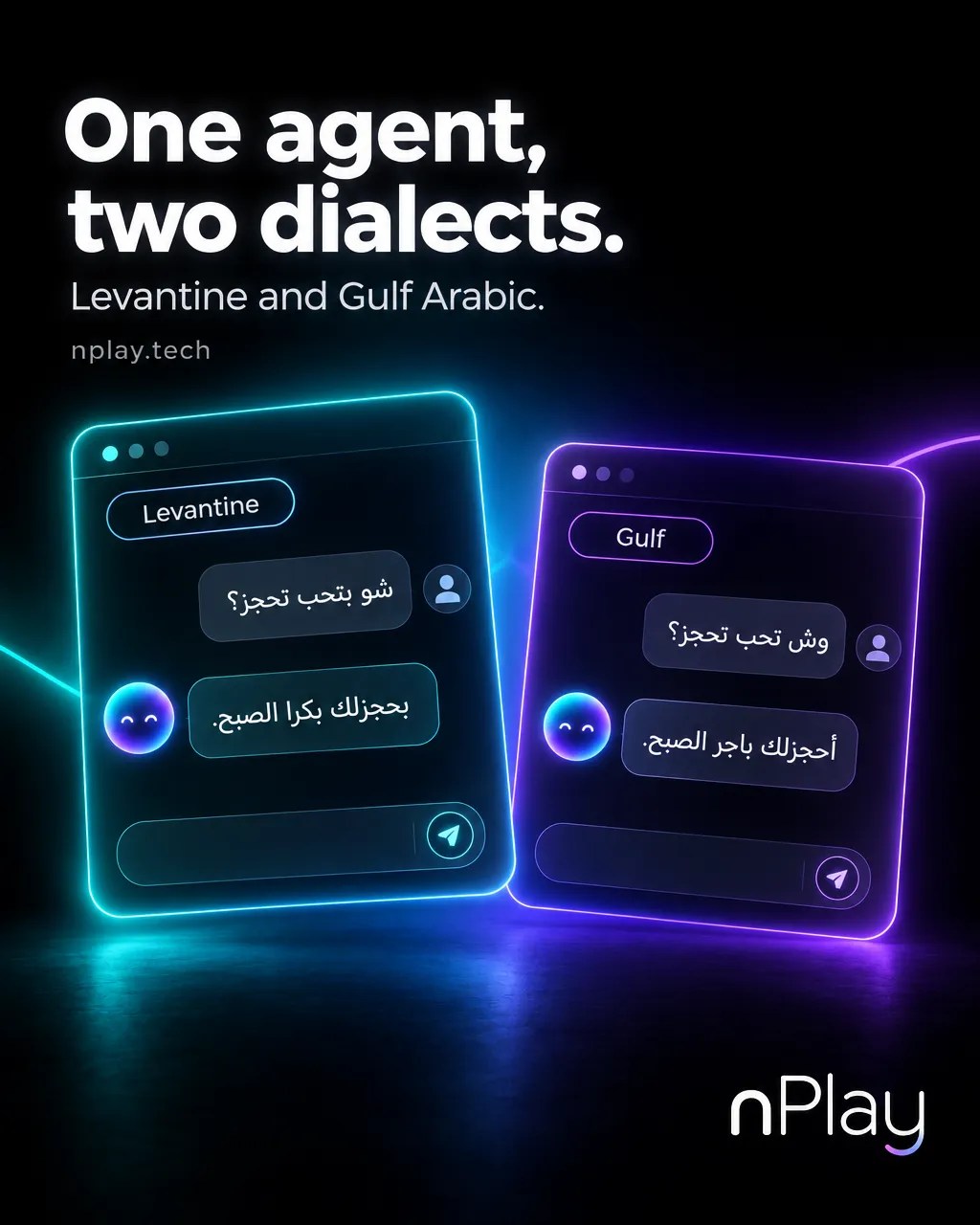
One AI agent that answers in two dialects, by NplayAI agents for customer service by Nplay
In short, custom ai toy for brands works best when it starts from a clear goal. Nplay plans custom ai toy for brands around your audience, your space and your budget. If you are comparing options for custom ai toy for brands, ask for a live demo before you decide. We are happy to answer any question about custom ai toy for brands.
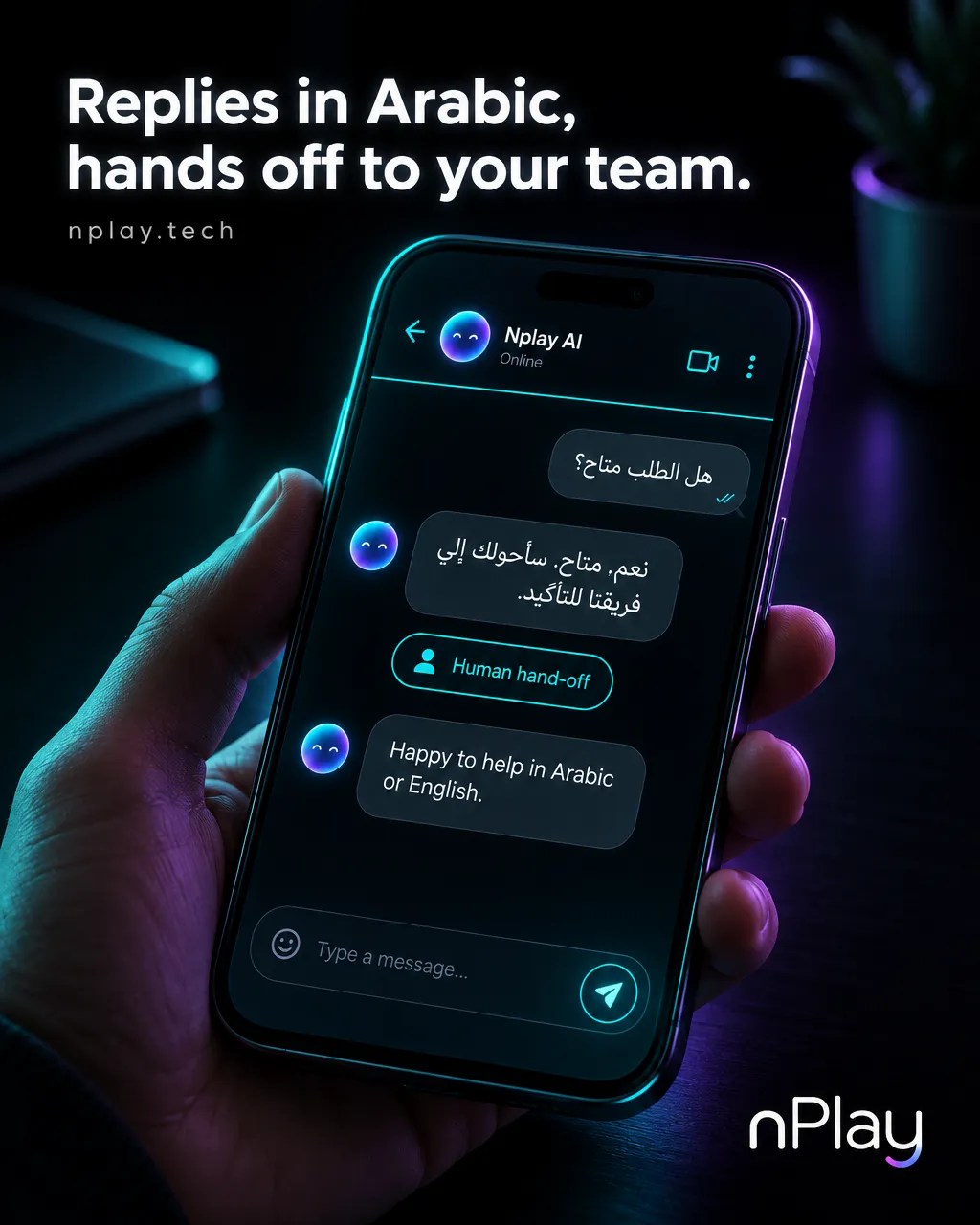
AI agent handing a conversation to the team, by Nplay
Hologram display price jordan: a practical guide from Nplay. This article covers what matters about hologram display price jordan, from the first idea to delivery.
What drives a hologram display price? Jordan’s buyers should look at size, content, installation and support. It is the first question on almost every hologram enquiry, and we understand why. We still do not answer it with a figure, because “a hologram” can mean a 21.5-inch counter unit or a whole memorial hall, and the same sentence would be wrong for both. What we can do is show you how buyers of hologram displays in the region should think about the problem: the formats, the five things that move a quotation, and the questions to put to any supplier. For the pricing models behind it, read our guide to budgeting for immersive tech.
Table of contents
Why we do not publish a hologram price
Search for hologram display price and you will find plenty of pages that quote a single figure. They are usually describing one product in one room with one piece of content, and the number does not travel. A hologram display in a Riyadh showroom and a hologram installation in a heritage hall in Jordan share a word and very little else.
So this page gives you structure instead. The aim is that after five minutes you can write a brief that any supplier, including us, can price on like terms, and you can tell when a quotation leaves something out.
One ground rule first. We call everything here a hologram because clients and visitors do. In practice there are two engineering families, the transparent-screen box and the projection system, and our comparison of the two explains how to choose. Cost depends on which family you are in, so start there.
Formats
Five formats, five different purchases
Format
What you are buying
What moves the cost
Buy, rent or lease
Nplay Halo Box (86-inch)
A complete transparent-LCD cabinet with 40-point touch, 4K camera, microphone array and the software platform
Chassis (aluminium or metal), processor configuration, software subscription, content, support plan
Purchased as a unit; event rental is discussed per project
Halo Box Mini (21.5-inch)
A counter-top unit for reception desks and small retail spaces, portrait or landscape
Same drivers at smaller scale; content is often the larger share
Purchased as a unit
Rear-projection hologram screen
Projector, black-glass screen, structure and a scripted film
Room height and throw distance, projector class, structure, cabling, calibration, the film
Project work, itemised per work package
Virtual promoter silhouette
A filmed presenter mapped onto an acrylic silhouette by a projector, finished to match the building
1. Size and count. The Halo Box comes as an 86-inch portrait unit, 2071 × 600 × 1242 mm, weighing 119 kg in aluminium or 240 kg in metal, or as a 21.5-inch Mini. One unit is a different conversation from ten. For projection, size means the screen or the surface, and the projector class it demands: ultra-short throw for small rooms, short throw for larger rooms, long throw for halls.
2. Content. A hologram without content is an expensive empty cabinet. You can choose from a media library of ready-made 3D assets, order custom work from our studios, or upload your own. Scanning a physical product, filming a presenter or teaching an AI avatar a knowledge base each adds a production effort that has nothing to do with the hardware.
3. Installation and site. The box ships complete; you connect power and internet. Projection needs a survey, cabling, a structure, projector selection and calibration before anything appears. At a national memorial we itemised the work into content creation, hardware and installation, and the last two were as important as the projectors.
4. Software and support. The box runs a cloud platform for content, avatars and live streaming, normally on a subscription. Support and maintenance plans, studio kits and 3D scanning are options, so check which are in and which are out.
5. Ownership model. Buying a unit, renting for an event and placing advertising on a hologram network are three different budget lines. Under our Halo Ads model, advertisers buy airtime by the spot instead of buying a display at all.
Content is the line that surprises people
When a quotation comes back higher than expected, content is usually the reason. Ask yourself what will actually appear inside the box or on the screen, and who will make it.
If you already own 3D models or brand films, adapting them is the lightest route. If you have a physical product, scanning converts it into a 3D asset that can rotate in the display. If you want a person, you can film a presenter in our XR studio and project it, or build an AI avatar that answers questions, which needs a knowledge base prepared by your team. If you want a story told across a hall, you are commissioning a film, with scripting, scene design and 3D production.
None of these is better or worse. They are different amounts of work, and a supplier who prices the hardware without asking about content has left the largest variable blank. Our 3D content studio scopes content as its own line so you can see it.
Market context
A market that is still forming
30.7%Forecast compound annual growth of the global holographic display market, 2023 to 2030Industry research cited in Nplay’s market brief
52,018MProjected market size in USD by 2030, from 6,109 million in 2022Industry research cited in Nplay’s market brief
Before you ask
Ten questions to put to any hologram supplier
Is this a transparent-screen box or a projection system, and why is that right for my room?
How bright is my room, and what brightness is the display rated for?
What is included: hardware, software subscription, content, installation, training?
Who makes the content, and how many revisions does the quotation cover?
Can I use my own 3D models and films, and in what formats?
How is the unit delivered, and what does the site need: power, internet, structure, ceiling height?
What support and maintenance are included, and what does year two look like?
If I rent for an event, what is covered: delivery, set-up, content, staff on site?
How do I update content after launch, and who can do it?
What happens if I want to add a second unit or move the first?
What to send us for a quotation you can compare
The shortest route to a real figure is a short brief. Send us a photograph of the space, the ceiling height if it is indoors, the lighting conditions, the audience and how long they will stand there, the content you already own, and the dates. Tell us whether the hologram is for an event, a permanent site or an advertising campaign, in Amman, Riyadh or elsewhere in the region.
We will tell you which format fits, what the quotation will contain, and what you can do yourself to reduce it. If you want to explore the product side first, the Nplay Halo Box page lists the full specification, and our earlier hologram cost overview covers the same ground from a different angle.
Because the format, the number of units, the content and the installation change the answer completely. We publish the cost drivers and the questions to ask so you can compare any quotation on like terms.
Is a hologram box cheaper than a projection hologram?
It depends on the room and the content. A box is budgeted by unit count and needs no installation. A projection is budgeted by the room, with survey, structure, cabling and calibration added. Neither is automatically cheaper.
Can I rent a hologram for an event in Jordan or Saudi Arabia?
Event rental is possible for some formats and is scoped per project. Tell us the dates, the venue and the content, and we will confirm what is available and what is included.
What is usually left out of a hologram quotation?
Content production, year-two support, and the software subscription are the most common gaps. Ask for each line to be shown separately.
Quick questions about hologram display price jordan
Who is hologram display price jordan for? Companies and institutions that want a clearer, faster experience for their customers and visitors.
How long does hologram display price jordan take? It depends on the size of the project and the content needed. We confirm the timeline after a short discovery call.
How do I start with hologram display price jordan? Contact the Nplay team in Amman or Riyadh and we will suggest a clear first step.
Does hologram display price jordan work in Arabic and English? Yes. We prepare the content in both languages from day one.
Holographic display in a mall atrium by NplayHologram display box showcase by NplayLife-size hologram museum guide by Nplay in Jordan
In short, hologram display price jordan works best when it starts from a clear goal. Nplay plans hologram display price jordan around your audience, your space and your budget. If you are comparing options for hologram display price jordan, ask for a live demo before you decide. We are happy to answer any question about hologram display price jordan.
How to choose a hologram: a practical guide from Nplay. This article covers what matters about how to choose a hologram, from the first idea to delivery.
A hologram in a shop window is easy to admire and easy to buy wrongly. The mistake is rarely the technology. It is the fit: too much daylight, a screen nobody passes at the right distance, or content that nobody has time to update. This is the checklist we use when a shop, showroom or mall kiosk owner in Amman asks how to choose a hologram display. It supports our hologram rental in Amman page, and you can use it with any supplier, ours included.
Table of contents
Three things people call a hologram
The first step in how to choose a hologram display is to agree on the word. Customers in Amman use it for three different products, and each suits a different shop.
A transparent-LCD box is a lit cabinet with a see-through screen. Content shot on a black background appears to float inside it, and a real product can stand behind the glass. Our Nplay Halo Box is this: an 86-inch unit for lobbies and flagship stores, and a smaller Mini for counters. A rear-projection screen is a projector throwing an image onto a dark screen or film; it can be large, but it needs a dim room. A virtual presenter is a filmed person projected onto a cut-out silhouette at the entrance, a greeter that plays a message but does not answer questions.
If you want the technical side of the first two, our comparison of the hologram box and projection hologram goes deeper. This guide stays with the shop floor.
Compare
Which option fits which shop
A qualitative guide. Your own space can overrule any row, which is why the next section matters.
Option
Works best when
Watch out for
Typical content
Transparent-LCD box (Halo Box)
The shop is lit, people walk up to it, and a product or a presenter should stand in front of them
Fixed size, heavy cabinet, needs floor space and a power point
3D scenes on black, a product inside, an AI avatar, short video
Rear-projection screen
You control the light and want a large scene or a feature wall
Daylight washes it out; needs installation, throw distance and calibration
Scripted 3D film, brand story, presenter footage
Virtual presenter on a silhouette
You want a greeter at the door and no staffed desk
It is a recording, not a conversation; needs a dim corner
A short welcome, a promotion, a store guide
Standard screen or poster
The message is simple and the budget or space is tight
Less novelty; may not stop the passer-by
Offers, menus, timed campaigns
Site check
Six things to measure in your shop before you ask for a quote
Ambient light: stand at the planned spot at midday and at night. Bright glass frontage favours a box; a controlled dim corner is needed for projection.
Footfall path: where do people walk, where do they pause and which way do they face? Place the display on the path, not in the best-looking corner.
Height and distance: a life-size figure should be read at eye level from a comfortable distance, not from a cramped aisle. Mark the viewing spot on the floor.
Floor space and access: measure the door, the lift and the route from the street. A box is heavy and arrives as one piece.
Power and internet: a wall socket within reach and a Wi-Fi or LAN connection are enough for the Halo Box. Projection adds cabling and a mounting structure.
Reflections: look for ceiling lights or shop windows that will bounce into the glass. Tell the supplier; they can advise on angle and position.
Decide the content before the display
The display is the container. What visitors remember is what appears in it. Before you shortlist hardware, answer three questions. What should a passer-by see in the first few seconds? What should someone who stops be able to do: watch, rotate a 3D product, ask a question? And what language do they expect?
For a shop the usual content options are a 3D model of a hero product, short video loops with a black background, and an AI avatar that greets people and answers common questions in Arabic and English from a knowledge base you provide. The avatar suits a showroom where customers ask about ranges, opening hours or service; a model suits a boutique with a few strong products. If you are weighing the avatar route, read about the AI hologram first.
Then ask who updates it. A hologram that shows last season’s offer is worse than no hologram. Our cloud dashboard lets a shop manager schedule new videos and playlists without a visit, but someone has to own that task each month.
Illustrative scenario: a perfume boutique in a mall
This is an illustrative scenario, not a client story. A boutique in an Amman mall has bright shop lighting, a glass front and three signature fragrances. A projection screen would struggle in that light. A Halo Box beside the entrance could show each bottle as a rotating 3D model while the real bottle stands inside the cabinet, and a short Arabic and English loop would explain the notes. If the owner later wants customers to ask questions, an avatar can be added to the same box.
Change the scene and the answer changes: a showroom with a dim demo room might prefer projection, and a small counter might only need the Mini. That is why we start with the room.
Rental or purchase: how to think about it
Many shops should rent first. A box for one season, a launch or a mall activation lets you see how customers behave in front of it, which spot works, and how often content needs to change. We discuss rental and purchase per project; we do not publish terms here because they depend on duration, content and location. If you are budgeting, our guide to what drives hologram cost in MENA explains the line items without quoting figures.
When you ask suppliers about either route, ask the same short list: what is included (content, installation, support), what happens if the display fails, who owns the content you commission, and what the cloud dashboard costs to keep running.
FAQ
How to choose a hologram display: frequently asked questions
Will a hologram display work in a bright mall unit?
A transparent-LCD box such as the Halo Box is built for lit spaces, with anti-glare glass, so it suits a bright shop. A rear-projection screen needs a controlled, dim spot. Check the light at the exact position first.
Do I need an installer for a hologram box?
The Halo Box ships as a complete unit; you connect power and internet and we pair it to the cloud dashboard. Projection is different: it needs a survey, cabling and calibration.
Can the display speak Arabic?
Yes. The AI avatar works in Arabic and English, and you choose persona, voice and the knowledge it answers from. Video and 3D content can be produced in both languages.
Should I rent or buy a hologram display?
For a first project we usually suggest talking about rental or a trial period, then purchase if the display earns its place. Send us your shop details and we will discuss both options for your brief.
Who is how to choose a hologram for? Companies and institutions that want a clearer, faster experience for their customers and visitors.
How long does how to choose a hologram take? It depends on the size of the project and the content needed. We confirm the timeline after a short discovery call.
How do I start with how to choose a hologram? Contact the Nplay team in Amman or Riyadh and we will suggest a clear first step.
Does how to choose a hologram work in Arabic and English? Yes. We prepare the content in both languages from day one.
Holographic display in a mall atrium by NplayHologram display box showcase by NplayLife-size hologram museum guide by Nplay in Jordan