Category: English

  • How to choose an immersive training platform in Saudi Arabia

    How to choose an immersive training platform in Saudi Arabia

    Immersive training platform saudi arabia: a practical guide from Nplay. This article covers what matters about immersive training platform saudi arabia, from the first idea to delivery.

    Training managers in Saudi Arabia are being offered VR headsets, 3D lessons, simulators and AI tutors, often in the same meeting. They are different tools for different jobs, and buying the wrong one is expensive. This guide sets out the options, the questions to put to any VR training company in Saudi Arabia, and a low-risk way to start. We also describe where Nplay Scholar, our 3D learning platform still at concept stage, and Nplay Academy, our training arm, fit.

    How to choose an immersive training platform in Saudi Arabia

    Why traditional training stalls, and what immersive training changes

    Search for an immersive training platform Saudi Arabia or a VR training company Saudi Arabia and you get dozens of offers that sound alike. Behind them is one problem. Training that depends on slides, videos and on-the-job shadowing has three weaknesses. It is passive, so retention suffers. Textbooks and videos give limited engagement with complex concepts. And practising on the real thing can be expensive, risky or slow to scale.

    An immersive training platform changes the learner’s role. Instead of reading about an engine, they pull it apart, rotate a component, read its specification where they are looking and answer a question about it. Instead of hearing about a safety procedure, they rehearse it where a mistake costs nothing.

    That promise is real, and it is also easy to oversell. Immersive does not automatically mean better. It means better for certain goals, at a cost that only makes sense if the right tool is used for the right job. The next section separates them.

    The options

    Five ways to train, and what each is for

    ApproachBest forNeeds a headset?Limit
    Video and slidesAwareness, policy, short briefingsNoPassive; little hands-on practice
    3D interactive learning in a browserUnderstanding parts, systems and layouts; anatomy, mechanics, equipment inductionNo, VR is optionalNot a substitute for practising a full procedure
    VR procedural simulatorRehearsing a procedure or emergency with hand controllersYesHigher effort to build per procedure
    AI presenterLectures, briefings and questions in several languagesNoAnswers only from the material you provide
    On-the-job trainingFinal competence on real equipmentNoExpensive, risky and slow to scale

    Where Nplay Scholar, Nplay Academy and our simulators fit

    We organise our own offer by those same jobs, and we are plain about what is delivered and what is not.

    Nplay Academy is our training arm and already delivers VR training programmes. Our VR training simulators cover the procedural layer, where a learner practises with controllers.

    Nplay Scholar is the knowledge and exploration layer. It is a 3D interactive learning platform from Nplay Academy in which learners explore, dissect and manipulate 3D objects in real time, with hotspots, animations and quizzes. Trainers build courses in a web portal without coding. It runs in a browser, with VR as an optional mode, and supports multiplayer collaboration. Scholar is a concept in development, and we are selecting pilot institutions in Saudi Arabia and Jordan before an official regional launch.

    Nplay Orator, also in development, adds an AI presenter for the lecture and the questions.

    These are layers of one approach: Scholar teaches the parts, a simulator teaches the procedure, an AI presenter answers the questions, and on-the-job practice confirms competence.

    Market context

    A small base in the region, and a young audience

    3%MENA’s share of the global immersive technology market in 2023, a small base with room to growIndustry research cited in Nplay’s market brief
    65%Of Saudi Arabia’s population is under 35, a learner base used to interactive toolsThird-party research cited in Nplay’s market brief

    Which organisations get the most from it

    The pattern we see is organisations that teach the same complex material to many people at several sites. Schools and universities use 3D lessons for anatomy, mechanics, chemistry and architecture; our university campus use case shows how a campus fits around them. Medical schools want to dissect organs and rehearse procedures without a cadaver or a patient. Military academies and vocational schools teach machinery, vehicles and safety procedures where errors are dangerous. Corporate and government training teams need the same induction delivered identically across many sites.

    If that describes your organisation, the case for an immersive training platform is strongest where the material is hard to see, dangerous to practise or costly to repeat. If your training is mostly policy and awareness, video may be all you need.

    Buying questions

    Questions for any VR training company in Saudi Arabia

    • Which learning goal does this tool serve, and what would you use instead if it does not?
    • Do learners need headsets, or does it run in a browser as well?
    • Can our own instructors build and update courses, and how much training do they need?
    • Can we import our own models, such as CAD or BIM files, and who owns the finished content?
    • Is the platform available in Arabic and English, including hotspots and voice-over?
    • What learner data do we get: scores, time on task, interaction paths?
    • Can many learners train across sites from one cloud platform?
    • What is delivered today and what is in development? Show us a running course.
    • How is it licensed, and what happens to the course if we stop?

    A pilot that tells you something

    A good pilot is small, real and measured. Choose one course that training staff already teach and that has a known difficulty: a piece of equipment that learners confuse, a procedure where errors are costly, a topic with poor test results. Agree in advance what will be measured, for instance completion, quiz results, time to competence and instructor feedback, and compare with a group that trains the usual way.

    Whichever VR training company Saudi Arabia buyers shortlist, use your own instructors in the build as far as possible. If they cannot author or adjust content, you will be dependent on the supplier for every change. Make sure that 3D models come from your own files or an agreed studio, and that you keep the content.

    Run it for one cycle. Then decide with data whether to extend, change or stop. We would rather a client stopped after a pilot that showed a tool did not fit than roll out something that nobody uses. For a deeper view of how simulators are used, read our article on VR training simulators in Saudi Arabia, and for how 3D lessons compare with textbooks see 3D interactive learning versus textbooks.

    FAQ

    Immersive training platform: frequently asked questions

    Is Nplay Scholar available now?

    No. Scholar is a concept in development by Nplay Academy. We are selecting pilot institutions in Saudi Arabia and Jordan to validate it with real courses.

    Does Nplay deliver VR training today?

    Yes. Nplay Academy delivers VR training programmes, and our VR training simulators cover procedures that need hand controllers.

    Do learners need VR headsets for an immersive training platform?

    Not always. Scholar is designed to run in a web browser, with VR as an optional mode for institutions that have headsets.

    Who should we talk to first, the platform or the content team?

    Start with the learning goal and the course you want to improve. The right immersive training platform Saudi Arabia institutions adopt follows from that, and so does the right content.

    Further reading: Virtual reality (Wikipedia)

    Quick questions about immersive training platform saudi arabia

    Who is immersive training platform saudi arabia for? Companies and institutions that want a clearer, faster experience for their customers and visitors.

    How long does immersive training platform saudi arabia take? It depends on the size of the project and the content needed. We confirm the timeline after a short discovery call.

    How do I start with immersive training platform saudi arabia? Contact the Nplay team in Amman or Riyadh and we will suggest a clear first step.

    Does immersive training platform saudi arabia work in Arabic and English? Yes. We prepare the content in both languages from day one.

    immersive training platform saudi arabia: Virtual 3D event space built by Nplay
    Virtual 3D event space built by Nplay
    VR training for your team, by Nplay
    VR training for your team, by Nplay
    VR training demo by Nplay at an exhibition
    VR training demo by Nplay at an exhibition

    In short, immersive training platform saudi arabia works best when it starts from a clear goal. Nplay plans immersive training platform saudi arabia around your audience, your space and your budget. If you are comparing options for immersive training platform saudi arabia, ask for a live demo before you decide. We are happy to answer any question about immersive training platform saudi arabia.

  • How to use AI agents to accelerate your business: a 90-day playbook

    How to use AI agents to accelerate your business: a 90-day playbook

    How to use AI agents: a practical guide from Nplay. This article covers what matters about how to use AI agents, from the first idea to delivery.

    Knowing how to use AI agents in business is mostly a question of order: what to do first, what to leave alone and when to decide. This playbook splits the first 90 days into four phases, defines what “accelerate” should mean for your team, lists the mistakes we see most and ends with the metrics and roles you need. It is the method behind our AI agents service.

    How to use AI agents to accelerate your business: a 90-day playbook

    What “accelerate” really means

    “Faster” is easy to claim and hard to prove. Before you ask how to use AI agents in business, agree which kind of faster you want. There are four, and they are different measurements.

    • Cycle time: how long one piece of work takes from request to completion.
    • Waiting time: the hours a request sits in a queue, an inbox or someone’s approval list.
    • First response: how long a customer or colleague waits before anything happens.
    • Handovers: how many times the work moves between people or systems, and how much is lost each time.

    In our experience waiting time is usually the largest of the four and the least visible, because nobody is working on the request while it waits. That is where agents help most. For a wider view of the departments involved, see AI agent use cases by department.

    Sources of speed

    Where acceleration actually comes from

    Five mechanisms. An agent that uses none of them is not making you faster.

    1

    Removing waiting

    The agent picks up a request the moment it arrives and does the first steps, instead of the request waiting for a person to open it.

    2

    Parallel work

    While a person deals with one customer, the agent prepares the next: finds the record, drafts the reply, collects missing details.

    3

    Round-the-clock coverage

    Enquiries that arrive at night or on a weekend get an answer or a logged request, so the morning starts with a prepared queue.

    4

    Instant look-ups

    Orders, balances, policies and availability are fetched in seconds across systems rather than by switching between screens.

    5

    Drafting

    Replies, summaries and reports arrive as a first draft for a person to correct and approve, which is quicker than starting blank.

    The playbook

    Four phases, 90 days

    Dates are a guide. A simple process with open systems can move faster; a process with many approvals or legacy systems will take longer.

    1. Days 1 to 15: pick and map one process

      Choose a repetitive, rules-based, high-volume process using the method in our guide to AI agents for business. Write the goal and definition of done. Map every step, system, exception and decision-maker. Record the baseline: cycle time, waiting time, first response and handovers as they are today.

    2. Days 16 to 45: connect knowledge and systems, and build

      Clean and load the knowledge the agent will rely on. Connect the systems it needs, such as the helpdesk, CRM or ERP, with the narrowest permissions that work. Write the guardrails: what it may do alone, what needs approval and when it must hand over. Build, then test with real past cases in Arabic and English.

    3. Days 46 to 75: pilot with human hand-off

      Release to a small group of customers or staff with a visible route to a person. Review conversations daily at first, weekly later. Fix knowledge gaps, tighten guardrails and log every hand-off with its reason.

    4. Days 76 to 90: measure and decide

      Compare the four measures with your baseline. Read the failures as carefully as the successes. Then choose one of three: widen the scope, fix and extend the pilot, or stop. Stopping with a clear reason is a valid result.

    Pitfalls

    Common mistakes that slow the 90 days

    • Starting with the hardest process because it hurts most. Begin with one that is clear and low-risk, and earn the right to tackle the hard one.
    • Skipping the baseline, so the result cannot be proved either way.
    • Automating a process nobody agrees on. Settle the rule first; the agent will only repeat it faster.
    • Feeding the agent outdated or contradictory documents and expecting accurate answers.
    • Giving broad system access for convenience instead of the narrowest permissions the job needs.
    • Hiding the hand-off. If customers cannot easily reach a person, trust falls quickly.
    • Treating launch as the finish. Knowledge changes, and so must the agent’s sources and tests.
    Measuring

    What to measure, how, and what to watch

    Every row uses a number you already collect or can collect from your own systems. We have not put figures in the table, because the right target is your baseline.

    MetricHow to measureWhat to watch
    Cycle timeTimestamp at request and at completion, compared with the baseline periodSpeed gained by skipping checks; look at error and re-open rates alongside
    Waiting timeTime between arrival and the first action by a person or the agentA queue that merely moved elsewhere, such as the hand-off inbox
    First responseTime from customer message to first useful replyFast but unhelpful answers; sample the replies for quality
    Hand-off rate and reasonsCount of conversations passed to a person, tagged by reasonA rising rate signals a knowledge gap; a rate near zero may mean the agent is guessing
    Resolution without re-contactCustomers who do not return on the same issue within a set periodClosing too early to look good
    Staff time on repeat workShort weekly survey or time sample of the team that owns the processTime moved into cleaning up agent errors

    How to read your day-90 results

    Put the baseline and the pilot numbers side by side, then read a good sample of real conversations. The numbers show direction; the conversations show why. If cycle time and first response improved and hand-offs are for sensible reasons, widen the scope to the next step of the same process before adding a new one.

    If the numbers are flat, look at the cause before you blame the technology. A process with unclear rules, or a knowledge base nobody maintains, will give flat results with any tool. Our note on cost, risk and oversight is in AI agent ROI, guardrails and governance, and the customer service and sales use case shows a typical first scope.

    People

    Team roles checklist

    One person can hold two roles in a small company, but every role needs a name next to it.

    • Process owner: decides the rules, accepts the results and owns the outcome.
    • Knowledge keeper: maintains the policies, product sheets and answers the agent relies on.
    • Systems contact: grants and reviews access to the CRM, ERP, helpdesk or email.
    • Reviewer: reads a sample of conversations each week and flags errors.
    • Escalation owner: the person or team who receives hand-offs and answers fast.
    • Executive sponsor: clears blockers and makes the day-90 decision.
    FAQ

    How to use AI agents: frequently asked questions

    Is 90 days realistic for a first agent?

    For one well-defined process with reachable data, it is a sensible frame for a working pilot and a first decision. Complex approvals, legacy systems or weak documentation extend it. We would rather tell you that at the mapping stage than promise a date.

    What if the pilot does not help?

    Then you have learned cheaply. Usually the cause is an unclear rule, weak knowledge or the wrong process, and each can be fixed or the project stopped. The measures in the table show which.

    Do we need to replace our existing systems?

    No. An agent connects to what you already run, where an interface exists. Our operations and back-office use case shows how this works alongside ERP and accounting tools.

    Can we run this in Arabic only, or English only?

    Yes, or both. Most teams in Jordan and Saudi Arabia need both, so we test every agent in each language and in mixed messages before the pilot.

    Further reading: NIST AI Risk Management Framework

    Quick questions about how to use AI agents

    Who is how to use AI agents for? Companies and institutions that want a clearer, faster experience for their customers and visitors.

    How long does how to use AI agents take? It depends on the size of the project and the content needed. We confirm the timeline after a short discovery call.

    How do I start with how to use AI agents? Contact the Nplay team in Amman or Riyadh and we will suggest a clear first step.

    Does how to use AI agents work in Arabic and English? Yes. We prepare the content in both languages from day one.

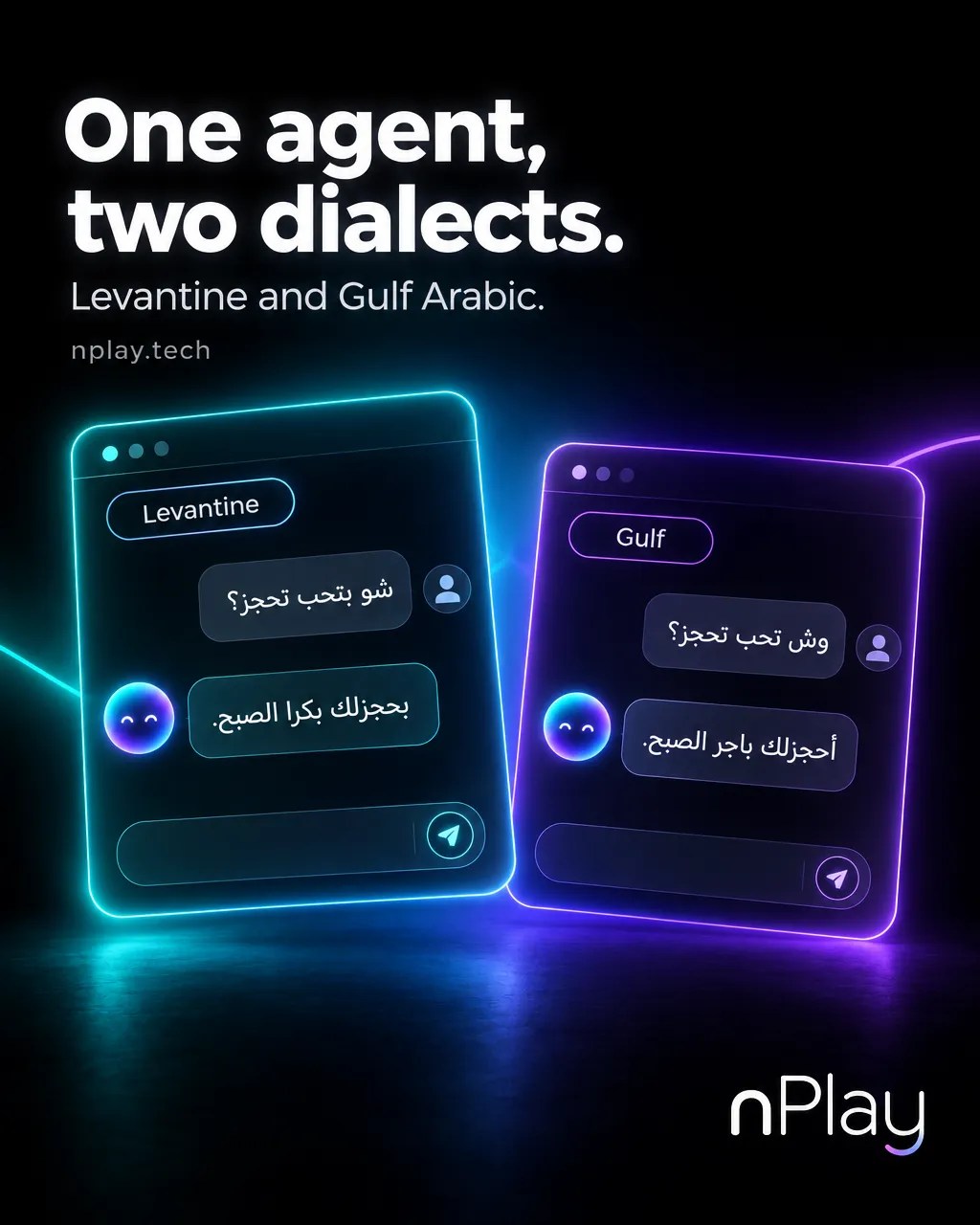
    One AI agent that answers in two dialects, by Nplay
    One AI agent that answers in two dialects, by Nplay
    AI agents for customer service by Nplay
    AI agents for customer service by Nplay
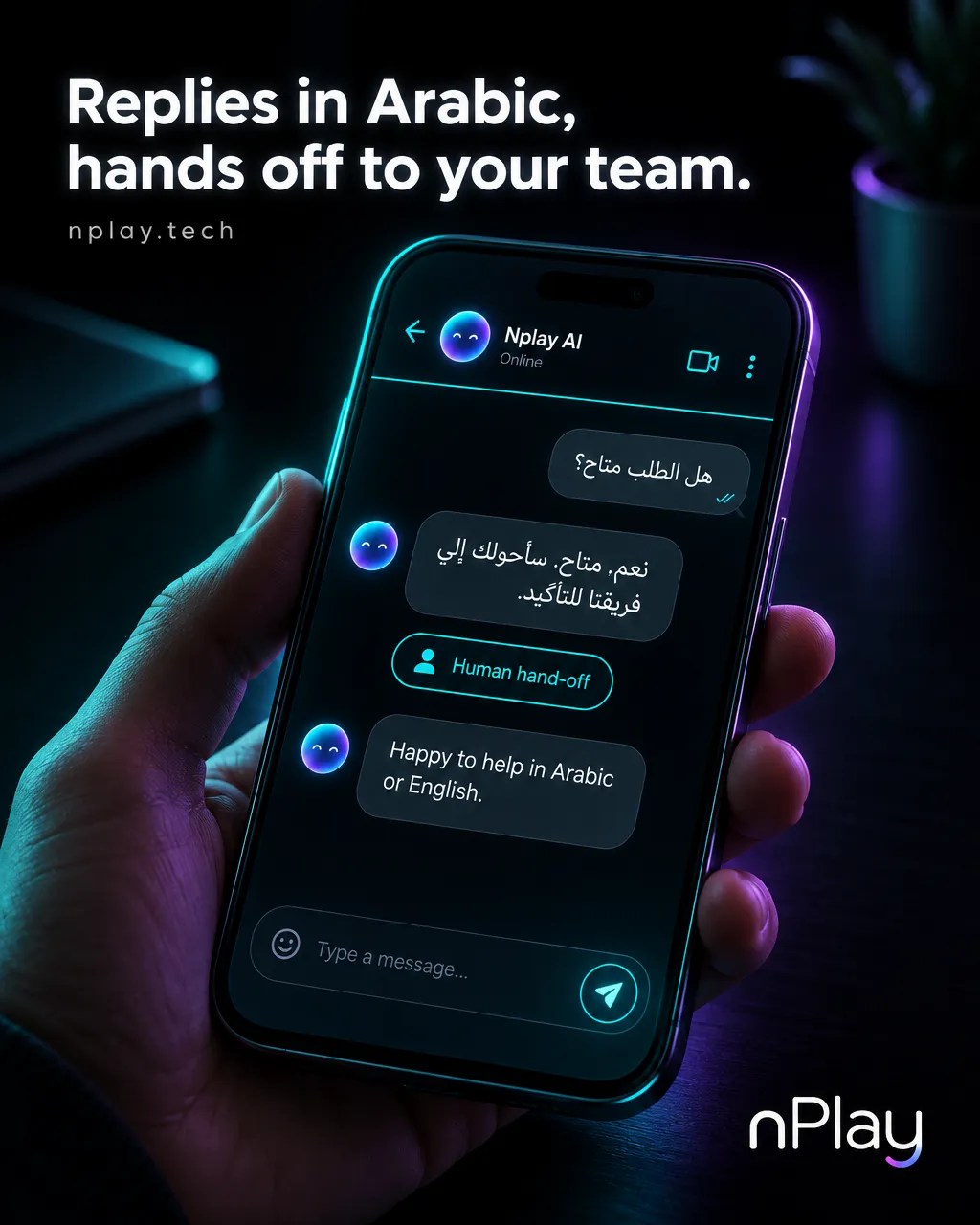
    AI agent handing a conversation to the team, by Nplay
    AI agent handing a conversation to the team, by Nplay
  • How to budget for immersive tech: from freemium to enterprise

    How to budget for immersive tech: from freemium to enterprise

    Hologram cost mena: a practical guide from Nplay. This article covers what matters about hologram cost mena, from the first idea to delivery.

    Hologram cost, MENA-wide, depends on size, content and how long you need it. The most common question we get after a demo is not “does it work” but “how do we budget for it”. Holograms, cloud signage, VR training and 3D platforms do not fit the line items most finance teams already have. This post explains the pricing models we use — freemium and pay-as-you-grow entry points, Basic, Professional and Enterprise subscriptions, revenue share, per-booking commission and per-unit hardware with cloud access — without quoting a single figure, because the figures depend on you. For what drives the numbers, see our hologram cost guide for MENA.

    How to budget for immersive tech: from freemium to enterprise

    Why there is no price list, and what there is instead

    We do not publish prices, and it is not coyness. A hologram box in a lobby, a network of 32 signage players across a retail chain and a VR training course for a refinery have almost nothing in common as purchases except that they came from the same company. Publishing one number for any of them would mislead more buyers than it helped.

    What we publish instead is the structure. Our pricing strategy has a stated aim — “affordable entry for new customers, scalable solutions as clients expand their use of immersive technologies, sustainable revenue growth through recurring income models” — and four families of model that follow from it. If you know which family your project falls into, you can build a budget line before you ever ask us for a figure, and you can compare our quotation with anyone else’s on like terms.

    The first thing to accept is that immersive technology is four costs, not one: software (a platform, usually subscribed), hardware (a display, a player, a headset, a badge), content (3D models, films, avatars, knowledge bases) and service (installation, training, support). Most budgeting mistakes come from funding the hardware as capital expenditure and forgetting that the other three recur.

    With that in mind, here are the models, from the lowest commitment to the highest.

    Freemium, pay-as-you-grow and usage-based

    The entry-level family exists so that a team can try before it commits capital.

    Freemium. Free, limited access to core features — in our strategy the examples are a basic 3D showroom on Nplay Vista and limited hologram usage on the Halo Box platform. The purpose is to let a marketing or training team prove a use case internally with real content before anyone signs a purchase order. Budget line: nothing, plus the staff time to build a first piece of content.

    Pay-as-you-grow. The free or basic tier plus paid additions as they are needed: extra features, AI enhancements, extended usage. This suits a team that knows the technology works and wants to expand it one step at a time — a second screen, an avatar, an analytics module. Budget line: a small recurring amount that steps up with each addition, which finance teams tend to prefer to a lump sum.

    Usage-based. Charging on transactions, AI requests or audience engagement rather than on seats or devices. A hologram avatar that answers questions, a virtual store that takes orders or a signage network that sells ad plays can all be metered. Budget line: variable, tied to activity — which means the cost rises only when the thing is being used, and an unused installation costs little.

    Entry-level models are how most of our relationships begin, and the point at which a client moves to a subscription is usually the point at which they stop calling it a pilot.

    Basic, Professional, Enterprise

    Subscription plans are the backbone of our software products — Nplay Beam for cloud signage, the Halo Box platform, and the products in development such as Nplay Orator and Nplay Scholar. They are billed monthly or annually, with a discount for annual payment, and they come in three tiers.

    Basic covers the fundamental features with limited customisation: enough to run a screen, a box or a course with our standard templates. Professional adds more integrations and AI-powered recommendations — connecting to your systems, letting the platform suggest content or courses, deeper scheduling. Enterprise is full customisation, advanced analytics and priority support, for organisations where the platform is operationally important and downtime is a cost.

    How to choose: count what you will connect to and who will be watching. A single café screen is Basic. A chain that wants signage tied to its promotions calendar is Professional. A hospital or a national site where a failed screen matters is Enterprise. Move up only when the feature you need is in the next tier; we would rather a client grew into Enterprise than started there and resented it.

    For digital signage pricing specifically, the per-device subscription usually comes with a media storage allowance per device, and the hardware player is a separate one-off line. That combination — one device, one subscription — is the same whether you run one screen or one hundred.

    Models

    Which model fits which product

    ModelWhat you pay forTypical Nplay fitBudget behaviour
    FreemiumNothing for core features; limited usageBasic Vista showroom; limited Halo Box useZero, plus staff time
    Pay-as-you-growAdditional features, AI, extended usageAdding avatar or analytics to a box; more Beam screensSmall recurring, steps up
    Usage-basedTransactions, AI requests, engagementAvatar Q&A; virtual store orders; ad playsVariable with activity
    Basic / Professional / Enterprise subscriptionMonthly or annual per device or accountBeam, Halo Box platform, Orator, ScholarPredictable recurring; annual discount
    Revenue share on placementsA share of advertising or content revenueHalo Ads network; Beam ad overlaysNo upfront; income-linked
    Per-booking commission or venue licenceA fee per booked event, or an annual licenceFrontRow (in development)Zero upfront or fixed annual
    Per-unit hardware + cloudEach display or badge, plus cloud accessSlate badges; Beam players; Halo BoxCapital per unit, recurring cloud
    Per-project fee + subscriptionModelling a project, then platform accessVista real-estate projectsProject fee, then recurring
    One-time setup + subscriptionCustomisation, integration, then cloud and updatesEnterprise and white-label deploymentsLarger upfront, then recurring

    Revenue share, commission and per-unit — paying the way the industry pays

    Some sectors have their own economics, and forcing a subscription on them is a mistake. Our strategy defines four industry-specific arrangements.

    Media and advertising: revenue share. On the Halo Ads network and on Beam screens that carry advertising overlays, the host location or partner takes a share of the revenue from ads and content placements rather than paying for the screen. Advertisers, in turn, buy time by the spot. Nobody in advertising wants to buy a display; everyone understands a share of the inventory.

    Events and ticketing: per-booking commission or venue licence. For Nplay FrontRow, our 3D booking platform in development, a venue can either pay nothing upfront and share revenue per event, or pay a development fee plus an annual licence and keep everything it earns. The choice is between testing demand and owning the channel.

    Retail and corporate: per-unit hardware plus cloud. Nplay Slate badges and Beam players are priced per display unit with cloud access on top, with volume pricing as unit counts rise. The same logic applies to the Halo Box: a hardware unit plus the software subscription, with content, 3D scanning, studio kits and maintenance plans as options.

    Real estate: subscription plus per-project fees. Vista is subscribed for 3D visualisation, with a fee per project modelled.

    In every case the question to ask is: how does this industry already pay for the thing we are replacing? Match that and the budget conversation gets short.

    Custom builds, white label and what actually drives the number

    The top of the range is enterprise customisation and white-label. A client wants our platform under their brand, integrated with their systems, with features built for them. The model is a one-time setup fee plus a subscription: the setup covers customisation, integration and initial cloud storage; the subscription covers ongoing cloud, software updates and support.

    Whatever the model, five things drive the figure in any quotation, and a buyer who knows them can predict most of the answer. Hardware size and count: an 86-inch box costs more than a 21.5-inch one, and 32 players cost more than four. Content: a filmed presenter, a 3D reconstruction and an AI knowledge base are three different production efforts; content is the line that varies most. Installation: a box that ships complete and plugs in, versus projection that needs survey, cabling, structures and calibration. Integration: connecting to booking, payment, HR or building systems. Support level: first-year support is included in our proposals; what happens in year two is a choice.

    Two things reduce the number. Early-adoption terms — discounted first-year pricing and referral programmes — and bundling, where a client takes two products together, such as a Vista showroom with a Halo Box for a developer’s sales centre, or Beam with Slate for an events venue. Long-term contracts carry loyalty terms.

    Our advice on VR training cost, hologram cost in MENA or digital signage pricing is always the same: scope one site, agree the model, run it for a season, and let the result set the budget for the roll-out. The cost guide explains the drivers for holograms in more depth.

    FAQ

    Hologram cost MENA: frequently asked questions

    Why does Nplay not publish prices?

    Because the same product can be a single lobby unit or a network of dozens, with content ranging from a template to a 3D film. We publish the pricing models and the cost drivers instead, and quote each project after scoping.

    Can we start without a capital purchase?

    Yes. Freemium and pay-as-you-grow tiers, usage-based pricing, revenue share on advertising placements and the no-upfront FrontRow model all allow a start with little or no capital.

    What is the difference between the Basic, Professional and Enterprise tiers?

    Basic gives fundamental features with limited customisation; Professional adds integrations and AI-powered recommendations; Enterprise adds full customisation, advanced analytics and priority support. All are monthly or annual, with a discount for annual payment.

    Is support included?

    First-year support and maintenance are included in our proposals; ongoing support is part of the subscription or a maintenance plan, depending on the model.

    Further reading: Holography (Wikipedia)

    Quick questions about hologram cost mena

    Who is hologram cost mena for? Companies and institutions that want a clearer, faster experience for their customers and visitors.

    How long does hologram cost mena take? It depends on the size of the project and the content needed. We confirm the timeline after a short discovery call.

    How do I start with hologram cost mena? Contact the Nplay team in Amman or Riyadh and we will suggest a clear first step.

    Does hologram cost mena work in Arabic and English? Yes. We prepare the content in both languages from day one.

    hologram cost mena: Holographic display in a mall atrium by Nplay
    Holographic display in a mall atrium by Nplay
    Hologram display box showcase by Nplay
    Hologram display box showcase by Nplay
    Life-size hologram museum guide by Nplay in Jordan
    Life-size hologram museum guide by Nplay in Jordan

    In short, hologram cost mena works best when it starts from a clear goal. Nplay plans hologram cost mena around your audience, your space and your budget. If you are comparing options for hologram cost mena, ask for a live demo before you decide. We are happy to answer any question about hologram cost mena.

  • Saudi Arabia’s metaverse moment: $7.6B of the GCC’s $15B

    Saudi Arabia’s metaverse moment: $7.6B of the GCC’s $15B

    Saudi metaverse: a practical guide from Nplay. This article covers what matters about Saudi metaverse, from the first idea to delivery.

    The Saudi metaverse opportunity is real, but it starts with practical projects. PwC estimates that the metaverse will contribute USD 15 billion to GCC economies by 2030, and that Saudi Arabia will take about USD 7.6 billion of it — more than half. Behind that figure sit three facts about the Kingdom: a population that is 65 per cent under 35, a tourism target of 100 million visitors, and a set of giga-projects being designed digitally before they are built physically. Here is how we read the numbers and where metaverse, digital twin and virtual event work fits.

    Saudi Arabia's metaverse moment: $7.6B of the GCC's $15B

    Half of the Gulf’s metaverse economy, in one country

    The most quoted number in this conversation comes from PwC: the metaverse will contribute USD 15 billion to GCC economies by 2030, and Saudi Arabia will take a share of about USD 7.6 billion — more than half. A 2023 report on metaverse technology published in the Kingdom, drawing on PwC, McKinsey, Gartner, BCG and Ipsos, adds the investment picture: 51 per cent of GCC metaverse investment sits in Saudi Arabia, followed by the UAE at 22 per cent, Qatar at 11, Kuwait at 7, Oman at 5 and Bahrain at 4.

    Set against the global figures the Gulf numbers are small. McKinsey’s 2022 estimate was that metaverse applications could reach USD 5 trillion in value by 2030; the global market was already roughly USD 47 billion in 2022. Gartner predicted in 2022 that by 2026 a quarter of the world’s population would spend at least an hour a day in some form of metaverse — a prediction whose deadline is this year, and which we would call directionally right and numerically generous.

    What makes the Saudi figure interesting is not its size but its concentration. Half of a regional economy landing in one country, whose government has an explicit digital transformation agenda, whose population is unusually young and whose largest construction projects are designed in 3D before a foundation is poured. That is a market with a shape, and the shape tells you where the work will be.

    Where the money goes

    Metaverse investment by sector, GCC to 2030

    SectorShare of metaverse investment by 2030What it looks like in practice
    Travel and tourism22%Virtual tours of heritage sites, destination previews, hologram guides at visitor centres
    Games16%Gaming platforms and virtual social communities popular with Gen Z
    Retail and e-commerce15%Virtual showrooms, 3D product configurators, avatar-staffed stores
    Banking and financial services12%Virtual branches, immersive customer service, training
    Real estate7%Digital twins of developments sold before completion; 3D property walkthroughs
    Government services3%Virtual service centres, public consultations, national event exhibitions
    Other sectors25%Education, healthcare, industry, culture

    Tourism first: 22 per cent of investment and 100 million visitors

    The sector breakdown in the same report puts travel and tourism at about 22 per cent of total metaverse investment by 2030 — the largest single sector, ahead of games, retail and banking. In Saudi Arabia that is not a coincidence. The national target is to raise the travel sector’s contribution to around 10 per cent of GDP by welcoming 100 million tourists by 2030, and the UNWTO reported in October 2022 that the Kingdom led Arab countries with 18 million visitors in the first nine months of that year.

    Bringing 100 million people to a country they have mostly never seen is a marketing problem before it is an infrastructure problem, and it is exactly the problem virtual experiences solve. The report describes the use case plainly: virtual tours of cultural and historical landmarks, and exhibitions that let tourists plan trips safely and explore destinations virtually ahead of the visit. A UNESCO World Heritage tomb in the north-west of the Kingdom has already been recreated in a public virtual world — the first such site to be, according to the report.

    This is where much of our own Saudi work concentrates. A destination experience that puts a hologram tour guide and an AI avatar in a visitor centre, speaking the visitor’s language; a heritage metaverse that lets a family in Jakarta walk a historic city before they book the flight. The demand is not for technology. It is for arrivals, and the technology is the brochure that can be walked through.

    A country where 65 per cent of people are under 35

    The second fact is demographic and it changes how every other number should be read. According to the same report, 65 per cent of Saudi Arabia’s population is under 35 years old. This is the generation that grew up with games as a social space, that is comfortable represented by an avatar, and that — in the report’s international survey — sees the metaverse’s positive potential in overcoming disabilities (39 per cent), enhancing creativity (37 per cent) and travelling the world without moving (37 per cent).

    The report also notes that gaming already commands the largest share of consumer spending on AR and VR, at more than USD 3 billion worldwide in 2020, and that the games sector accounts for 16 per cent of forecast GCC metaverse investment. For a brand, this means the interface problem that slowed enterprise VR in older markets is largely absent. A Saudi audience does not need to be taught what an avatar is or how to navigate a 3D space. They need a reason to be there.

    That shifts the design brief. In markets with older populations we spend time making virtual spaces feel like websites. In Saudi Arabia we spend time making them feel like places, because the audience already expects a place. It also explains why immersive learning lands well: our Nplay Scholar training platform, in development, is aimed at exactly this audience of students and young professionals who would rather dissect a 3D engine than read about one.

    Giga-projects: designed as twins, delivered as experiences

    The third fact is physical. Saudi Arabia is building a series of giga-projects — new cities, coastal destinations, entertainment districts — at a scale and pace that has no recent parallel. The report cites one of them as having produced the first 3D digital twin of a physical place, and another as planned to be the largest theme park in the world, nearly three times the size of its best-known American equivalent.

    What matters for this discussion is how they are being built. A giga-project is designed in 3D, coordinated in 3D and increasingly marketed in 3D long before it exists. That means the digital twin is not an add-on commissioned after opening; it is a by-product of construction. The same model that coordinates the contractors becomes the virtual tour for investors, the training environment for staff, the facilities-management platform for the operator, and — eventually — the metaverse destination for visitors who cannot travel.

    We wrote about the operational side in digital twins for Saudi giga-projects. The point here is commercial: when the twin already exists, the marginal cost of a virtual experience falls sharply, and the question for a brand or institution stops being “should we build a metaverse presence” and becomes “what should people do in the model we already have”.

    Four practical entry points for brands and institutions

    Forecasts do not tell a marketing director or a dean what to do on Monday. Based on the projects we have delivered and the enquiries we receive in Riyadh, these are the four entry points that are working now.

    • Virtual and hybrid events. A branded booth at a virtual exhibition or a 3D venue alongside the physical one. Low risk, measurable, and the fastest way for a team to learn how their audience behaves as avatars. Our Nplay Nexus platform, in development, is built for this.
    • Digital-twin campuses and facilities. A university, a hospital or a headquarters modelled in 3D, used for admissions, training, wayfinding and maintenance. We delivered a complete campus twin for a Jordanian university and the same approach transfers directly to Saudi institutions.
    • Heritage and destination experiences. Hologram guides and AI avatars in visitor centres, virtual tours for the audience abroad. Where the 22 per cent of tourism investment will be spent.
    • Immersive training. 3D, interactive training for industrial, medical and vocational learners — a young workforce entering new sectors quickly.

    Underneath all four we are building Nplay Core, a low-code immersive engine intended to let organisations assemble these environments themselves with AI avatars, multiplayer and real-time rendering. It is in development, and it is our bet on what the USD 7.6 billion will actually be spent on: not one metaverse, but thousands of small, purposeful places.

    What the numbers do not say

    We should end with the caveats, because a company that sells immersive technology quoting a USD 7.6 billion forecast should be read carefully.

    The figures come from a 2023 report and from analysts writing in 2022, at the height of metaverse enthusiasm. Some of the platforms it mentions have since retreated; some of the predictions — Gartner’s hour-a-day by 2026 — will be judged this year and will probably fall short. The report itself lists four drawbacks that have not gone away: the technology is not affordable for everyone, privacy and security are unresolved, virtual worlds can be addictive, and regulation lags behind development.

    Our reading is that the direction is right and the timing is slower than the headlines. The projects that are being funded in Saudi Arabia today are not “the metaverse” in the abstract; they are digital twins, virtual events, heritage experiences and training environments with a budget line and a KPI. That is where we work, and it is where we would advise any brand to start — with one purposeful place, measured, before believing anyone’s total.

    FAQ

    Saudi metaverse: frequently asked questions

    Where does the $7.6 billion figure come from?

    PwC’s estimate, as cited in a 2023 Saudi report on metaverse technology, that the metaverse will contribute USD 15 billion to GCC economies by 2030 with Saudi Arabia taking about USD 7.6 billion — more than half.

    Which sector attracts the most metaverse investment in the Gulf?

    Travel and tourism, at about 22 per cent of total investment by 2030 according to the same report, followed by games (16%), retail and e-commerce (15%) and banking (12%).

    Does Nplay build metaverse platforms for Saudi clients?

    Yes. We deliver digital twins, virtual events and heritage and destination experiences from Riyadh and Amman, and we are developing Nplay Nexus, Scholar and Core for virtual events, immersive training and low-code immersive environments.

    Do users need VR headsets?

    No. Everything we build runs in a browser and on mobile first; headsets add immersion where the client wants it but are never a requirement for visitors, students or delegates.

    Further reading: Extended reality (Wikipedia)

    Quick questions about Saudi metaverse

    Who is Saudi metaverse for? Companies and institutions that want a clearer, faster experience for their customers and visitors.

    How long does Saudi metaverse take? It depends on the size of the project and the content needed. We confirm the timeline after a short discovery call.

    How do I start with Saudi metaverse? Contact the Nplay team in Amman or Riyadh and we will suggest a clear first step.

    Does Saudi metaverse work in Arabic and English? Yes. We prepare the content in both languages from day one.

    Virtual 3D event space built by Nplay
    Virtual 3D event space built by Nplay
    VR training for your team, by Nplay
    VR training for your team, by Nplay
    VR training demo by Nplay at an exhibition
    VR training demo by Nplay at an exhibition

    In short, Saudi metaverse works best when it starts from a clear goal. Nplay plans Saudi metaverse around your audience, your space and your budget. If you are comparing options for Saudi metaverse, ask for a live demo before you decide. We are happy to answer any question about Saudi metaverse.

  • Mixed Reality for Business: 7 Use Cases That Are Actually Working in 2026

    Mixed Reality for Business: 7 Use Cases That Are Actually Working in 2026

    NPLAY BLOG · 2026-07-22 · By Hani Alhaj, Founder & CEO

    Mixed Reality for Business: 7 Use Cases That Are Actually Working in 2026

    Mixed Reality is the youngest of the immersive technologies — and the one moving fastest from demo to daily work. Unlike VR (which replaces the world) or simple AR (which overlays it), MR anchors interactive digital objects to your real space. Here are the seven use cases we see delivering real value in 2026, and what they mean for businesses in our region.

    Mixed Reality for Business: 7 Use Cases That Are Actually Working in 2026

    1. Holographic work instructions

    Technicians see step-by-step 3D guidance pinned directly onto the real machine they’re servicing — the right panel highlighted, the right bolt circled. Error rates drop, training time shrinks, and expertise scales beyond your most senior engineer.

    2. Design and engineering review

    A full-size 3D prototype on a real conference table, walked around and marked up by a team before anything is manufactured. Architecture and industrial design teams cut review cycles dramatically.

    3. MR-enhanced retail and showrooms

    Virtual products on real shelves, configurable in place: change the color of the sofa in the actual showroom, see the kitchen with different finishes. This pairs naturally with our digital twins — one 3D asset serves web, VR and MR.

    4. Remote expert assistance

    A remote specialist sees what the on-site worker sees and draws annotations that stick to real equipment. For companies operating across MENA’s geography, this collapses travel budgets.

    5. Immersive training with real context

    Where VR training excels at dangerous or rare scenarios, MR training excels at procedures on real equipment — practice on the actual machine with digital safety layers. The two combine: see our training simulators.

    6. Museums and cultural storytelling

    Artifacts that reassemble themselves, historical figures who appear beside real exhibits. For a region rich in heritage, MR lets institutions add layers of story without touching the physical collection — an approach we pioneered in Jordan’s landmark museums.

    7. Events with a memory

    Exhibition stands where visitors’ phones and MR headsets reveal content invisible to the naked eye. The stand becomes a treasure hunt — dwell time and recall soar.

    Where to start: pick one workflow with measurable pain — training time, error rate, review cycles — and pilot MR there. Six weeks and one metric beat a year of committee slides.

    Getting mixed reality for business right in MENA

    Arabic content, right-to-left interfaces, and heat-and-dust-ready hardware choices are not afterthoughts — they decide whether an MR deployment survives contact with reality here. That’s the gap Nplay fills: strategy, 3D content, hardware and Arabic-first delivery under one roof, from Amman and Cairo. Start with our immersive experiences service or talk to us about a pilot.

    Frequently Asked Questions

    What is the difference between Mixed Reality and Augmented Reality?

    AR overlays digital content on the real world; MR goes further — digital objects understand and interact with your physical space, hiding behind real walls and responding to touch. MR needs spatial-mapping headsets, while basic AR runs on phones.

    Is Mixed Reality ready for business use in 2026?

    Yes, for focused workflows: work instructions, design review, remote assistance and training show measurable ROI today. Broad consumer MR is still emerging, but enterprise use is proven.

    Does Nplay build Mixed Reality apps in Arabic?

    Yes — we build MR, AR and VR experiences with native Arabic and English interfaces and content, serving Jordan, the GCC, MENA and China.

    Work with Nplay: we design and build VR, AR, MR and hologram experiences in-house, in Arabic and English, from our offices in Amman and Cairo. Talk to us →

    ← All articles

    Further reading: Extended reality (Wikipedia)

    Quick questions about mixed reality for business

    Who is mixed reality for business for? Companies and institutions that want a clearer, faster experience for their customers and visitors.

    How long does mixed reality for business take? It depends on the size of the project and the content needed. We confirm the timeline after a short discovery call.

    How do I start with mixed reality for business? Contact the Nplay team in Amman or Riyadh and we will suggest a clear first step.

    Virtual 3D event space built by Nplay
    Virtual 3D event space built by Nplay
    VR training for your team, by Nplay
    VR training for your team, by Nplay
    VR training demo by Nplay at an exhibition
    VR training demo by Nplay at an exhibition

    In short, mixed reality for business works best when it starts from a clear goal.

  • The last paper badge: how reusable e-paper badges cut event waste

    The last paper badge: how reusable e-paper badges cut event waste

    Reusable event badges jordan: a practical guide from Nplay. This article covers what matters about reusable event badges jordan, from the first idea to delivery.

    Ask about reusable event badges: Jordan’s conferences and hospitals reprint the same badges every event. Walk past the exit of any exhibition on its final afternoon and you will find the bin: hundreds of laminated badges, lanyards and plastic sleeves, printed for three days and thrown away in one. Nplay Slate is our answer — a reusable e-paper badge rewritten by NFC, tracked over Bluetooth and updated across a whole venue by LoRa. This is how it works, what it saves, and where it goes after the event.

    The last paper badge: how reusable e-paper badges cut event waste

    Three days of use, one afternoon in the bin

    Every event organiser knows the ritual. Weeks before opening, a print run: names, companies, QR codes, colour-coded stripes for exhibitor, visitor, speaker and press. Then the reprints — the sponsor who changed their title, the delegate whose name was misspelt, the 200 walk-ins on day one who need a badge in ninety seconds. Then, on the last afternoon, the bin by the exit.

    The badge is the smallest item on the budget and one of the most wasteful. It is printed for a life of three days. It cannot be corrected without being replaced. It tells the organiser nothing once it has been handed over: not where the delegate went, not which sessions were full, not whether the exhibitor’s stand was ever visited. And it repeats, in full, at every event, forever.

    The environmental case is obvious — paper, lamination, plastic sleeves and the energy behind them — but the operational case is the one that persuades finance departments. Printing, distribution and the staff hours to manage it are recurring costs with no residual value. When Nplay set out to design Slate, the brief was simple: a badge you buy once, rewrite every time, and never throw away.

    Why e-paper, and why it needs no power to hold an image

    The display on a reusable badge has to do something unusual: hold a crisp, readable image for days without a battery, in bright exhibition-hall light, at a weight that hangs comfortably on a lanyard. Electronic paper is the only display technology that does all three.

    E-paper works by physically moving pigment particles to form an image; once they are in place, they stay there. The screen draws energy only in the moment it is rewritten and none at all to keep showing what it shows. That is why a Slate badge can be lightweight, durable and — for the basic NFC model — entirely without an internal power source. It is also why it reads like paper: high contrast, no glare, visible from any angle, comfortable for a name to be read at two metres.

    Rewriting is where the radios come in. Nplay describes the NFC rewrite as “wireless printing”: hold the badge against a reader or a phone and the new name, role, photo or agenda appears in a few seconds. No printer, no lamination, no queue. A walk-in registration at a Riyadh conference becomes tap, wait, hand over.

    The display is only half of the product, though. What makes the badge useful to an organiser rather than merely greener is what the radios do after the image is on the screen.

    Three radios

    NFC, Bluetooth and LoRa — what each one does on the badge

    TechnologyWhat it does on the badgeWhat the organiser or venue gets
    NFCRewrites the e-paper display by tap; transfers contact and access dataInstant re-issue, no printer; walk-in registration in seconds; badge doubles as an access card
    Bluetooth (lifetime battery)Keeps the badge connected; supports monitoring and real-time locationSession attendance, hall occupancy, lost-badge location, dynamic content in retail and hospitality
    LoRaLong-range, low-power network that reaches many badges at oncePush an agenda change or alert to every badge in the venue simultaneously; GPS tracking across large sites
    Cloud dashboardReal-time updates, analytics, user and group managementDesign badges by drag-and-drop, assign groups, see who is where, export reports
    EncryptionData encryption and secure cloud storageDelegate data protected on the badge and in the platform

    What “up to 50 per cent” means in practice

    Nplay’s business plan for Slate states that the system reduces operational costs by up to 50 per cent. It is worth being precise about what that figure refers to, because it is a claim in our own plan rather than an independent audit.

    The comparison is between the recurring costs of paper badges — printing, lamination, distribution, on-site reprints and the labour behind them, repeated at every event — and the cost of a reusable fleet that is bought once and rewritten. The saving accumulates with use. An organiser running one small event a year will see little of it; a venue, an events company or a university running dozens of events on the same fleet will see most of it, because the badge that cost money last month costs a tap this month.

    There are savings the figure does not capture. Corrections that took a reprint now take a tap, so registration queues shrink. Attendance data that used to be guessed from badge scans at the door is now available per session. And the environmental line — a significant reduction in paper waste — turns into something an organiser can put in a sustainability report, which increasingly matters when the client is a ministry, a giga-project or a listed company.

    We would rather under-promise here. Ask us to model the numbers on your own event calendar, and hold us to the result.

    The badge that becomes a price tag, a pass and a patient sign

    A reusable badge is only reusable if there is something to reuse it for, and this is where the design of Slate diverges from a conference giveaway. The same e-paper card with the same three radios serves five sectors.

    • Events — attendee, exhibitor and staff badges for conferences, expos and trade shows, rewritten per event and per day.
    • Retail — electronic shelf labels for dynamic pricing, updated across a store or a chain from the cloud instead of by hand.
    • Corporate offices — digital ID badges, access cards and visitor passes, with monitoring of who is on site.
    • Education — student IDs, classroom management tools and digital note-taking.
    • Hospitals — displays for surgery rooms and patient rooms, updated from the nurses’ station rather than by whiteboard marker.

    This is why we describe Slate as smart signage as much as a badge. The technology that shows a delegate’s name on Monday shows a price on Tuesday and a room status on Wednesday. For venues that host mass gatherings — see our smart visitor experience use case — a badge that can be located and messaged across a large site is also a safety tool. And it pairs naturally with Nplay FrontRow, our 3D venue booking platform, which is designed with e-badge integration so that the seat you chose in 3D is the seat written to your badge.

    Where Slate is today, and the order we are building it in

    Slate is a product in development, and we prefer to say so plainly. Nplay’s roadmap builds it in the order the technology matures and customers need it.

    The first stage is NFC badge cards for employees and visitors, together with the dashboard that designs and rewrites them — the “wireless printing” core. The second adds Bluetooth-enabled cards with a lifetime battery for retail, shops, hotels and digital signage, and the dashboard functions for synchronising many devices and sharing content between them. The third brings LoRa networks for distributing content to whole fleets of cards at once, with GPS tracking for large sites.

    The market is moving in the same direction. Research cited in Nplay’s market brief projects a 17.14 per cent compound annual growth rate for the global e-paper market from 2022 to 2030, with one estimate putting it at USD 8.45 billion by 2030. Electronic shelf labels are already common in European retail; reusable badges are the next application, and events in the Gulf — with their scale, their sustainability targets and their appetite for visible innovation — are where we expect them to arrive first.

    If you run events, a venue or a retail chain in Jordan or Saudi Arabia and want to be part of the pilot, we would like to hear from you.

    How to run a paperless pilot without betting the event

    Nobody should switch a 5,000-delegate conference to a new badge system in one go, and we would not suggest it. The approach we recommend is smaller.

    Start with one group — speakers and staff, say, or a single exhibitor hall — and run e-paper badges alongside paper for the rest. Measure three things: how long registration takes for each group, how many reprints the paper group needed, and what the attendance data from the Bluetooth badges tells you that door counts did not. Then extend to the next event on the same fleet.

    Pair the badges with the screens. Nplay Beam, our cloud signage platform, can show the agenda, wayfinding and sponsor content across the venue’s displays from the same cloud that manages the badges, so an agenda change reaches the screens and the lanyards together.

    And keep one paper badge from the pilot. Frame it. With a little luck it will be the last one your organisation prints.

    FAQ

    Reusable event badges Jordan: frequently asked questions

    Does an e-paper badge need charging?

    The basic NFC badge has no internal power source: e-paper holds its image without power and is rewritten by tap. Bluetooth-enabled badges carry a lifetime battery for connectivity and location, sized to last the life of the badge.

    How is the badge rewritten at a busy registration desk?

    By NFC — hold the badge to a reader or a compatible phone and the new name, role and details are written in seconds. Nplay calls this “wireless printing”; there is no printer or lamination.

    Where does the “up to 50 per cent” cost saving come from?

    It is a figure stated in Nplay’s plan for Slate, comparing the recurring costs of printing, distributing and re-printing paper badges with a reusable fleet bought once and rewritten. The saving grows with the number of events run on the same fleet.

    Is Nplay Slate available in Saudi Arabia and Jordan now?

    Slate is in development, with NFC badges and the dashboard as the first stage. We are looking for event, venue and retail pilots in both markets — contact us to discuss.

    Further reading: Extended reality (Wikipedia)

    Quick questions about reusable event badges jordan

    Who is reusable event badges jordan for? Companies and institutions that want a clearer, faster experience for their customers and visitors.

    How long does reusable event badges jordan take? It depends on the size of the project and the content needed. We confirm the timeline after a short discovery call.

    How do I start with reusable event badges jordan? Contact the Nplay team in Amman or Riyadh and we will suggest a clear first step.

    Does reusable event badges jordan work in Arabic and English? Yes. We prepare the content in both languages from day one.

    VR training demo by Nplay at an exhibition
    VR training demo by Nplay at an exhibition
    Holographic display in a mall atrium by Nplay
    Holographic display in a mall atrium by Nplay
    Virtual 3D event space built by Nplay
    Virtual 3D event space built by Nplay

    In short, reusable event badges jordan works best when it starts from a clear goal. Nplay plans reusable event badges jordan around your audience, your space and your budget. If you are comparing options for reusable event badges jordan, ask for a live demo before you decide. We are happy to answer any question about reusable event badges jordan.

  • Projection mapping for museums and memorials: what actually gets installed

    Projection mapping for museums and memorials: what actually gets installed

    Projection mapping jordan: a practical guide from Nplay. This article covers what matters about projection mapping jordan, from the first idea to delivery.

    Planning projection mapping? Jordan’s museums use it to bring halls and objects to life. Most articles about projection mapping show a festival facade and stop there. This one is about what goes into a museum for good. In May 2023 we installed a route of hologram screens, a virtual speaker, floor projection and renewed dome projectors in a national military memorial in Jordan, in about three weeks. Here is what was installed, why each piece was chosen, and what a museum or heritage team should know before commissioning projection mapping in Jordan or Saudi Arabia.

    Projection mapping for museums and memorials: what actually gets installed

    Six work packages, one visitor route

    The memorial was established in 1977 and holds a rare collection of military weapons, uniforms and vehicles. The collection was strong; the halls were static. The brief in April 2023 asked for an immersive route through the building that respected the architecture, could be run by the museum’s own staff and could be ready within weeks.

    We scoped it as six work packages. A main-hall hologram presenting the country’s four historic rulers through a 3D narrative film, ending with the four together in a symbolic scene. Hologram video screens at the entrance and in a second exhibition hall. A virtual speaker welcoming visitors at the entrance. Floor projection in the tomb hall. Renewal of the dome projectors, which were badly placed. And facade projection mapping for a short-run ceremony.

    Five of the six ran on site in parallel between 11 and 31 May 2023, with survey, story, 3D production, installation and testing overlapping. The delivered system connects ten displays through Nplay Beam with a 5 GB media library, so the museum schedules and changes what plays without calling us. The full timeline is in the case study; this post is about the hardware decisions behind it, because those are the ones every museum hologram project in Jordan or elsewhere has to make.

    Rear projection onto a dark screen

    A hologram hall in a museum is a projection system, not a light-field device. A projector sits behind a black or dark glass screen and throws the image onto it from the rear. The screen is made of a material that reflects the projected light without distorting or scattering it, and its darkness is what gives the figures their contrast and keeps ambient light from washing them out.

    Size is a function of the room. In the memorial’s main hall the hologram structure was purpose-built and fed by a 3D narrative film we wrote, storyboarded and produced. In the second exhibition hall we noted that the venue’s two existing projectors could be reused to give roughly a 300-inch image. That is a general lesson: audit what the building already owns before specifying new projectors.

    What people call an AR hologram display is, in the words of our proposal, a system that combines “the real world with digital or virtual objects by projecting three or two-dimensional holographic images into glass surfaces”, seen through “a special screen film that helps capturing the holographic projection”. No glasses are needed. The trade-off is light: the room must be controlled. A hologram hall next to a glass atrium will disappoint unless the glazing is dealt with.

    Content for a hall is a film, and it should be written as one, with a beginning, a scene structure and an ending that lands. Our team drafted the story, reviewed it with the museum, sketched every scene and only then modelled it in 3D. Museums that skip the writing get a screensaver.

    A presenter who welcomes every visitor

    The most photographed piece in most heritage installations is the smallest: a life-size person who appears to stand at the entrance and speak. In the memorial this is the virtual speaker — a presenter filmed in our XR studio, cut out, and mapped with a hologram projector onto an acrylic silhouette shaped to the figure. The message auto-repeats, and the hardware was finished to match the building’s look.

    This is a people hologram: it “creates the illusion of an actual person being present in a physical location”. It is visible without glasses, it costs a fraction of a staffed welcome desk over a year, and it never varies its script. For a memorial the figure was a life-like soldier; for a museum it might be the founder, a curator or a historical figure whose likeness can be reconstructed in 3D.

    The workflow is short. Location and cabling first; script written and approved; presenter chosen, filmed, edited and approved; devices installed and a trial show run. At the memorial the character, script and video were complete within nine days of the start; installation followed the building works.

    Where a museum wants the figure to answer rather than recite, the same silhouette can be replaced by a Halo Box running an AI avatar, which is the approach we take for interactive museum designs where visitors ask questions.

    Hardware

    Which projector and surface goes where

    ElementSurfaceProjector classRoom conditionsContent
    Main-hall hologramPurpose-built rear-projection hologram structureLong throw (large hall)Controlled light, dark backdropScripted 3D narrative film
    Hologram video screensBlack-glass hologram screen, rear projectorShort throw (larger room); reuse of two venue projectors gave ~300 in.Low ambient lightHistorical films and archive footage
    Virtual speakerAcrylic silhouette cut to the figureHologram projectorEntrance, moderate lightFilmed presenter, auto-repeating
    Floor projection (tomb hall)The tomb surface, viewed from aboveLong-throw laser, ceiling mount at 8.7 mCeiling height, ceremonial protocol“Falling lights” particle animation
    Dome projectorsExisting dome, repositioned unitsTwo replacement projectorsCorrect throw and alignmentNew content written to fit the story
    Facade mappingBuilding exteriorTwo leased projectors, 2–4 day eventNight, exterior power2D/3D messages, archive footage, flag, artworks

    Falling lights indoors, a facade outdoors

    Two of the packages were not screens at all.

    The floor projection in the tomb hall projects beams and particles of light from the ceiling onto the tomb surface — an effect we called falling lights, designed to feel like walking through a garden. The hall is 8.7 metres high, which dictated a long-throw laser projector mounted on the ceiling. The content was storyboarded, reviewed with the museum and coordinated with the ceremonial protocol of the hall, because a wreath-laying has its own choreography and the light must serve it, not compete with it. Interactive tracking of visitors walking above was planned for a second phase.

    The facade projection mapping was different in kind. Two projectors were leased for a two-to-four-day event; 2D and 3D content — gratitude messages, archive footage of a historic battle, artworks and the national flag — was mapped onto the exterior. Facade mapping is a large, public and inexpensive canvas, but it is an event, not an installation, and it should be budgeted as one.

    The dome package is the unglamorous one that saves the most embarrassment: two existing projectors were incorrectly placed, so we surveyed new positions, removed and relocated the old units, installed new ones and wrote content that fitted the story. Many museums own projectors that were never aligned properly; fixing them is often the best return in the whole project.

    Three weeks, five tracks, one dashboard

    The reason the project fitted into three weeks is that we treated it as five parallel sub-projects, each with its own survey, story, production, installation and test phases. Site survey and cabling routes for every hall were complete within the first week. Scripts, storyboards and the floor-projection story were approved in the same window. 3D production, filming and editing ran while technicians built structures and pulled cable. Trial shows were run hall by hall.

    The other reason is control. Every display is a player on the same signage platform, so the museum’s own staff schedule films, swap footage for an anniversary and monitor whether a projector is on, from one dashboard. That is what turns a one-off show into interactive museum design that lasts.

    If you are planning projection mapping for a museum or memorial in Jordan or Saudi Arabia, the questions to answer first are about rooms, not technology: how high, how dark, how many visitors at once, and what ceremonies the space must still serve. Bring us those and we will bring the projector list.

    FAQ

    Projection mapping Jordan: frequently asked questions

    Does a hologram hall need a dark room?

    It needs controlled light. Hologram screens are black or dark to give high contrast and avoid interference; direct daylight on the screen will wash the image out. Atriums and glazed halls need blinds or a different position.

    How is the projector chosen?

    By throw distance and room size: ultra-short throw for small rooms, short throw for larger rooms, long throw for halls and auditoriums. Ceiling height decides the floor-projection unit — at 8.7 m we used a long-throw laser projector.

    Can museum staff change the content themselves?

    Yes. All displays run through Nplay Beam, so films, footage and schedules are changed from a cloud dashboard without a technician on site.

    How long does an installation like this take?

    The memorial project was proposed in April 2023 and executed on site between 11 and 31 May 2023, with five sub-projects running in parallel. Content writing and 3D production are the usual critical path.

    Further reading: ICOM museum definition

    Quick questions about projection mapping jordan

    Who is projection mapping jordan for? Companies and institutions that want a clearer, faster experience for their customers and visitors.

    How long does projection mapping jordan take? It depends on the size of the project and the content needed. We confirm the timeline after a short discovery call.

    How do I start with projection mapping jordan? Contact the Nplay team in Amman or Riyadh and we will suggest a clear first step.

    Does projection mapping jordan work in Arabic and English? Yes. We prepare the content in both languages from day one.

    projection mapping jordan: Holographic display in a mall atrium by Nplay
    Holographic display in a mall atrium by Nplay
    Hologram display box showcase by Nplay
    Hologram display box showcase by Nplay
    Life-size hologram museum guide by Nplay in Jordan
    Life-size hologram museum guide by Nplay in Jordan

    In short, projection mapping jordan works best when it starts from a clear goal. Nplay plans projection mapping jordan around your audience, your space and your budget. If you are comparing options for projection mapping jordan, ask for a live demo before you decide. We are happy to answer any question about projection mapping jordan.

  • VR relaxation pod explained: what SAKINA Pod is

    VR relaxation pod explained: what SAKINA Pod is

    Vr relaxation pod: a practical guide from Nplay. This article covers what matters about vr relaxation pod, from the first idea to delivery.

    A VR relaxation pod puts one person in a small, closed, quiet space for a short guided VR rest. SAKINA Pod is our concept for one, and it is in design development. This post explains what the category is, what we are designing into the shell, door, air and light, who it is for, and, just as important, what it is not.

    VR relaxation pod explained: what SAKINA Pod is

    What a VR relaxation pod is

    A vr relaxation pod is a small enclosed space designed around one activity: a short, guided VR session taken for rest. The headset provides the scene. The pod provides everything the headset cannot: a door that closes, clean air, a quiet interior and a clear signal about whether the space is free, in use or being prepared.

    Enclosing the experience matters because a headset in an open room hands the user a list of small worries. Is anyone watching? Is it noisy? Can I take this off and leave quickly? Who used it before me, and was the space cleaned? A person who is managing those questions is not resting. A pod treats each one as a design problem to be solved in the structure, instead of leaving it to a notice on the wall.

    That is the whole idea. A vr relaxation pod is a place and a routine for taking a few minutes out of a busy day. It is not a clinical device, and it does not need to be one to be worth designing carefully.

    SAKINA Pod: our concept, in design development

    SAKINA Pod is Nplay’s concept for a sealed, single-person, climate-controlled VR relaxation capsule. We want to be exact about its status. It is a concept in design development. Every specification in this post is indicative until it is frozen with a fabricator, and we are not claiming a price, availability, release date, pilot, certification or clinical result.

    The visual direction is black, graphite and warm grey, with electric blue and magenta accents and warm-white light inside. The line we have approved for it is “Rest, engineered.” It describes the approach: a few minutes of rest deserve the same engineering care as any other piece of shared equipment.

    The concept sits in a small family: Pod, Pod Clinical, Pod Open (an open-format CARE-VR version) and Cart. This post is about the sealed single-person Pod. The full concept page is SAKINA Pod.

    At a glance

    SAKINA Pod at a glance: design intent

    ElementDesign intentWhy it matters
    OccupancyOne occupant per sessionPrivacy is part of rest, so nobody shares the space
    ShellBlack anodised aluminiumA dark, calm exterior in the black, graphite and warm-grey palette
    DoorSmoked acrylic sliding door with a fail-safe lock and four independent safety provisionsA closed door is only acceptable if leaving is never in doubt
    VentilationHEPA-filtered active ventilation, with a purge between sessionsThe next person should not have to wonder about the air
    Light statesFive: ready, opening, occupied, purging, faultAnyone outside can read what the pod is doing
    Session lengthCapped at 15 minutesKeeps it a short break rather than an open-ended stay
    AcousticsTarget below 28 dBAA quiet interior; this is a design target, not a measured result
    Interior lightWarm whiteSoft light inside, apart from the accent colours outside

    The list of what it must not do

    Next to the feature list we keep a second list, written positively, of what the pod must never do. It keeps design reviews honest. Three things must not happen.

    • No trapped feeling. The smoked acrylic sliding door and the fail-safe lock, with four independent safety provisions, exist so that the person inside can always leave.
    • No unclear state. The five-state light tells staff and the next visitor whether the pod is ready, opening, occupied, purging or in fault.
    • No hygiene doubt. HEPA-filtered active ventilation and a purge between sessions deal with the air by design, not by reminder.

    Writing the list positively turns vague impressions (“it feels odd in there”) into items a review can check one by one. Does the door read as easy to leave? Is the state obvious from across the room? Would the next person trust the air? Each question maps to a feature in the table above.

    We go through each of these in more detail in designing a safe VR rest pod: door, ventilation and light.

    How a session is meant to feel

    In outline, and as design intent rather than a recording of a tested prototype: one person steps in, the sliding door closes and the light outside changes to show the pod is occupied. Inside there is quiet, warm-white light, moving filtered air, and a guided relaxation session in the headset.

    The session is capped at 15 minutes. That limit is deliberate. A vr relaxation pod in a shared space is a pause, not a destination, and a fixed cap keeps it that way for the next person in line. When the session ends the door opens, and the pod purges before it shows ready again.

    The acoustic target, below 28 dBA, is there because the quiet interior is half of the product. A guided session in a noisy cubicle is a worse experience than no session at all.

    Who it is for

    Who SAKINA Pod is designed for

    Anywhere people are busy, and a short, quiet, private pause would be welcome.

    Hospital and clinic operators

    A calm place on site for a short rest, kept separate from care and treatment.

    Airports and transport hubs

    A place to step out of a busy concourse for a few minutes of quiet.

    Corporate wellbeing teams

    A private break space inside the workplace, with a fixed session length.

    Universities

    A quiet pause point on a campus where quiet is hard to find.

    Malls and hotels

    A distinctive, calm amenity for guests and visitors.

    Designers and fit-out teams

    A concept with a stated design discipline they can react to and help shape.

    What SAKINA Pod is not

    SAKINA Pod is not a medical device. It is a calm, rest-focused space designed for short guided VR relaxation sessions, and nothing here says that it treats, cures or reduces pain, or helps with any condition.

    Published research reviews on VR for procedural pain and anxiety do exist. We cover that field separately, in our post on VR for pain and anxiety and on the VR for hospitals page, which is also not a medical device and has no FDA or CE approval. SAKINA Pod does not borrow conclusions from that research.

    It is also not a product you can order. There is no price, release date or pilot, and we are not quoting any. If you run a venue and want to shape the brief, that is the useful conversation to have now. For venue-by-venue thinking, read VR rest pods in hospitals, airports and workplaces.

    FAQ

    Frequently asked

    What is a VR relaxation pod?

    A closed, single-person space in which someone takes a short guided VR session to rest. The headset provides the scene; the pod handles privacy, air, noise and a clear signal of its status.

    Is SAKINA Pod available to buy?

    No. It is a concept in design development. There is no price, availability, release date, pilot or certification, and the specifications are indicative until frozen with a fabricator.

    Is SAKINA Pod a medical device?

    No. It is a calm, rest-focused space for short guided VR relaxation sessions. We make no clinical claims and do not say it treats or helps any condition.

    How long is a session in SAKINA Pod?

    The design caps a session at 15 minutes, so the pod stays a short pause and is ready for the next person.

    Further reading: Virtual reality (Wikipedia)

    Quick questions about vr relaxation pod

    Who is vr relaxation pod for? Companies and institutions that want a clearer, faster experience for their customers and visitors.

    How long does vr relaxation pod take? It depends on the size of the project and the content needed. We confirm the timeline after a short discovery call.

    How do I start with vr relaxation pod? Contact the Nplay team in Amman or Riyadh and we will suggest a clear first step.

    Does vr relaxation pod work in Arabic and English? Yes. We prepare the content in both languages from day one.

    Virtual 3D event space built by Nplay
    Virtual 3D event space built by Nplay
    VR training for your team, by Nplay
    VR training for your team, by Nplay
    VR training demo by Nplay at an exhibition
    VR training demo by Nplay at an exhibition
  • Guiding a million visitors: technology for mass gatherings

    Guiding a million visitors: technology for mass gatherings

    Smart visitor experience: a practical guide from Nplay. This article covers what matters about smart visitor experience, from the first idea to delivery.

    When a site receives more people in a week than most cities hold, the questions do not change — where am I, what do I do next, where is my child — but the scale breaks every tool designed for a museum or a mall. In 2024 we prepared a set of technical proposals for operators of holy sites and pilgrimage seasons, built on three products we ship: Nplay Beam signage, the Halo Box and a multilingual AI avatar. This post sets out the ideas as a smart visitor experience for Hajj, Umrah and any other mass gathering.

    Guiding a million visitors: technology for mass gatherings

    A signboard cannot answer, and it cannot change

    A printed sign at a mass gathering answers one question, in a handful of languages, until the route it points to closes. It cannot tell a visitor that a gate is congested right now, it cannot say where the nearest lost-and-found station is from where the visitor is standing, and it cannot respond when someone asks it something in a language the designers did not anticipate.

    Our 2024 proposals for holy-site operators started from the aim of “comprehensive, integrated and sustainable solutions covering all aspects of the pilgrim’s journey, from registration to performing the rituals”. That framing matters. The visitor’s experience begins at home, weeks before travel, and ends after the last ritual; the technology has to cover the whole arc, not just the crowded middle.

    We organised the ideas into three groups — field services on the ground, enrichment services that add understanding and reassurance, and digital services that reach people before and between visits — and we insisted on one constraint: every idea must run on a product we already deploy. A mass gathering is the last place to debut a new platform. The use-case page presents the programme; here we walk through how each piece works and why.

    Lost-and-found, smart signs and bookings that remove queues

    Integrated lost-and-found. Screens distributed across the site show detailed information on lost-and-found station locations, managed centrally through the signage platform. Each screen carries a QR code that opens an AR map: the visitor points their phone camera at the surroundings, the app pins their position, and the screen or phone shows the nearest station with a clear route. When a station moves or a route closes, the update goes to every screen from one dashboard.

    Smart guidance signboards. Physical signs stay, but an AR layer sits over them. Point a smartphone at the sign and it shows additional information in the visitor’s language — the next step of a ritual, the distance to a gate, the current status of the area.

    Booking for wheelchairs and consultations. Visitors with special needs pre-book a wheelchair and receive a notification with a place and time; visitors who need a religious consultation book a slot instead of queuing. The point is to move waiting off the site and onto the phone.

    Children’s activities in protected areas. A 3D multiplayer experience, designed for children and available in several languages, lets them live the journey — sites, rituals and historical places — in a safe zone, away from crowding, while adults perform rituals. It is a use of our metaverse platform work for a purpose most people would not expect.

    An avatar that answers, a hologram that translates, a scholar who is live

    The second layer is about understanding, and it rests on the AI avatar.

    A multilingual AI avatar kiosk — on a phone, a kiosk or a hologram box — answers questions about rituals, helps find lost items or children and gives schedule updates. The scenario we wrote is ordinary and important: a lost visitor talks to the avatar, which guides them step by step to their destination; if a child or item is reported missing, the avatar alerts security. The avatar’s knowledge comes from an information bank controlled by the operator, so answers are consistent and authorised.

    The interactive hologram box takes the same avatar to life size. It offers instant translation for visitors speaking different languages, explanations and lectures in several languages, and interaction through a microphone and high-resolution camera. The languages we specified as a minimum were Arabic, English and French, with more added as needed.

    Live Q&A on hologram screens. In central areas, hologram screens show live sessions with scholars; visitors ask questions and receive answers by live broadcast, so they can perform rituals with confidence rather than searching for other sources or waiting for a person.

    Immersive landmarks. VR and AR let visitors explore the architectural and civilisational details of historic sites as if living in those eras — a heritage experience that adds meaning to the visit without adding to the crowd at the monument.

    Mapping

    Visitor need, channel and the product behind it

    Visitor needChannelWhat happensProduct
    Where am I, where is the nearest station?Screen + QR to AR mapPhone pins position; route to nearest lost-and-found, gate or ritual siteNplay Beam + AR wayfinding
    Is this gate congested?Screens and phone notificationsCrowd levels, alternative routes and timings pushed in real timeNplay Beam
    What do I do next in this ritual?Kiosk or hologram boxAI avatar explains in the visitor’s languageAI avatar · Halo Box
    I have lost my childKiosk avatarStep-by-step guidance; security alertedAI avatar
    I need a wheelchair or a consultationPhone bookingSlot confirmed with place and time; no queueBooking system on the platform
    I want to ask a scholarHologram screens in central areasLive Q&A broadcast; direct answersHologram screens + live studio
    My children are bored and at risk in the crowdSafe-zone 3D experienceMultiplayer journey through sites and rituals, several languages3D platform
    I do not speak ArabicEvery channelScreens, avatars and boxes switch to the visitor’s languageAll of the above

    Crowd alerts on digital signage — the one feature that pays for the rest

    If an operator implemented only one idea, we would choose this one. Broadcasting messages, updates and alerts on dedicated screens gives real-time information on current crowd levels, available services and reminders about specific rituals. At peak times, visitors also receive phone notifications about alternative routes or timings so they can avoid congestion before they reach it.

    The mechanism is our cloud signage platform. Every screen on site is a player managed from one dashboard: content is scheduled, offline copies are held on each device in case connectivity drops, and unscheduled content — an alert — can be pushed instantly to one zone or all of them. Live monitoring shows which screens are on. We run the same platform across 32 branches of a hypermarket chain in Jordan; the difference at a mass gathering is not the software but the discipline of who is allowed to push what.

    Crowd alerts on digital signage work because they reach people who have not downloaded anything, in the place where the decision is made. A phone notification is the second channel, not the first.

    Two design rules from our signage deployments carry over. Keep alert templates pre-approved and short, in every language, so an operator selects and sends rather than writes under pressure. And separate the alert channel from the scheduled channel in the dashboard, so a congestion message interrupts the ritual reminder and is cleared, without anyone rebuilding the day’s playlist afterwards.

    The same screens carry the lost-and-found map, the ritual reminders and the multilingual welcome, which is why we say this feature pays for the rest: the hardware is shared, and each new service is content rather than infrastructure.

    Before the season, and how to pilot

    The third layer reaches people away from the site. Awareness workshops before the season distribute educational and visual content on performing rituals correctly through interactive platforms and apps, accessible from anywhere — so the first-time visitor arrives knowing the sequence. Health advice through the AI avatar, based on the visitor’s own vital signs, helps prevent illness and manage conditions in heat and crowds. And everything in multiple languages: boxes, avatars and screens configured so that a visitor who does not speak Arabic gets explanations in their own language at every touchpoint.

    How would an operator start? We would pick one zone with existing screens or power for new ones, connect them to the platform, load the lost-and-found map, ritual reminders and alert templates, and place one AI avatar kiosk with the three-language knowledge bank. Run it for one season. Count questions answered, alerts pushed, bookings made and, above all, the reduction in people asking staff the same question.

    Nothing in this list is specific to a holy site. Stadiums, festivals, airports and expos have the same needs at a smaller scale, and the same three building blocks apply. The proposals can be refined through a detailed study of each site’s challenges; the products are ready now.

    FAQ

    Smart visitor experience: frequently asked questions

    Do visitors need to install an app?

    No. Screens and hologram boxes work for everyone; the QR-to-AR wayfinding and phone notifications are optional extras for visitors who choose to use their phone.

    Which languages does the AI avatar support?

    We specified Arabic, English and French as a minimum for the kiosks and hologram boxes; the avatar system supports additional languages from the same knowledge base.

    Who controls what appears on the screens and what the avatar says?

    The operator. Content and alerts are scheduled or pushed from a central cloud dashboard with role-based access, and the avatar answers only from an information bank the operator maintains.

    Has this been deployed at a holy site?

    These are proposals prepared in 2024 for operators of holy sites and pilgrimage seasons. The products behind them — Nplay Beam, the Halo Box and the AI avatar system — are deployed in retail, healthcare and cultural sites in Jordan today.

    Further reading: Extended reality (Wikipedia)

    Quick questions about smart visitor experience

    Who is smart visitor experience for? Companies and institutions that want a clearer, faster experience for their customers and visitors.

    How long does smart visitor experience take? It depends on the size of the project and the content needed. We confirm the timeline after a short discovery call.

    How do I start with smart visitor experience? Contact the Nplay team in Amman or Riyadh and we will suggest a clear first step.

    Does smart visitor experience work in Arabic and English? Yes. We prepare the content in both languages from day one.

    In short, smart visitor experience works best when it starts from a clear goal. Nplay plans smart visitor experience around your audience, your space and your budget. If you are comparing options for smart visitor experience, ask for a live demo before you decide. We are happy to answer any question about smart visitor experience.

  • From a university hall in Amman to a metaverse assembly in Dubai: what audiences ask about VR

    From a university hall in Amman to a metaverse assembly in Dubai: what audiences ask about VR

    Metaverse jordan: a practical guide from Nplay. This article covers what matters about metaverse jordan, from the first idea to delivery.

    Ask an audience about the metaverse: Jordan’s students and executives raise the same five questions. In one year I spoke about virtual reality to students in a university hall in Amman and to specialists at a metaverse assembly in Dubai, and in between we signed a university to build a full digital-twin campus and helped run the first fully virtual Arab summit. The audiences could not have been more different. The questions were almost identical. Here they are, with the answers we give today across metaverse, virtual exhibition and campus work.

    From a university hall in Amman to a metaverse assembly in Dubai: what audiences ask about VR

    The university hall: two hundred students and one honest question

    The university hall in Amman was full, which surprised me, because it was a weekday afternoon and the subject was announced as “virtual reality”, which in 2022 could have meant anything from a lecture on optics to a sales pitch. I brought a headset, a few short films and four photographs’ worth of slides.

    I gave the tour I usually give — what VR is, what AR is, where the two meet in mixed reality, why the region should build rather than import — and then I opened the floor, which is the only part of any talk I actually enjoy.

    The first question was not about technology. A student in the third row asked: “Is anyone actually using this here, or is it just conferences?” It is the most honest question anyone can ask a speaker about an emerging technology, and it is the one I have been asked most often since, in every accent. I answered with the projects we had running at the time, and I noticed the room relax. They did not need to be convinced that VR was clever. They needed to know somebody had paid for it.

    I have kept that lesson. Every talk since starts with a delivered project and ends with the technology, not the other way round. The headset stays in the bag until somebody asks for it, and somebody always does — but only after they have seen that the thing exists outside the conference hall.

    The metaverse assembly: a thousand conversations and the same five questions

    A few months later I was in Dubai at a global metaverse assembly — regional and international specialists gathered for two days to shape, as the programme put it, the future of the metaverse. It was outstanding to meet so many people and to have so many genuinely good conversations in corridors and over coffee, and I say that as someone who is usually tired of corridors by the second day.

    What struck me was that the questions were the same as in the university hall. The vocabulary was more expensive — “interoperability”, “digital assets”, “persistent worlds” — but underneath, a bank’s innovation lead and a third-year student were asking identical things. Who is using it? What does it cost? Does it work on a normal phone? Is my data safe? And, always, what happens to the physical thing — the campus, the exhibition, the shop — when the virtual one exists?

    The difference was not the questions but who was expected to answer them. In Amman, I was. In Dubai, the room expected the platforms to answer, and the platforms mostly answered with roadmaps. I came back convinced that the region did not need more roadmaps. It needed a few things that were actually built, open to the public, and boring enough to work on a Tuesday. Two of those arrived within the year.

    The five

    The five questions I hear in every city, and the short answers

    QuestionWhat is really being askedOur short answer
    Is anyone actually using this here?Show me proof, not a demoYes: a digital-twin campus at a Jordanian university, hologram halls at a national memorial, signage across 32 hypermarket branches, a fully virtual Arab summit
    Does it need a headset?Will my audience be excluded?No. Everything we build runs in a browser and on a phone first; the headset is an option, not a requirement
    What does it cost?Is this for giga-projects only?It scales from a single branded booth to a campus. Start with one hall or one course and grow
    What about our data?Who owns the world we build?You do. Encryption, authentication and access control are standard, and the content stays yours
    What happens to the physical venue?Am I replacing something?You are doubling it. The virtual campus or exhibition extends the physical one to people who could not come

    A Jordanian university signs for a complete digital-twin campus

    The first thing that was actually built was a campus. A Jordanian university signed to create a complete digital twin of its campus inside an Arabic-language metaverse platform: students and teachers present as avatars in a 3D virtual campus, with lecture halls, laboratories and gathering spaces that mirror the physical ones, and smart learning supported by VR, AR and AI. At signing, the university described itself as among the first in the world to be present in the metaverse, and I think that was fair.

    I mention it here because it answered the third-row student’s question better than any slide could. Here was a university — their kind of institution, in their city — putting real students into a 3D campus with real lectures. Not a conference booth. A Tuesday.

    It also answered the fifth question. The physical campus did not get less important. The twin let students who were ill, abroad or simply across town attend a lab session as an avatar; it let the university show its campus to applicants and their parents in other countries; and it gave facilities staff a model of every building. We have since written up what a digital-twin campus involves and published the case study. The short version: the virtual campus is a second campus, not a replacement.

    The first fully virtual Arab summit: halls, theatres and branded booths

    The second thing that was built was an event. Our team helped build and run the first fully virtual Arab summit, held entirely inside a virtual expo centre — exhibition halls, theatres for keynotes and panels, meeting rooms for the side conversations that are the real reason anyone attends a summit. Exhibitors designed their own branded virtual booths, uploaded their documents and films to the booth screens, and staffed them with live chat. Attendees joined as avatars from wherever they happened to be.

    It was positioned as the first and largest virtual exhibition centre of its kind, and whatever you think of superlatives, the scale was real: a venue with a reception, an auditorium, meeting rooms and a booth floor, navigated in a web browser with no download.

    The lesson we took from it now shapes Nplay Nexus, our virtual exhibition and convention platform, which is in development. A virtual event works when it is designed as a venue — with a floor plan, sightlines, a place to bump into people — and fails when it is designed as a website with a 3D skin. Exhibitors want to know who visited their booth and for how long; speakers want to know who was in the room. Analytics is not a feature of a virtual venue, it is the reason to hold one. You can read the summit case study for the details.

    Nobody asked about headsets

    Looking back across the year — the hall, the assembly, the campus and the summit — the thing that stays with me is what nobody asked. In neither city did anyone ask me about field of view, refresh rates or which headset was best. The audiences were, on the whole, not interested in the hardware at all.

    They asked about people. Will my students come? Will exhibitors pay for a booth they cannot stand in? Will a visitor from another country feel welcome in an Arabic-language world? Will my mother be able to use it? These are design questions and trust questions, and they are the ones we now spend most of our time on, which is why our platforms are browser-first and phone-first, why avatars are customisable to look like the person, and why every 3D venue we build has a social space in it.

    The technology has moved on since — the hardware is lighter, the engines faster, the AI avatars now hold a conversation — and we have written elsewhere about the differences between VR, AR and MR and about where VR is heading. But if I walked into that university hall tomorrow, I would still start with the student’s question. Is anyone actually using this here? Yes. Let me show you who.

    FAQ

    Questions audiences ask us

    Does a virtual campus or exhibition require VR headsets?

    No. Our platforms run in a standard web browser and on mobile first; a headset adds immersion for those who have one but is never required to attend, teach, exhibit or buy.

    Can Nplay speak at our conference or run a demo for our team?

    Yes. We regularly present on VR, AR, digital twins and virtual events in Jordan and the Gulf, and we bring working demos — a hologram box, a virtual venue, a digital twin — rather than slides alone. Use the contact page.

    What is the difference between a metaverse campus and an online learning platform?

    An online platform delivers content. A digital-twin campus recreates the place: students and teachers meet as avatars in the same 3D halls and labs, with VR, AR and AI support, and the model doubles as a facilities and admissions tool.

    Is Nplay Nexus available today?

    Nexus, our virtual exhibition and convention platform, is in development and builds on the virtual summit our team helped deliver. Contact us to discuss pilots and timelines.

    Further reading: Virtual reality (Wikipedia)

    Quick questions about metaverse jordan

    Who is metaverse jordan for? Companies and institutions that want a clearer, faster experience for their customers and visitors.

    How long does metaverse jordan take? It depends on the size of the project and the content needed. We confirm the timeline after a short discovery call.

    How do I start with metaverse jordan? Contact the Nplay team in Amman or Riyadh and we will suggest a clear first step.

    Does metaverse jordan work in Arabic and English? Yes. We prepare the content in both languages from day one.

    metaverse jordan: Virtual 3D event space built by Nplay
    Virtual 3D event space built by Nplay
    VR training for your team, by Nplay
    VR training for your team, by Nplay
    VR training demo by Nplay at an exhibition
    VR training demo by Nplay at an exhibition

    In short, metaverse jordan works best when it starts from a clear goal. Nplay plans metaverse jordan around your audience, your space and your budget. If you are comparing options for metaverse jordan, ask for a live demo before you decide. We are happy to answer any question about metaverse jordan.