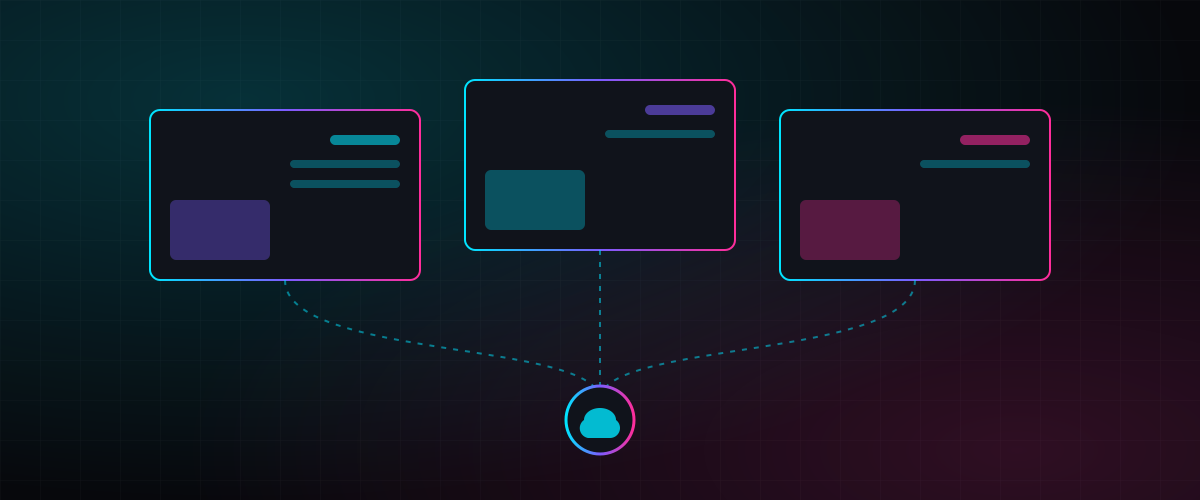
What 32 branches actually looks like
The chain asked for the platform to support 32 branches across Jordan, and it went in as 32 set-top boxes — one per branch — connected to every screen the chain specified, with 10 GB of shared media storage in the cloud. Our technicians also connected the switches and amplifiers of each store's sound system to the players, so that audio is controlled from the same dashboard as the screens.
The chain uses the system for two purposes, and that is the first lesson. Externally, it advertises products and offers to shoppers on the sales-floor screens. Internally, it uses the same platform to train employees and to make internal announcements on staff-area displays. And through the audio integration, it broadcasts a music radio channel to the store sound systems, with the ability to interrupt it with announcements or promotions.
Three functions — marketing, HR communication and in-store radio — that a chain would ordinarily buy as three systems from three vendors, on one set of hardware with one subscription per device. The case study has the detail; the rest of this post is about why this shape produces a return and how to measure it.
It is worth saying that this is retail digital signage in Jordan at national scale, on a platform we also run for a four-display medical hub in Amman and ten displays at a national memorial. Scale changes the ROI arithmetic, not the software.
Four places the money comes back
Digital signage vendors like to quote uplift percentages. We prefer to name the mechanisms, because a chain can check each against its own accounts.
Replaced print and logistics. Every promotion that used to be a printed poster, a shelf talker and a courier run to 32 branches becomes a file uploaded once. The saving is the chain's own print, distribution and in-store labour cost per campaign, multiplied by campaigns per year. Finance already has that number.
Speed of change. A price correction, a stock-out or a competitor's move used to take days to reach every branch. On the platform it is scheduled or pushed instantly to all 32, or to one region, or to one store. The value is the margin protected during the days that used to be lost, and the campaigns that can now be run because they are no longer too short to print for.
Training and announcements on the same screens. Staff-area displays carrying training modules and announcements replace printed circulars and briefings that depend on a manager remembering. The cost avoided is training-delivery time and the inconsistency between branches.
In-store radio without a separate system. The music layer, with promotions and announcements inserted, runs on the same players through the wired amplifiers. A chain that was paying for a separate radio or music service, or running it from a laptop in the back office, folds it into the signage subscription.
None of these needs a footfall study to prove. They are line items the chain already pays, moved to a smaller line.
The features that matter at chain scale
A single-store screen needs a player and a playlist. A chain needs a platform, and the features that produce the return are the unglamorous ones.
Centralised management. One dashboard controls users, access, devices, media storage, performance metrics and transactions across all branches. Marketing, HR and store operations each get the access they need and no more.
Scheduling and campaigns. Instant multi-screen publishing, media galleries, playlists per screen or per group, customisable campaigns and automated scheduling — the morning offer, the evening switch, the weekend promotion — set once and run everywhere.
Group control. Play, pause, mute or unmute one screen or a group from anywhere; manage a region or a store format as a unit.
Offline content and auto-update. Each player holds its content locally, so a branch with a bad connection keeps playing, and picks up updates when the link returns. For a chain, uptime is the ROI multiplier.
Live monitor. See which screens are on and what they are showing, without phoning the branch.
Flexible content. HD video, images, audio, web links, satellite channels, widgets, HDMI feeds, 3D models and interactive systems such as wayfinding; overlays let a promotion sit on top of a live feed.
Security. Hosted on a major cloud object store with server TLS, firewall and password policies, player lock-down and storage encryption — the questions a chain's IT department asks first. Our retail chains use case maps these to store formats.
Nplay Beam deployments and proposals in Jordan, by the numbers
| Client (generic) | Sector | Players / displays | Storage | Uses |
|---|---|---|---|---|
| National hypermarket chain | Retail | 32 branches · 32 set-top boxes · all requested screens | 10 GB | Offers to shoppers · staff training · internal announcements · in-store radio via wired amplifiers |
| Integrated healthcare hub, Amman | Healthcare | 4 distributed displays | 5 GB | New services, partner providers and offers to patients |
| National military memorial and museum | Culture · Tourism | 10 displays incl. projection and hologram screens | 5 GB | Historical content, welcome figure, floor projection |
| Regional hypermarket chain (proposal, 2025) | Retail | 25 Android set-top boxes, 4K, separate audio out, Wi-Fi | 100 GB per device | Chain-wide signage and audio · one-year cloud subscription per device |
How to measure the ROI honestly
We will not give you an uplift percentage, because we would be guessing about your stores. Here is what we suggest a chain measures instead, before and after.
Cost per campaign. Print, distribution and in-store set-up cost for a promotion across all branches, versus the time to upload and schedule it. Track campaigns per year as well — the number usually rises once campaigns are cheap.
Time to change. Hours from a decision to every branch showing it. This is the metric that store operations care about most.
Screens live per day. From the live monitor: the share of screens actually showing scheduled content. A signage network that is 70 per cent on is 30 per cent wasted; the platform tells you which branch and why.
Training delivered. Modules shown, branches reached, versus the previous method's cost in manager time.
Audio. Cost of the separate music or radio service retired, and promotions inserted into the audio stream.
Where a chain wants sales-uplift measurement, the platform's scheduling makes a clean A/B possible: run an offer on screens in half the branches for a fortnight and compare tills. That is a test a chain runs itself, on its own data, and it is worth more than any figure a vendor can print.
From order to 32 screens in weeks
Chain deployments move faster than most chains expect, because the hardware is small and the configuration is central.
A branch player is an Android set-top box with 4K output, a separate mini-jack audio output for the sound system, and Wi-Fi or Ethernet. Where a store wants a video wall, a single player and controller drive a 2×2 or 3×3 wall or a portrait strip of up to seven screens. Each device carries an annual cloud subscription with its own media storage allowance — the 2025 proposal for a regional chain specified 100 GB per device.
Delivery in our proposals is two to four weeks from confirmation, with half paid upfront and half on delivery. Our technicians install the players, connect the screens, and wire switches and amplifiers so audio is on the dashboard. Head-office users are trained on the platform; branch staff need nothing. Support and maintenance for the first year are included.
For chains in Saudi Arabia the model is the same: cloud digital signage with players shipped to each branch and the dashboard in head office, whether that is Riyadh or Amman. Our post on café and restaurant signage shows the same platform at the other end of the scale.
Thirty-two branches, one dashboard. The return is not in the screens; it is in everything the chain stops doing by hand.
Retail digital signage Jordan: frequently asked questions
How many screens can one player drive?
One set-top box per branch drives the connected screens; for video walls a single player and controller handle a 2×2 or 3×3 grid, or a portrait wall of up to seven screens, with content per screen or as one canvas.
What happens when a branch loses internet?
Each player stores its content locally and keeps playing the schedule offline, then picks up updates automatically when the connection returns.
Can the same system run staff training and in-store radio?
Yes. The hypermarket chain uses staff-area screens for training and announcements, and its store sound systems are wired to the players so a radio channel with inserted promotions runs from the same dashboard.
How long does a chain-wide rollout take?
Players and subscriptions ship in two to four weeks from confirmation; our technicians install and wire audio at each branch. First-year support and maintenance are included.