Author: HANIALHAJ

  • Virtual tours for real estate in Dubai and the UAE

    Virtual tours for real estate in Dubai and the UAE

    Virtual tour company dubai: a practical guide from Nplay. This article covers what matters about virtual tour company dubai, from the first idea to delivery.

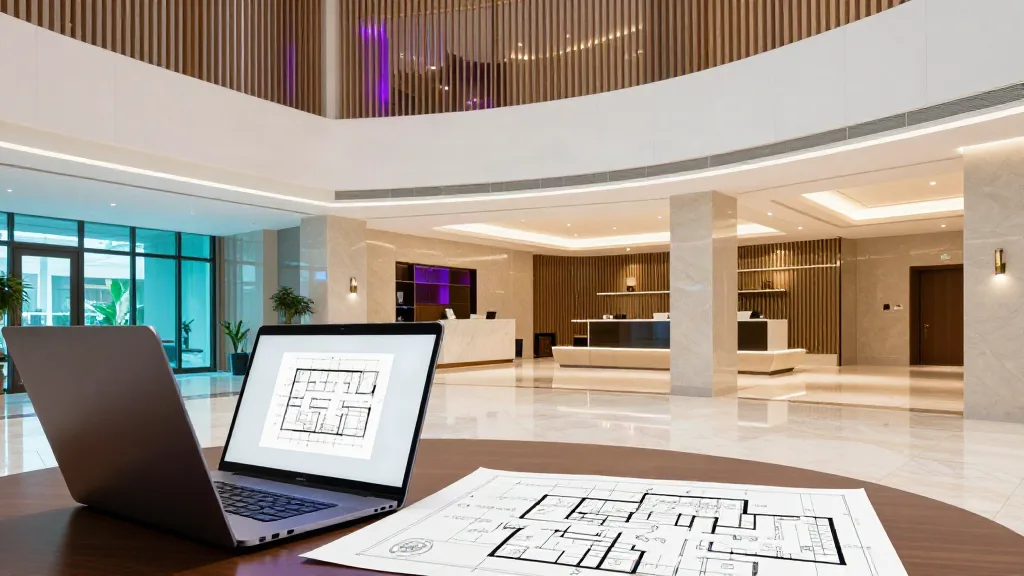
    Hiring a virtual tour company? Dubai’s property and hotel teams need tours that load fast and work in Arabic. A property buyer in Dubai, Abu Dhabi or another country now makes a first viewing on a phone, often late in the evening, with a short list and a few questions. A good virtual tour answers those questions before anyone calls the sales office. This guide is for UAE developers, brokers and hospitality owners who are choosing a virtual tour company: which format fits which property, how off-plan visualisation should be handled, and how we work remotely from Amman and Riyadh for clients in the UAE.

    Virtual tours for real estate in Dubai and the UAE

    The first viewing now happens on a screen

    Whether you search for a virtual tour company Dubai developers use, or in Arabic for جولة افتراضية دبي, you are looking for the same thing. A gallery of ten photographs shows a home on its best day from its best angle. A virtual tour does what a first viewing does. It shows how large the rooms really are, how you move from the entrance to the kitchen, where the light falls and what you see from the balcony. That is the thinking behind a virtual tour for real estate UAE developers can commission: not a novelty for the brochure but the first viewing, available at any hour, from any country.

    The buyer’s questions are predictable. How big is the living room? Does the second bedroom have a window? What does the view look like? Is the building finished or a render? A listing either answers these or sends the buyer to the next listing. A tour answers them, then sends the buyer to the enquiry button.

    The same model then works harder. One 3D model serves the walkthrough, the stills, a short film and a screen in the sales gallery, so the cost of modelling is spread across every channel. For brokers, a tour link sits comfortably in a message; for developers, it runs inside a stand at an exhibition.

    The tour also changes the conversation with the sales team. A broker who has sent a link knows the buyer has already seen the layout, so the call can begin with the price, the payment plan and the handover date instead of the basics. For hospitality owners the logic is the same: a guest who has walked the suite and the restaurant books with fewer questions and fewer surprises on arrival.

    Formats

    Which format for which UAE property

    FormatBest forWhat we need from you
    360° photo tourCompleted apartments, villas, hotel rooms, serviced officesAccess to the property and a local capture team, or your own 360° photos
    3D model walkthroughOff-plan units, show units that cannot be staged, interiors with optionsApproved drawings, finishes schedule and unit list
    Guided live tourHigh-value buyers, overseas clients, investor briefingsA sales lead, a video link and a tour to lead
    VR headset experienceSales galleries, exhibitions, launchesHeadsets on site and a host to fit them

    Off-plan: where visualisation earns its keep

    An off-plan buyer is buying a promise. A 3D walkthrough models the building to scale from the approved drawings, lights it for the plot and lets the buyer walk the unit they are considering. Done well, it reduces the disappointment at handover, because the buyer has already seen the proportions.

    Two rules keep it honest. First, freeze the drawings before modelling starts; late design changes are the most common reason a visualisation drifts from the building. Second, model the units you are selling, not a fantasy penthouse, and mark furniture and décor as illustrative. Buyers forgive styling; they do not forgive a balcony that turns out to be smaller.

    This is the one part of a UAE project that is fully remote. Our 3D content studio works from your drawings, sends builds for review and updates them as the design is approved, with no travel needed. Where buyers choose finishes, the next step is a configurator. Nplay Vista, our immersive real-estate platform, is designed for that, but it is in development and a concept today; the tours described here are available now.

    Completed properties: capture is the local step

    A virtual tour company Dubai agents can brief remotely still needs a person with a camera in the room. A 360° photo tour of a finished property needs a camera in the room. That is the step we arrange locally. The options are your own photographer following our capture guide, a local production partner, or a capture team we brief in advance. Everything after capture, stitching, hotspots, floor plans, branding and Arabic and English text, is done in our studio.

    Capture quality decides the result. Rooms should be staged, lights on, blinds open and clutter cleared. Tripod height should be consistent. Each room needs its own capture point, with extra points in open-plan spaces so the viewer can move without jumps. A rushed capture cannot be fixed in editing, so we would rather you re-shoot one room than publish a tour with a dark kitchen.

    Arabic and English, embedded and findable

    UAE buyers read in both languages, so the tour needs both: hotspot labels, room names, prices and calls to action. We prepare the Arabic and English together and suggest a native Arabic speaker approves the wording on screen.

    A virtual tour for real estate UAE buyers can open on a phone still has to be found. A tour that nobody finds does not earn its cost. We supply an embed snippet for your website and a direct link for messaging, and we can host on your own domain. Give each tour its own page with a clear title, such as the project name plus 3D virtual tour Dubai, and a short text summary of rooms, prices and facilities in both languages. Add an enquiry button inside the tour so a visit becomes a lead you can track. Our guide to embedding and search goes through the steps.

    From brief to published tour, remotely

    A typical UAE tour project has five steps and only one of them needs someone on site. Brief: a video call to agree the property, the buyer, the languages and where the tour will live. Scope: we confirm the format and what we need, such as drawings for a model or access for capture. Build: our studio models or stitches the tour and sends a private link for review. Review: you comment, we revise, and a native Arabic speaker approves the Arabic. Publish: we hand over the embed code, the direct link and, if wanted, the hosted version.

    Hospitality clients use the same steps for rooms, suites, meeting spaces and event halls, and brokers use them to turn a listing into a link that can be sent in one message. Our real estate and hospitality use case shows the range.

    What to ask any virtual tour company in Dubai before you sign

    • Can we see a finished tour of a comparable property, on a phone, not only on a desktop?
    • Who owns the files and the 3D model at the end, and can we reuse them for stills, film and a sales-gallery screen?
    • How is the tour published, embedded and updated when prices or availability change?
    • Is the Arabic designed right to left, or simply translated?
    • What is done remotely, what needs a local team, and who arranges it?

    We answer each of these in the first call, including the uncomfortable ones. If the answer to the last question is that part of the work needs a local partner, we will say so and help you choose one rather than hide it in the quotation.

    The market, briefly

    Our market brief cites research that puts the virtual tours market at about USD 0.96 billion in 2023, growing to about USD 8.4 billion by 2030, a compound annual growth rate of 27.9 per cent, as cited in Nplay’s market brief. It is a global figure, not a UAE one, and it is a direction. For a developer the useful question is smaller: would a tour shorten the path from enquiry to viewing for one project this quarter?

    When you are ready to compare vendors, ask for a sample tour of a comparable property, ask who owns the files at the end, and ask how the tour will be published and updated. Our cost factors guide lists what moves the price, from the number of rooms to the level of detail in the model and the number of languages.

    FAQ

    Virtual tour company Dubai: frequently asked questions

    Do you have a Dubai office or team?

    No. Nplay has offices in Amman and Riyadh. We produce tours remotely in our 3D studio and arrange on-site capture with the client or a local partner.

    Can you build a tour for an off-plan development?

    Yes. We model from approved drawings and finishes schedules, and we update the model as the design is approved. No site visit is needed for the modelling itself.

    Are tours available in Arabic and English?

    Yes. Labels, room names, hotspots and calls to action are prepared in both languages, with right-to-left layout for Arabic.

    Is Nplay Vista available now?

    No. Nplay Vista is a real-estate platform in development. The virtual tours, 3D walkthroughs and live guided tours described here are available today.

    Further reading: Virtual tour (Wikipedia)

    Quick questions about virtual tour company dubai

    Who is virtual tour company dubai for? Companies and institutions that want a clearer, faster experience for their customers and visitors.

    How long does virtual tour company dubai take? It depends on the size of the project and the content needed. We confirm the timeline after a short discovery call.

    How do I start with virtual tour company dubai? Contact the Nplay team in Amman or Riyadh and we will suggest a clear first step.

    Does virtual tour company dubai work in Arabic and English? Yes. We prepare the content in both languages from day one.

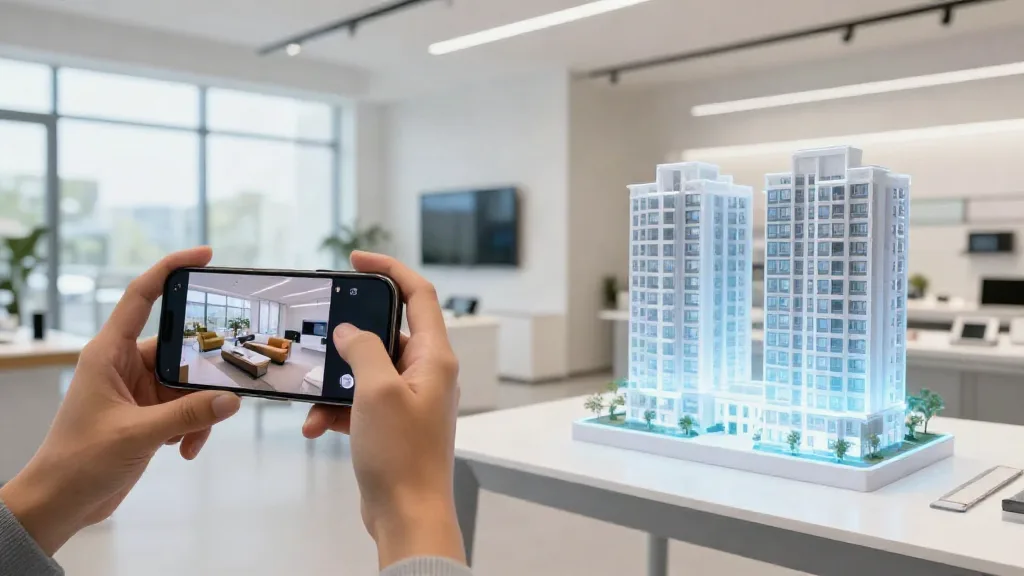
    virtual tour company dubai: 3D virtual tours for properties and showrooms by Nplay
    3D virtual tours for properties and showrooms by Nplay
    3D real estate model by Nplay
    3D real estate model by Nplay
    3D city model digital twin by Nplay
    3D city model digital twin by Nplay

    In short, virtual tour company dubai works best when it starts from a clear goal. Nplay plans virtual tour company dubai around your audience, your space and your budget. If you are comparing options for virtual tour company dubai, ask for a live demo before you decide. We are happy to answer any question about virtual tour company dubai.

  • Virtual tour Jordan: previews for tourism boards, operators and adventure sites

    Virtual tour Jordan: previews for tourism boards, operators and adventure sites

    Virtual tour jordan: a practical guide from Nplay. This article covers what matters about virtual tour jordan, from the first idea to delivery.

    Travellers choose a destination before they land, and most of what they want to know is hard to put in a brochure: how big, how busy, how steep, what the room is like. A well-made virtual tour answers those questions in the traveller’s own language. This guide is for tourism boards, tour operators and the managers of heritage and adventure sites in Jordan, with a section on the virtual tourism experience Saudi Arabia is building towards. The formats are part of our virtual tours service.

    Virtual tour Jordan: previews for tourism boards, operators and adventure sites

    A traveller decides before arriving, with questions a brochure cannot answer

    A family choosing between two desert camps, a couple comparing Red Sea resorts, a group of hikers deciding whether a canyon suits everyone. Each is making a decision with incomplete information, and each has the same questions: how large is it, how crowded, how hard, what will the room be like, will it suit our age and ability.

    A virtual tour Jordan visitors can open on a phone answers many of these before the booking. It does not replace the visit. It makes the visit more likely to match what the traveller hoped for. The market is moving in this direction: virtual tours are projected to grow from about USD 0.96 billion in 2023 to about USD 8.4 billion by 2030 (27.9% CAGR), per Allied Market Research as cited in Nplay’s market brief. Travel is among the most natural places for that growth to show.

    We work from our Amman studio, with a team that also works in Riyadh, and this guide draws on how we plan tourism tours for both countries.

    Four audiences

    Who needs which kind of tour

    Tourism boards

    A destination hub

    One page per region or site, each with a tour, short copy and links onwards. It gives travellers a starting point, and gives the board one asset that can also run on stands abroad and on kiosks in visitor centres.

    Tour operators

    The itinerary as a tour

    Each day of a trip as a sequence of views: the hotel room, the meeting point, the vehicle, the trail, the dinner. It lets a buyer see what the price includes and helps a sales agent explain it.

    Heritage sites

    Accurate, respectful capture

    Spaces captured to the conservator’s rules, with scripts approved by historians. The tour reaches people who will never visit and prepares those who will.

    Adventure and nature sites

    An honest preview of effort

    Trails, canyons, dive sites and camps, shown with the difficulty and the conditions. It helps people choose the right trip and arrive prepared.

    Formats

    What each audience needs

    AudienceFormatWhere it is shownWatch out for
    Tourism board360 tours per site, linked on one destination pageBoard website, visitor centres, fairs abroadConsistent style across sites; one owner for updates
    Tour operatorDay-by-day tour with hotspots and audioSales page, agent presentations, emailKeep it in step with what the trip actually offers
    Heritage site360 capture, 3D for lost or restricted areasSite website, schools, international audiencesPermissions, light limits and accuracy of scripts
    Adventure site360 photo and short 360 video for moving routesSite and operator pages, social linksSafety, weather and file size on mobile data
    Hotel or camp360 tour of rooms and groundsBooking page and operator pagesShow the rooms guests actually get

    Outdoor sites are harder than interiors

    Indoors, we control the light and the crowd. Outdoors, neither holds still. Sun angle changes every few minutes, wind moves the camera, dust and heat affect equipment and crew, and visitors walk through the frame. A desert camp at dawn and the same camp at noon are different pictures.

    Plan around it. Shoot in the best light windows, with permission from the authority that manages the site, including for any aerial capture. Choose stills for places people will study, and short 360 video for experiences that move, such as a boat crossing or a walk through a narrow canyon. Where the season changes the place, capture more than once. Keep the tour light, because many travellers will open it on mobile data in a hotel lobby, and show the real difficulty of a route, steps and gradients included. An honest preview should bring you better-matched guests, and we would rather build that than a glossy one.

    For operators: make the itinerary walkable

    Operators sell trust. A tour of each stop tells a buyer more than a paragraph of adjectives: the rooms they will sleep in, the vehicle, the landing point, the lunch spot. Add short audio notes from a guide, a hotspot with what the price includes and an enquiry button, so the buyer can ask about that stop.

    The same production feeds other uses. The views can run on a screen at a travel fair, and a Halo Box can present the destination on a stand, with an avatar answering in the visitor’s language. Our post on hologram tour guides for destination marketing explains that side. For hotels and camps, see virtual tours for hotels, and for museums and monuments our guide to virtual museum and heritage tours in Jordan.

    A virtual tourism experience for Saudi Arabia

    Saudi Arabia is building a new destination offer, from heritage to coast to desert, and the audience is international and multilingual from day one. A virtual tourism experience Saudi Arabia can offer should do three things: show places honestly, speak Arabic first and other languages well, and travel with the brand to fairs and visitor centres.

    That is the same set of skills described above, at a larger scale. A tour per site, hosted and maintained by a named owner; a destination hub; a hologram or avatar guide for stands; and, for the longer term, richer 3D experiences. Our tourism destinations use case sets out how we would deploy the programme for a destination authority. Where something is a concept or a proposal rather than a delivered project, we say so. The tours themselves are available now.

    FAQ

    Virtual tour Jordan: frequently asked questions

    Does a virtual tour replace visiting a site?

    No. It gives travellers enough to choose well and prepares them to arrive informed. For many sites it also reaches people who can never visit in person.

    Can you capture places with difficult access, like canyons or remote camps?

    Often, yes. Access, weather and permissions decide the plan, and we agree them with the site’s managers first. Some places need a short 360 video instead of stills, or capture in more than one season.

    Do you build a virtual tour Jordan operators can change themselves?

    We build for updating: itineraries change, so text, hotspots and prices can be edited without rebuilding the tour. We agree in the project who does it and how fast.

    Can tours be in several languages?

    Yes. We build Arabic and English as standard, with a right-to-left Arabic layout, and add other languages on request for the markets you want to reach.

    Further reading: Virtual tour (Wikipedia)

    Quick questions about virtual tour jordan

    Who is virtual tour jordan for? Companies and institutions that want a clearer, faster experience for their customers and visitors.

    How long does virtual tour jordan take? It depends on the size of the project and the content needed. We confirm the timeline after a short discovery call.

    How do I start with virtual tour jordan? Contact the Nplay team in Amman or Riyadh and we will suggest a clear first step.

    Does virtual tour jordan work in Arabic and English? Yes. We prepare the content in both languages from day one.

    3D virtual tours for properties and showrooms by Nplay
    3D virtual tours for properties and showrooms by Nplay
    3D city model digital twin by Nplay
    3D city model digital twin by Nplay
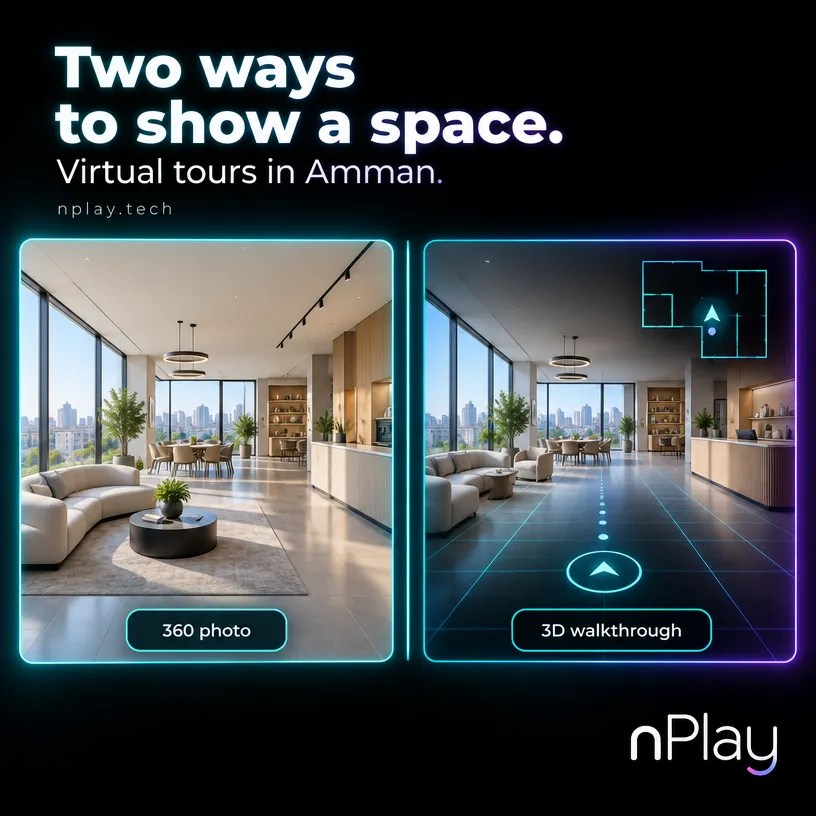
    Two ways to show a space: virtual tours by Nplay
    Two ways to show a space: virtual tours by Nplay
  • Front row, flyover, or on the pitch: the next decade of sports broadcasting

    Front row, flyover, or on the pitch: the next decade of sports broadcasting

    VR sports broadcasting: a practical guide from Nplay. This article covers what matters about VR sports broadcasting, from the first idea to delivery.

    VR sports broadcasting could put fans in the front row or above the pitch. For seventy years, watching sport on a screen has meant watching what a director chose. The next decade hands the choice to the fan: stand behind the goal, sit in the front row, or fly over the stadium — in 8K, with spatial sound, on a headset or a phone. This is how the technology stack works, why 360-degree video was a detour, and what it means for broadcasters, leagues and sponsors. It is also the roadmap behind Nplay’s immersive broadcasting service and our sports fan experience work.

    Front row, flyover, or on the pitch: the next decade of sports broadcasting

    Three seats the television never sold

    Every sports broadcast you have ever watched was directed. Someone in a truck outside the stadium chose the wide shot, cut to the close-up, decided when you saw the replay and from which angle. It is a craft, and a good director is worth a great deal. But it means the fan at home has always watched one seat: the director’s.

    Immersive broadcasting sells three more. The front row: a virtual seat at pitch level, where the fan looks left and right as the play moves and hears the crowd behind them. The flyover: a viewpoint above the stadium that lets the fan watch shape and movement the way a coach does. And on the pitch: cameras placed where no spectator has ever stood, behind the goal, beside the bench, inside the tunnel.

    The technology to capture these views has existed in pieces for a decade. What has changed is that the pieces — 8K capture, stereoscopic 3D, spatial audio, low-latency delivery to headsets and phones, and AI-assisted production — can now be assembled into a single live pipeline. The proposals Nplay has developed for immersive sports and event broadcasting in Saudi Arabia describe the result in a phrase we keep returning to: fans should feel as though they are standing on the field, watching from the front row, or flying overhead. Audiences don’t just watch events — they become part of them.

    Why 360-degree video was a detour, not the destination

    The first wave of “VR sports” was 360-degree video: a spherical camera at one position in the stadium, a panoramic image the viewer could look around in. It was exciting for a season and then it was not, and it is worth understanding why, because the reason shapes everything that comes next.

    A 360-degree panorama has no depth. The pitch is a flat picture wrapped around a sphere, so the fan can look anywhere but everything is equally far away. There is only one position — wherever the camera was — and the resolution of that single spherical image, spread across an entire sphere, is thin exactly where the fan is looking. It gave the sensation of being somewhere without the sensation of the game.

    The alternative that our broadcasting proposals adopt is stereoscopic 3D combined with spatial picture-in-picture: stereo camera pairs that deliver genuine depth perception, with additional spatial layers framed within the view — a tactical overhead, a player close-up, statistics — that the fan can bring forward or dismiss. It is a focused, deep view rather than a flat, all-round one, and it can carry several perspectives at once. The comparison table below sets the two side by side. The short version: 360 answers “where am I?”, while stereoscopic 3D with spatial layers answers “what is happening?”, which is the question sport is about.

    Compare

    Broadcast 360 versus stereoscopic 3D with spatial picture-in-picture

    FeatureBroadcast 3603D stereoscopic + 4× spatial 3D PiP
    Viewing perspectiveFull 360-degree panoramic view from one positionFocused 3D view with depth perception and multiple spatial layers
    Immersive technologyVR-compatible; the viewer explores every directionStereoscopic 3D for depth and realism, with picture-in-picture framing
    Camera setup360-degree camerasStereoscopic camera pairs and multiple 3D layers
    Content displayOne spherical, panoramic image3D main view plus up to four spatial layers — tactical, close-up, data, replay
    Resolution where the fan looksShared across the whole sphereConcentrated in the field of view; 8K capture where it matters
    SoundUsually stereo or ambisonic from one pointFull 3D spatial audio matched to the viewpoint

    8K and spatial sound: what the pipeline actually demands

    Resolution is the least interesting part of immersive broadcasting and the most demanding. When a fan’s view fills a headset, or a phone held close, the pixels that were plenty for a television are not enough. Live streaming in 8K with full 3D spatial audio and video is the target our proposals set, and it forces decisions all the way down the chain.

    At the venue it means camera positions that do not exist in a conventional rig — stereo pairs at pitch level, behind the goals, above the stands — and the fibre optics and 5G to move that volume of data out of the building in real time. In production it means transcoding to several device profiles simultaneously: a headset wants stereo 8K, a phone wants a cropped 4K view, a large public screen wants something else again, and a web browser wants a version that starts in two seconds. In delivery it means a content network that can hold latency low enough that the crowd in the headset roars at the same moment as the crowd on the terrace.

    Multiple device support is not a footnote. The fan who buys a virtual front-row seat on a headset is a minority for years to come; the fan on a phone, a smart TV or a browser is the audience. A pipeline built for 8K headsets that also serves everyone else well is the only one worth building. Our Nplay Live platform, in development, is the delivery and ticketing layer for exactly this — one event, every device, pay-per-view or subscription.

    The AI control room: how one team runs many events

    If every immersive broadcast needed a full production truck and a director choosing among a dozen 3D layers by hand, the economics would confine it to a handful of showpiece matches a year. The proposals Nplay has developed take a different position: management and broadcasting of hundreds of live events simultaneously with minimal human intervention, with a target of automating 90 per cent of the broadcasting process.

    The mechanism is the AI-powered control room. Rather than a truck at each venue, a small number of remote control rooms — the phase-one plan specifies four — use AI to manage live events, optimise the picture-in-picture layouts as the play develops, schedule events and make real-time adjustments to the stream. A human producer supervises several events at once and intervenes where judgement is needed; the routine of framing, switching and layout is handled by the system.

    The same plan sets concrete infrastructure targets for a first phase: five key locations equipped for each category — sports, concerts, arena events and tourism — hardware able to stream five concurrent events across those categories, and 3D picture-in-picture recordings of twenty tourism locations made available on demand. The tourism piece matters more than it looks: the same cameras and control rooms that broadcast a match on Friday capture a heritage site on Saturday, and that video-on-demand library is what fills the platform between fixtures. We described the production side on our immersive broadcasting page.

    Where the money comes from: inventory the TV deal never had

    Leagues and broadcasters ask the right question first: does this cannibalise the television rights that fund the sport? Our answer is that immersive broadcasting is additive because it sells inventory that did not previously exist.

    The core streams in our proposals are pay-per-view for major events — a virtual front-row seat is a ticket, priced like one; advertising and sponsorship integrated into the 3D environment, where a sponsor’s placement can sit pitch-side in the virtual stadium without touching the physical one; and subscription tiers for exclusive live events, immersive content and premium experiences.

    Around them sit the additional streams: licensing the immersive feed to broadcasters abroad; virtual merchandise and collectibles tied to the event; branded headsets and accessories; a marketplace for fan-generated content with revenue sharing for creators; virtual event hosting for fan conventions and esports; premium bundles that combine a match, a player interview and a VR tour of a landmark; and the analytics themselves, since viewer preferences, engagement and interactions become data a broadcaster and advertiser can act on.

    For sponsors the shift is from a static board seen by a camera to a placement seen by a fan who chose where to sit. That is a different product, and it is why event organisers and sponsors can personalise their 3D environments in the platform rather than buying a slot in someone else’s.

    Where this stands, and what we would build first

    We should be plain about the status. What we have described is a roadmap that Nplay developed with a camera-technology partner for immersive sports and event broadcasting in Saudi Arabia, with a phased plan running from venue infrastructure and 3D picture-in-picture development, through AI control rooms and content partnerships, to a national platform and global distribution. Parts of the stack — live hologram streaming, event streaming, 3D production — are things we deliver today; the full 8K stereoscopic pipeline with automated control rooms is the destination, not the current state.

    If a league, a venue operator or a broadcaster asked us where to start, we would say: one venue, one stereo camera position at pitch level, one flyover, a spatial-audio mix, and a stream to phones and one headset model, for one fixture. Measure how long fans stay in the front-row view, what they pay for it, and which sponsor placements they look at. Then decide about the control rooms.

    Sport has always been the technology that sells the technology — colour television, satellite, high definition. Immersive viewing will be no different, and the region that builds the pipeline first will export it. We have written elsewhere about where VR is heading; for sport, it is heading to the front row. The fan will choose the seat. The question is who sells it.

    FAQ

    VR sports broadcasting: frequently asked questions

    Do fans need a VR headset to watch an immersive broadcast?

    No. The pipeline serves headsets, phones, smart TVs, web browsers and large public screens from one production. The headset gives the fullest front-row experience; the phone and TV audience is the majority for years to come.

    What is the difference between 360-degree video and stereoscopic 3D with spatial PiP?

    360 video is a flat panorama from one camera position with no depth. Stereoscopic 3D uses camera pairs for genuine depth perception and adds spatial picture-in-picture layers — tactical view, close-up, data — that the viewer can bring forward.

    Does immersive broadcasting compete with television rights?

    It is designed to be additive: it sells inventory that did not exist — virtual seats, in-environment sponsorship, immersive subscriptions, licensing of the immersive feed — rather than replacing the conventional broadcast.

    Is Nplay delivering 8K stereoscopic sports broadcasts today?

    Not yet at full scale. We deliver live hologram and event streaming and 3D production today; the 8K stereoscopic pipeline with AI control rooms is a phased roadmap developed for Saudi Arabia. We recommend starting with a single-venue pilot.

    Further reading: Virtual reality (Wikipedia)

    Quick questions about VR sports broadcasting

    Who is VR sports broadcasting for? Companies and institutions that want a clearer, faster experience for their customers and visitors.

    How long does VR sports broadcasting take? It depends on the size of the project and the content needed. We confirm the timeline after a short discovery call.

    How do I start with VR sports broadcasting? Contact the Nplay team in Amman or Riyadh and we will suggest a clear first step.

    Does VR sports broadcasting work in Arabic and English? Yes. We prepare the content in both languages from day one.

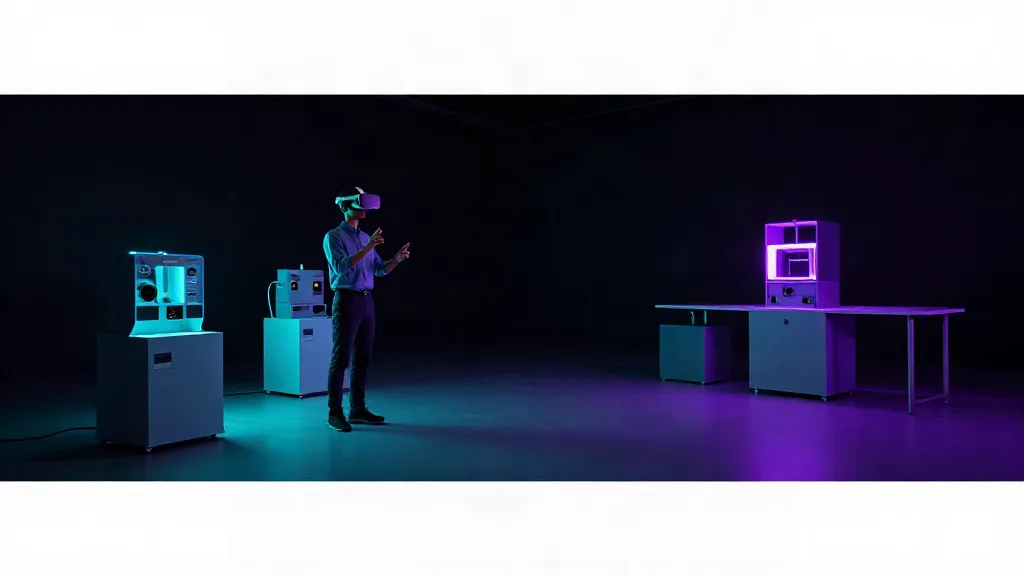
    VR sports broadcasting: Virtual 3D event space built by Nplay
    Virtual 3D event space built by Nplay
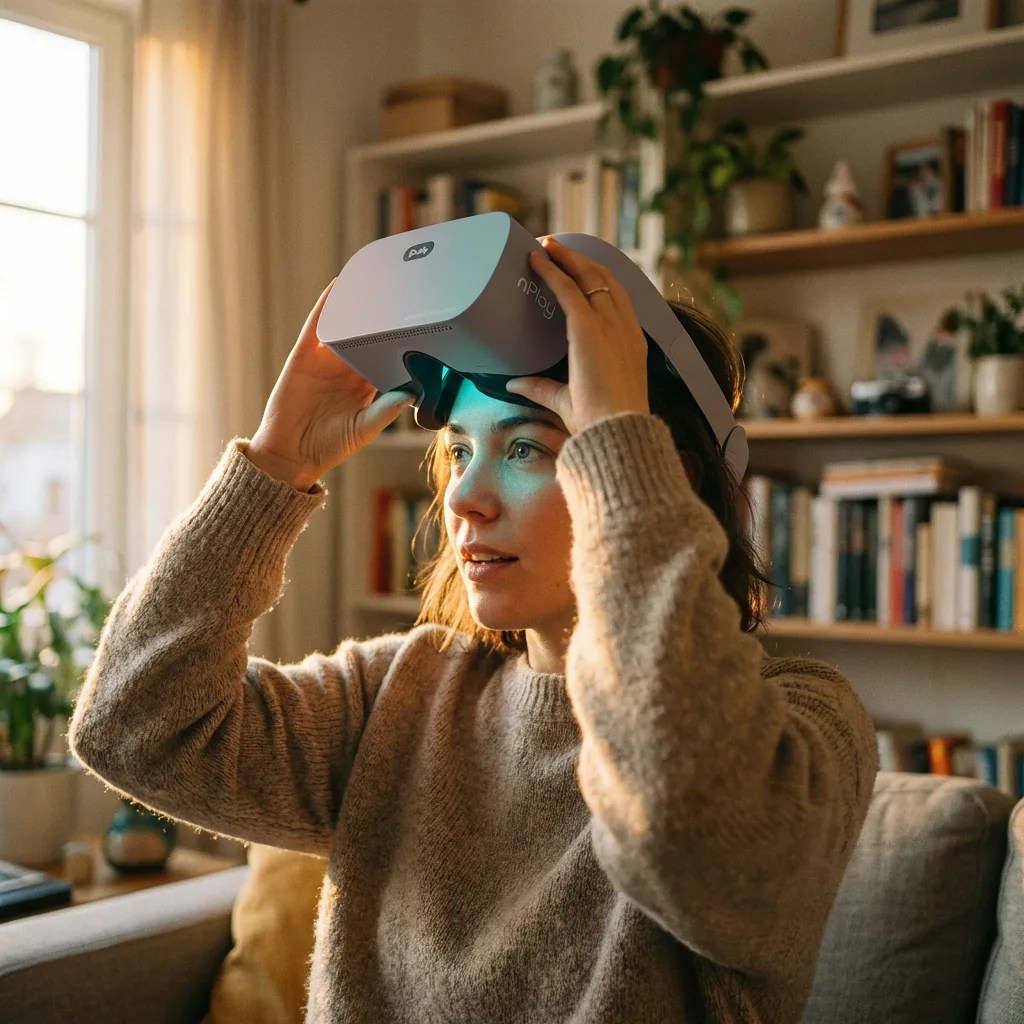
    VR training for your team, by Nplay
    VR training for your team, by Nplay
    VR training demo by Nplay at an exhibition
    VR training demo by Nplay at an exhibition

    In short, VR sports broadcasting works best when it starts from a clear goal. Nplay plans VR sports broadcasting around your audience, your space and your budget. If you are comparing options for VR sports broadcasting, ask for a live demo before you decide. We are happy to answer any question about VR sports broadcasting.

  • VR for autism and medical anxiety: a supportive tool, used alongside clinicians

    VR for autism and medical anxiety: a supportive tool, used alongside clinicians

    Vr for autism jordan: a practical guide from Nplay. This article covers what matters about vr for autism jordan, from the first idea to delivery.

    VR for autism: Jordan’s therapy teams are exploring it as a calm, repeatable practice space. Families, schools and hospitals ask us about VR more carefully than most buyers, and they should. This article is about two areas where VR is being explored as a support: autism and special education, and pain and anxiety around medical procedures. We are a technology company, not a clinic. So we describe what we build, what we have not claimed, and the questions we think any family or clinical team should ask before trying it. Nothing here is a treatment claim.

    VR for autism and medical anxiety: a supportive tool, used alongside clinicians

    What “supportive tool” means, and what we do not claim

    We use the words supportive tool deliberately. VR can occupy attention, create a controlled environment and let a person rehearse or experience something in a setting chosen for them. In the right hands, alongside the right specialist, those properties may help. We do not say that VR treats autism, cures anxiety or replaces medical care, and nobody at Nplay is a clinician.

    What we do is build immersive technology and work with people who are. Our wider work in VR for wellbeing includes the SAKINA Pod, a sealed single-person relaxation capsule that is still in design development, and Nplay VR for Hospitals, an early-stage concept and prototype explored together with clinical partners. Neither is available for purchase or deployment, and VR for Hospitals is not a medical device.

    Our earlier article From Calm to Care sets out how we approach this work. The rest of this page is a practical companion for families, schools and hospitals deciding whether to explore VR at all.

    VR and autism: searching for VR for autism Jordan and Saudi Arabia

    Searches such as “VR for autism Jordan” and “VR for autism Saudi Arabia” usually come from a parent, a teacher or a centre that has heard VR might help and does not know where to begin. The honest first answer is that it depends on the individual. Autism is a spectrum. A setting that one person finds engaging, another may find overwhelming, and a headset on the face is itself a sensory experience that not everyone will want.

    That is why we treat VR in this area as a special-education and therapy-support question rather than a product question. Our VR for autism and special education page describes our work in this area. It is the place to start for detail.

    A few principles hold whatever the application. The therapist or educator who knows the person decides whether VR is appropriate. Any use is introduced gradually and can be stopped at any moment. The content is chosen to fit the person, including how busy, loud or bright it is. And the aim is agreed in advance, so that everyone can tell afterwards whether it helped.

    If a provider promises outcomes without asking about the individual, be cautious.

    VR for pain and anxiety around medical procedures

    The second area is the hospital. Anxiety before an injection, a scan or a dressing change is common, and it is especially hard for children. The idea behind VR pain anxiety medical procedures research is simple to describe: an immersive experience takes up attention, leaving less for fear and discomfort. Published systematic reviews in recent years have reported that VR reduced pain and anxiety in hospital settings. We summarise them in our article on VR in hospitals for pain and anxiety.

    Research summaries are not a product. Whether VR suits a particular ward, procedure or patient is a clinical decision. A hospital needs to consider infection control, headset fit and comfort, supervision, consent and how the experience will be offered. Those are the tasks we work through with clinical partners on VR for Hospitals, and they are why we call it a concept rather than an offer.

    The same caution applies to wellbeing spaces. In the SAKINA Pod concept, for instance, the design includes a hard session limit and a door that can always be opened from the inside. Safety provisions come first, before any content is considered. Any VR pain anxiety medical procedures pilot should start from the same principle.

    Questions

    Questions for a clinician-led VR project

    QuestionWhy it mattersWho should answer
    Who is this for, and is VR suitable for them?Comfort and sensitivity differ widely between individualsThe clinician, therapist or educator who knows them
    What is the aim, and how will we judge it?A defined aim lets everyone see whether it helped, or stopThe clinical or education team, with the family
    Who supervises, and for how long is a session?Sessions need a responsible adult and a stop at any timeThe supervising professional
    How is the content chosen?Pace, sensory intensity and setting should fit the person or the procedureSpecialists, with the content team
    How are comfort, hygiene and fit handled?A headset is a physical device worn on the faceThe facility and the technology provider
    How is consent obtained, and how is data handled?People should know what is used and what is recordedThe facility, under its own policies
    For providers

    What a responsible technology partner should offer

    • A clear statement that the product is a supportive tool and not a treatment, and no outcome promises
    • A working process with your clinical or education team, not a finished demonstration handed over
    • Content that can be adjusted by the specialist, including pace and sensory intensity
    • Plain information on hygiene, supervision and stopping a session at any time
    • Honest status: concept, prototype or delivered, and what approvals exist
    • Respect for privacy, consent and local policy in Jordan and Saudi Arabia

    Starting small and starting with the right people

    If you are a parent, begin with the professional who works with your child. If you run a school, centre or hospital, begin with the clinical or education lead and a single, well-defined question: one group, one purpose, one short pilot with agreed measures. Bring us in when you know what you want to try.

    We are based in Amman and work across Jordan and Saudi Arabia. Our role is to build the immersive experience with your specialists and to be transparent about what stage it has reached. The decision about whether VR is right belongs to the people who know the person in the headset.

    FAQ

    Frequently asked

    Does VR treat autism?

    Nplay makes no treatment claim. VR can be a supportive tool used alongside therapists and educators, and whether it suits an individual is for their specialist to judge.

    Is Nplay VR for Hospitals available?

    No. It is an early-stage concept and prototype explored with clinical partners. It is not a medical device and carries no regulatory approval.

    Is VR safe for children?

    Suitability depends on the child and the setting. A clinician or educator should decide, introduce it gradually and supervise, and a session must be possible to stop at any moment.

    Who should I speak to first?

    The professional who knows the individual or runs the procedure. Technology comes second. Then talk to us about what a supervised pilot could look like.

    Further reading: Virtual reality (Wikipedia)

    Quick questions about vr for autism jordan

    Who is vr for autism jordan for? Companies and institutions that want a clearer, faster experience for their customers and visitors.

    How long does vr for autism jordan take? It depends on the size of the project and the content needed. We confirm the timeline after a short discovery call.

    How do I start with vr for autism jordan? Contact the Nplay team in Amman or Riyadh and we will suggest a clear first step.

    Does vr for autism jordan work in Arabic and English? Yes. We prepare the content in both languages from day one.

    vr for autism jordan: Virtual 3D event space built by Nplay
    Virtual 3D event space built by Nplay
    VR training for your team, by Nplay
    VR training for your team, by Nplay
    VR training demo by Nplay at an exhibition
    VR training demo by Nplay at an exhibition
  • From Calm to Care: How Nplay Designs VR for People

    From Calm to Care: How Nplay Designs VR for People

    VR for wellbeing: a practical guide from Nplay. This article covers what matters about VR for wellbeing, from the first idea to delivery.

    Most of what Nplay builds is meant to be experienced in public — a hologram at an event, an AI receptionist in a lobby, a digital twin on a showroom floor. Two of the concepts furthest along right now are quieter, built for a single person at a time: SAKINA Pod, a relaxation capsule, and Nplay VR for Hospitals, a concept exploring VR’s role in reducing pain and anxiety during medical procedures. Neither is in production yet. Together, though, they show something real about how Nplay approaches VR: the same underlying capability, aimed at very different human needs.

    From Calm to Care: How Nplay Designs VR for People

    SAKINA Pod: Engineering Rest

    SAKINA Pod is a sealed, single-person, climate-controlled VR relaxation capsule, currently in design development. The shell is black anodised aluminium with a smoked acrylic sliding door, and the interior air is actively managed through HEPA-filtered ventilation. A five-state light system — ready, opening, occupied, purging, fault — signals what the pod is doing at a glance, and the door lock carries four independent safety provisions so the person inside is never at risk of being unable to exit. As the brief that shaped it puts it: “Rest, engineered.”

    SAKINA Pod is issued for design development only — dimensions and component selections stay indicative until the design is frozen with a fabricator. It is not yet available for purchase or deployment.

    VR for Hospitals: The Science of Calm in Clinical Settings

    Nplay VR for Hospitals is an early-stage concept and prototype, explored together with clinical partners. It is not a claimed medical device, and it carries no FDA or CE approval. What it is grounded in is real, published research. A 2024 meta-analysis in BMC Medicine, covering 92 trials and 7,133 patients, found VR reduced pain with a standardized mean difference of -0.78 overall — with the effect even stronger for children (-0.91) than adults (-0.66), and particularly strong for venepuncture (-0.99), childbirth (-0.99) and burn dressing changes (-0.8). A 2025 systematic review in the European Journal of Pain reached a similar conclusion, describing VR as safe and effective at reducing in-hospital anxiety and pain.

    The mechanism is simple to describe, harder to engineer well: VR captures a patient’s attention fully enough that there is less of it left over for pain and fear. Nplay’s work here is about exploring how to design that experience responsibly, in partnership with the clinicians who understand the settings it would be used in.

    One Underlying Capability, Many Applications

    SAKINA Pod and VR for Hospitals sit at one end of what Nplay builds — experiences designed around a single person’s wellbeing. The same core capability in immersive VR, AI and spatial design shows up across Nplay’s full service line: AI receptionists and AI holograms (which share one conversational AI backend), VR training and simulation for industrial and safety-critical teams, digital twins and virtual showrooms for sales and planning, and the creative branding, web development, AI tools and digital marketing work that supports all of it.

    A wellness capsule and a hospital waiting room are different problems from a retail showroom or a training floor — but the underlying skill of building VR and AI experiences people actually want to be inside of is the same one.

    Built in Amman, Designed for the World

    Nplay was founded in Amman, Jordan, in 2018, and that is still where this work happens — from the earliest hologram projects to concepts like SAKINA Pod and VR for Hospitals today. Both are still in development, not yet available to buy or deploy, but they represent the same design discipline behind everything else Nplay ships: real research, real engineering constraints, and no invented claims about where a concept stands.

    Further reading: Virtual reality (Wikipedia)

    Quick questions about VR for wellbeing

    Who is VR for wellbeing for? Companies and institutions that want a clearer, faster experience for their customers and visitors.

    How long does VR for wellbeing take? It depends on the size of the project and the content needed. We confirm the timeline after a short discovery call.

    How do I start with VR for wellbeing? Contact the Nplay team in Amman or Riyadh and we will suggest a clear first step.

    Does VR for wellbeing work in Arabic and English? Yes. We prepare the content in both languages from day one.

    VR for wellbeing: Virtual 3D event space built by Nplay
    Virtual 3D event space built by Nplay
    VR training for your team, by Nplay
    VR training for your team, by Nplay
    VR training demo by Nplay at an exhibition
    VR training demo by Nplay at an exhibition

    In short, VR for wellbeing works best when it starts from a clear goal. Nplay plans VR for wellbeing around your audience, your space and your budget.

  • What I told architects at Facilities Management Expo about VR

    What I told architects at Facilities Management Expo about VR

    Virtual reality facility management: a practical guide from Nplay. This article covers what matters about virtual reality facility management, from the first idea to delivery.

    Virtual reality: facility management teams can rehearse, inspect and plan without stopping the building. In May 2022 I had twenty minutes in Hall A of the Facilities Management Expo in Amman to explain to a room of architects and facility managers why virtual reality belongs in their sector. This is what I said, what they asked, and what has changed since — mostly because digital twins have moved from slideware to deliverable.

    What I told architects at Facilities Management Expo about VR

    Twenty minutes, Hall A, 13:30

    The invitation was straightforward: “Dear architects and friends, you are welcome to Facilities Management Expo. Topic: Virtual Reality in Facility Management. Session: Technology in the FM Sector. 11 May 2022, 13:30 to 13:50, Main Conference Venue, Hall A.” Twenty minutes, straight after lunch, to a room whose day job is keeping buildings running.

    I knew the risk. In 2022 “virtual reality” still meant headsets and games to most of the room, and “facility management” meant work orders, chillers and cleaning contracts. Putting the two words together sounded like a sales pitch from somebody who had never had to fix a lift on a Friday.

    So I decided not to talk about headsets at all for the first ten minutes. I talked about a problem every person in the room had: you are responsible for a building you cannot see all of at once, full of equipment whose history lives in a filing cabinet, maintained by technicians who are never in the right place when something fails. Then I asked what would change if you could stand inside the building without being in it, and if the building could tell you what was wrong with it.

    The talk was recorded and is still on the video platforms under my name, delivered in a slightly faster voice than I would use today. Here is the structure of it, updated with what we have learned in the years since.

    Start with visualisation: walk the building before you visit it

    The first benefit I put on the screen was the least glamorous and, I think, the most important: 3D model integration and virtual walkthroughs for planning.

    Most facility managers inherit a building as a set of drawings — often out of date, often in three different formats — and a spreadsheet of assets. Bringing the building into a navigable 3D model gives a comprehensive and detailed picture of how space is actually used: which corridors are dead, where the plant rooms really are, which ceiling void is already full of ducting. Better planning starts with better seeing.

    Virtual walkthroughs extend that into operations. A manager responsible for a hospital campus, a university or a chain of branches can identify potential issues and plan maintenance activities without being physically present on site. In 2022 this was still a “wouldn’t it be nice”. Today it is exactly what we deliver as a digital twin: a scanned or modelled replica of the facility that can be walked on a laptop, a phone or a headset, with asset data attached to the geometry.

    I told the architects that they were already halfway there. They produce the models. What FM needed was for those models to stop dying at handover.

    AR on the asset, MR for the expert who is somewhere else

    The second block was maintenance and operations, and this is where the room leaned forward, because it is where the money is.

    Real-time data overlay. Augmented reality can place live information on top of the physical asset: equipment status, maintenance history and operational guidelines, floating next to the pump or the panel the technician is standing in front of. No tablet menus, no walking back to the office for the manual. The building documentation becomes visible where it is needed.

    Remote assistance. Mixed reality lets an expert who is in Amman guide a technician who is in Riyadh through a complex task, seeing what the technician sees and drawing instructions into their view. That reduces downtime and travel costs, and it is the single benefit I would tell any FM company to pilot first, because the saving shows up in the first month: one specialist, many sites.

    I also mentioned digitised documentation — using AR to visualise building records rather than storing them in a cabinet — because half the cost of a maintenance call in this region is finding out what was done last time. These are the ideas we later wrote up in more detail in VR, AR and MR for facilities management.

    Training, safety and the emergencies you cannot rehearse for real

    The third block was training and safety, and here virtual reality earns its place without argument. You cannot set fire to a shopping mall to practise evacuating it. You cannot flood a plant room to see whether the team isolates the right valve. But you can do both in VR, in the actual building layout, as many times as it takes.

    Interactive training simulates real-life scenarios and emergencies and improves the team’s preparedness and response times, because they have already made the wrong decision three times in a headset before they have to make the right one in a corridor full of smoke. Safety protocols and evacuation plans stop being laminated posters and become something staff have physically walked through.

    This is the same reason we build VR training simulators for industrial and healthcare clients: the dangerous, expensive or rare situations are exactly the ones worth rehearsing virtually. In FM the list is long — confined-space entry, working at height on a façade, a generator changeover during a blackout — and the cost of getting one of them wrong once is higher than the cost of the whole programme.

    The map

    Which reality fits which FM task

    TechnologyFM taskWhat changes for the team
    3D model / digital twinSpace planning, asset inventory, handover from constructionOne navigable model instead of drawings in three formats; asset data attached to geometry
    Virtual walkthrough (VR or web)Remote inspection, maintenance planning across many sitesIdentify issues and plan work without travelling to site
    Augmented reality overlayOn-site maintenance and inspectionsStatus, history and procedures shown on the asset itself
    Mixed reality remote assistanceComplex repairs, commissioning, vendor supportOne expert guides technicians in several cities; less downtime, less travel
    VR trainingEmergency drills, safety induction, rare proceduresRehearse evacuations and failures in the real layout with no risk
    Scenario simulationReconfigurations, energy measures, predictive maintenanceTest the change before spending on it; see failures before they happen
    BMS integrationMonitoring and controlThe twin becomes the front end for the building’s live systems

    Simulate the decision, then connect it to the building

    The last two blocks were about decision-making and integration, and I remember rushing them because the clock in Hall A was unforgiving. They deserve more space.

    Scenario simulation. Before you reconfigure a floor, move a department or spend on an energy-saving measure, you can run the scenario in the model. Emergency evacuations, space reconfigurations and energy-saving measures can all be simulated and compared, which turns an argument between two managers into a comparison between two results.

    Predictive maintenance. When the twin is fed with asset data, you can visualise potential failures and required interventions rather than discovering them. Asset management and lifecycle planning become things you can see, which is the only way most boards will fund them.

    Integration with the BMS. This was my closing point and it is the one I would underline hardest today. An immersive model that is not connected to the building management system is a beautiful brochure. Connected, it becomes a unified platform for monitoring and controlling the building’s functions — the place where the facility’s live data, its documentation and its people meet. It also improves the conversation with the client: you can present facility layouts, planned changes and maintenance schedules in a form they can actually understand, and they can experience proposed changes and give feedback before anything is built.

    What the room asked, and what has changed since

    The questions afterwards were the right ones. How accurate does the model have to be? (Accurate enough for the task: a wayfinding twin and a maintenance twin are different animals.) Who owns the data? (The building owner, always; the platform is a tool.) And the one every FM company asks: what does it cost compared with just sending a technician? (Less, as soon as you have more than a handful of sites or one genuinely dangerous procedure.)

    What has changed since is mostly that the tools caught up with the talk. We now deliver digital twins as a service rather than a concept, including a complete digital-twin campus for a Jordanian university, and the conversation in Saudi Arabia has moved from “what is a digital twin” to “how do we run facilities management for a giga-project with one”. We wrote about that shift in digital twins for Saudi giga-projects.

    If I gave the talk again I would change one thing. I would spend less time on the headset and more time on the handover — the moment the architect’s model is either archived or becomes the operating system of the building for the next thirty years. That decision is made by the people who were in that room, and it is still the most important one.

    FAQ

    Common questions from facility managers

    Do we need to replace our BMS or CAFM system to use VR, AR or MR?

    No. The immersive layer sits on top of existing systems and reads from them. The integration work is in connecting asset IDs and live data to the 3D model, not in replacing what already runs the building.

    Which application pays back first?

    In our experience, mixed-reality remote assistance: one expert guiding technicians across several sites saves travel and downtime from the first month. Virtual walkthroughs across a multi-site portfolio are a close second.

    How is a digital twin different from the architect’s BIM model?

    The BIM model is the starting geometry. A digital twin adds asset data, documentation, live feeds from the BMS and a way to navigate it all — on web, mobile or headset — so it stays useful after handover rather than being archived.

    Does Nplay deliver this in Saudi Arabia as well as Jordan?

    Yes. We deliver digital twins, VR training and immersive facility applications in both markets, with teams in Amman and Riyadh.

    Further reading: Virtual reality (Wikipedia)

    Quick questions about virtual reality facility management

    Who is virtual reality facility management for? Companies and institutions that want a clearer, faster experience for their customers and visitors.

    How long does virtual reality facility management take? It depends on the size of the project and the content needed. We confirm the timeline after a short discovery call.

    How do I start with virtual reality facility management? Contact the Nplay team in Amman or Riyadh and we will suggest a clear first step.

    Does virtual reality facility management work in Arabic and English? Yes. We prepare the content in both languages from day one.

    virtual reality facility management: Virtual 3D event space built by Nplay
    Virtual 3D event space built by Nplay
    VR training for your team, by Nplay
    VR training for your team, by Nplay
    VR training demo by Nplay at an exhibition
    VR training demo by Nplay at an exhibition

    In short, virtual reality facility management works best when it starts from a clear goal. Nplay plans virtual reality facility management around your audience, your space and your budget. If you are comparing options for virtual reality facility management, ask for a live demo before you decide. We are happy to answer any question about virtual reality facility management.

  • Where a VR rest pod for hospitals, airports and workplaces could fit

    Where a VR rest pod for hospitals, airports and workplaces could fit

    Vr rest pod for hospitals: a practical guide from Nplay. This article covers what matters about vr rest pod for hospitals, from the first idea to delivery.

    A sealed, single-person capsule for a short guided VR rest is not one product for one room. The same idea meets very different demands in a day-surgery lobby, a departures hall and an office floor. SAKINA Pod is our concept, in design development, for a calm VR relaxation capsule. This post walks through six settings, what each one would ask of the capsule, and what a sensible first pilot looks like.

    Where a VR rest pod for hospitals, airports and workplaces could fit

    One capsule, six very different rooms

    When we show the SAKINA Pod concept, the first question is rarely about the capsule. It is about the room: “Where would this go in our building?” The honest answer is that it depends, and the differences between rooms matter more than the headset.

    First, what we are describing. SAKINA Pod is a sealed, single-person, climate-controlled VR relaxation capsule. The design calls for a black anodised aluminium shell and a smoked acrylic sliding door, HEPA-filtered active ventilation with a purge between sessions, and a five-state light system (ready, opening, occupied, purging, fault) that tells anyone nearby what the capsule is doing. The door has a fail-safe lock with four independent safety provisions. A session is capped at 15 minutes, the acoustic target is below 28 dBA, and there is one occupant. Our line is “Rest, engineered.”

    Second, its status. It is a concept, in design development. Specifications are indicative until frozen with a fabricator, and we claim no price, availability date, pilot, certification or clinical result. For the design in depth, read SAKINA Pod explained and designing a safe VR rest pod.

    Six settings

    What each space would need from a VR rest pod

    SettingWhy a quiet space is wantedHygieneFootprintStaffing and supervision
    Hospital waiting areas and day-surgery lobbiesLong, tense waits before proceduresHighest bar: infection control signs off cleaning and the purge cycleA fixed spot; corridors and exits stay clearStaff in sight; clear rule on who may use it
    Airports and transport hubsDelays, long layovers, crowded concoursesHigh turnover; fast, visible clean cycleTight; floor space is valuableLounge host; signage and a queue rule
    Corporate wellbeing roomsA short break away from the deskModerate; routine for shared surfacesA small room or quiet cornerBooking by wellbeing or facilities team
    Universities during exam periodsPressure peaks; students look for somewhere quietModerate to high; heavy use for a few weeksA library or student-services roomStudent-services staff; booking limits
    MallsVisitors who want a pauseHigh turnover in a public spaceA visible, safe spotStaff on duty; incident procedure
    HotelsGuests tired from travelLike other shared guest amenitiesA lobby alcove or wellness areaFront-desk or spa staff; opening hours

    A VR rest pod for hospitals: the most demanding room

    A VR rest pod for hospitals is the case people raise first and the one that deserves the most caution. Waiting areas and day-surgery lobbies hold people who are nervous and often waiting with relatives. A quiet, enclosed space is an obvious wish, and it is the setting with the tightest rules.

    Published research reviews on VR for procedural pain and anxiety exist, and we cover the wider picture in VR in hospitals for pain and anxiety. SAKINA Pod makes no such claim. It is a calm, rest-focused space for short guided VR relaxation sessions, and it is not a medical device. Our separate VR for hospitals work carries no FDA or CE approval either.

    Before any pilot, a hospital would need to decide who may use the capsule (patients, relatives, staff), who watches it, how it is cleaned between users, whether the infection-control team accepts the HEPA-filtered ventilation and purge cycle or wants changes, and where it can stand without narrowing an exit route. That is why the family includes a Pod Clinical variant, and why a hospital’s own teams would shape its specification. A vr rest pod for hospitals only makes sense if they are in the room from the start.

    Airports, workplaces, universities, malls and hotels

    Airports and transport hubs

    Travellers wait, often with nowhere quiet to do it. The constraints are floor space and turnover: with a 15-minute session cap, a queue forms quickly. The five-state light helps, because a passer-by can see whether the capsule is ready or occupied without asking anyone.

    Corporate wellbeing rooms

    For a wellbeing team, a capsule offers a short guided break to a whole floor. The questions are booking, fair use and placement. It complements a wellbeing programme and does not replace one.

    Universities during exam periods

    Demand in exam weeks is very high for a short period, then low. A capsule could sit in a library or student-services space with booking limits, separate from our digital-twin campus work for universities.

    Malls and hotels

    Both care about how a space looks. The smoked acrylic door and warm-white interior light are designed to read as calm rather than clinical. A mall needs staff on duty and an incident procedure; a hotel treats it as a shared amenity with a host.

    Product family

    The SAKINA concept family

    Four formats are being considered. All are concept-stage and none has a frozen specification.

    Core concept

    Pod

    The sealed, single-occupant capsule described above, with active ventilation, a five-state light system and a fail-safe door.

    Read the concept →Pod
    Clinical settings

    Pod Clinical

    The variant we would shape with hospital and clinic teams. Its specification is not set.

    Open format

    Pod Open (CARE-VR)

    The open-format CARE-VR version. It is a separate design question from the sealed pod, and its details are not defined yet.

    Flexible format

    Cart

    The fourth format in the family. Its details are not defined yet.

    Before a pilot

    Questions to settle with your own teams first

    • Infection control: how is the capsule cleaned between users, and what does your policy require?
    • Facilities: where does it stand, what services does it need, and does it keep exits and corridors clear?
    • Supervision: who is responsible when the light shows a fault, and who helps someone who wants to leave early?
    • Eligibility: who may use it, and who decides when it should not be used?
    • Accessibility: what is the alternative for someone who cannot or would rather not enter a small space?
    • Success measure: what would you count as a useful pilot: bookings, repeat use, staff and visitor feedback?

    Concept first, pilot only with the operator

    SAKINA Pod is a concept in design development. No pilot has run and no unit has been sold. The design discipline we use is a positively framed list of what the capsule must not do: no trapped feeling, no unclear state, no hygiene doubt. That list is the test every operator should apply, and it is why a first pilot belongs in one space, run with the operator’s own infection-control and facilities teams.

    If you run a waiting area, lounge or wellness floor, tell us about the space. For background, see From Calm to Care.

    FAQ

    Frequently asked

    Is a VR rest pod for hospitals available now?

    No. SAKINA Pod is a concept in design development. There is no price, release date, pilot or certification yet. A hospital pilot would be designed with the hospital’s infection-control and facilities teams.

    Does SAKINA Pod treat pain or anxiety?

    We make no such claim. It is a calm, rest-focused space for short guided VR relaxation sessions. Published research reviews on VR for procedural pain and anxiety exist, but they do not describe this concept.

    Which setting is the best first pilot?

    The one where you can answer the questions in this post: a clear owner, a defined user group and a simple measure. A hospital pilot needs full clinical oversight and the operator’s sign-off.

    Can the pod be used by more than one person at a time?

    No. The design is one occupant, with a session cap of 15 minutes. A queue and a booking rule are part of any plan for a busy space.

    Further reading: Virtual reality (Wikipedia)

    Quick questions about vr rest pod for hospitals

    Who is vr rest pod for hospitals for? Companies and institutions that want a clearer, faster experience for their customers and visitors.

    How long does vr rest pod for hospitals take? It depends on the size of the project and the content needed. We confirm the timeline after a short discovery call.

    How do I start with vr rest pod for hospitals? Contact the Nplay team in Amman or Riyadh and we will suggest a clear first step.

    Does vr rest pod for hospitals work in Arabic and English? Yes. We prepare the content in both languages from day one.

    Virtual 3D event space built by Nplay
    Virtual 3D event space built by Nplay
    VR training for your team, by Nplay
    VR training for your team, by Nplay
    VR training demo by Nplay at an exhibition
    VR training demo by Nplay at an exhibition
  • VR training GCC employers ask about: energy, construction, aviation and healthcare

    VR training GCC employers ask about: energy, construction, aviation and healthcare

    VR training for GCC industries: a practical guide from Nplay. This article covers what matters about VR training for GCC industries, from the first idea to delivery.

    VR training for GCC industries pays off where real practice is risky, costly or rare. Training managers across the Gulf are offered headsets, 3D lessons, simulators and AI tutors, often in the same meeting. They do different jobs, and in industries where a mistake is costly or dangerous the difference matters. This is our guide to VR training for GCC employers: which training problems suit a VR training simulator UAE or VR training Qatar buyers might commission, how the four sectors we are asked about differ, what a proper pilot looks like, and what we can do remotely from Amman and Riyadh. We describe the pattern in general terms and name no client projects.

    VR training GCC employers ask about: energy, construction, aviation and healthcare

    Why training stalls where the stakes are highest

    Traditional training is static and passive, and retention suffers. Textbooks and videos offer limited engagement with complex concepts. On-the-job training can be expensive, risky and time-consuming. Those three observations describe the training manager’s problem in any industry. They bite hardest where the real equipment is scarce, the environment is hazardous, or a mistake costs far more than the course.

    That is the reasoning behind VR training GCC employers are now testing. A VR training simulator UAE employers evaluate, or a VR training Qatar programme a ministry or operator pilots, rests on one idea: a learner wearing a headset can repeat a procedure as often as needed, make the mistake that would be unacceptable on site, and see the consequence without harm. An instructor can compare attempts. And the same lesson can be delivered identically at every site, which matters for an organisation with operations in several cities or countries.

    It does not follow that immersive is always better. It is better for certain goals, and it only pays if the right tool is used for the right job.

    By sector

    Four sectors, in general terms

    SectorThe training problem, in generalWhat a simulator can rehearseWhat to measure
    EnergyHazardous environments, scarce equipment, strict proceduresIsolation steps, inspection routines, emergency responseProcedure errors, time to competence
    ConstructionWork at height, plant and site-safety inductionHazard spotting, equipment familiarisation, safe routesHazards identified, induction pass rates
    AviationEmergency drills, ground procedures, maintenance familiarityDrill sequences, walkarounds, component locationCompletion, sequence accuracy
    HealthcareProcedural practice without a patient; communicationStep-by-step procedures, equipment handling, patient conversationsSteps completed, confidence, instructor rating

    What this table is, and what it is not

    The table describes categories of training problem and the general shape of a simulator answer. It does not list projects. Our Nplay Academy delivers VR training programmes and our VR training simulators cover the procedural layer, where a learner practises with hand controllers. We have not published simulator work for energy, construction or aviation operators in the Gulf, and we will not imply otherwise. What we offer is the method: take one procedure, build it with your instructors, measure it, and decide with data.

    In healthcare, the same reasoning applies to training and to patients. Our work on VR in hospitals and on pain and anxiety in medical procedures shows how the headset is used with patients; staff training follows the pattern above.

    Knowledge, procedure and questions are different jobs

    We organise our own offer by job. Exploration is for knowledge: the learner pulls a component from a machine, rotates it, reads its specification and answers a quiz. That is Nplay Scholar, a 3D interactive learning platform from Nplay Academy, which runs in a browser with VR as an optional mode. Scholar is a concept in development, and we are selecting pilot institutions before an official regional launch.

    Procedure is for practice: the simulator, with controllers and, where needed, more, for procedures where errors are costly. Questions and lectures are for an AI presenter such as Nplay Orator, also in development, which uses the avatar engine already running in our hologram products.

    These are layers. Scholar teaches the parts, a simulator teaches the procedure, a presenter answers the questions, and on-the-job practice confirms competence. For VR training GCC buyers comparing offers, this split is the quickest filter. A buyer who starts with the headset for a knowledge problem spends more than needed; one who starts with a video for a procedural problem learns less than hoped.

    What makes a simulator scenario worth building

    The headset is the easy part. A scenario is good when it starts from the task, not the technology. We sit with the instructors and walk through the real procedure: the steps, the order, the tools, the usual mistakes and the consequences of each one. That list of failure modes becomes the scenario, because a simulator that only shows the correct path teaches little.

    Three design choices decide whether it works. Feedback: the learner should learn immediately what went wrong and why. Repetition: the scenario should be short enough to repeat several times in one session. Debrief: the instructor should see the attempt afterwards and talk it through, because the discussion is where much of the learning happens. A scenario that cannot be debriefed is entertainment. Keep scenarios short, specific and tied to one learning goal each, and build a library of them over time rather than one large course that nobody can update.

    Comfort matters too. Some learners find headsets uncomfortable, so sessions stay short and there is always a non-headset route to the same competence.

    Finally, be honest about what a simulator cannot do. It cannot replace supervised time on real equipment, and it should not be used to certify competence on its own. It prepares learners so that the time they spend on real equipment is safer and more productive, and it gives instructors evidence of who is ready. Where regulators or employers require certification on the real thing, the simulator sits earlier in the path, not at the end.

    Questions to put to any VR training supplier

    • Who writes and edits the scenarios: the supplier, or our instructors?
    • Which measures will the pilot report, and who agreed them?
    • Do we own the 3D models and the content at the end?
    • How is the same training delivered to several sites, and who supports each one?
    • In which languages are narration, prompts and feedback?

    A supplier who answers all five plainly, and admits which parts are still in development, is one worth a pilot.

    A pilot that tells you something

    A good pilot is small, real and measured. Choose one course that instructors already teach and that has a known difficulty: equipment learners confuse, a procedure where errors are costly, a topic with poor test results. Agree in advance what will be measured, for instance completion, quiz results, time to competence and instructor feedback, and compare with a group trained the usual way.

    Use your own instructors in the build as far as possible. If they cannot author or adjust content, you depend on the supplier for every change. Make sure the 3D models come from your own files or an agreed studio, and that you keep the content. Run it for one cycle and then decide with data whether to extend, change or stop. Write down before the pilot starts what would count as success, and what would make you stop, so that the decision afterwards is not a negotiation. We would rather a client stopped after a pilot that showed a tool did not fit than roll out something nobody uses.

    The pattern is the same as in our guide to choosing an immersive training platform and our article on simulators in Saudi Arabia.

    How a GCC training project runs from Amman and Riyadh

    We serve the GCC from Amman and Riyadh. Content design and 3D production happen remotely in our studio, with workshops by video and review builds sent for your instructors to test. Headsets and any other hardware ship to you. On-site set-up, instructor orientation and supervised sessions are arranged with your team or a local integrator. We have no office, training centre or client in the UAE, Qatar, Kuwait, Bahrain or Oman, and this page claims none. A VR training simulator UAE operators commission, or a VR training Qatar employers run, would be scoped and supported the same way.

    Training managers with several sites often ask whether one programme can serve all of them. It can, if the content is built once and the hardware and instructor orientation are repeated at each site. Plan the practicalities early: a room for sessions, headset cleaning between learners, a schedule that fits shifts, and a named person who owns the pilot. Decide the language of narration and on-screen text at the start; we prepare Arabic and English together. For country detail, see our UAE and Qatar pages.

    FAQ

    VR training for GCC industries: frequently asked questions

    Do you have a VR training centre in the UAE or Qatar?

    No. Nplay has offices in Amman and Riyadh. Content is produced remotely and on-site sessions are arranged with the client or a local integrator.

    Which industries is VR training best for?

    Those where practice on the real thing is costly, risky or slow to scale, such as energy, construction, aviation and healthcare. We describe these in general terms and do not list client projects there.

    Is Nplay Scholar available?

    Not yet. Nplay Scholar is a concept in development, and we are selecting pilot institutions. Nplay Academy delivers VR training programmes today.

    Do learners need headsets?

    For simulators, yes. The knowledge layer can run in a browser, with VR as an optional mode.

    Further reading: Virtual reality (Wikipedia)

    Quick questions about VR training for GCC industries

    Who is VR training for GCC industries for? Companies and institutions that want a clearer, faster experience for their customers and visitors.

    How long does VR training for GCC industries take? It depends on the size of the project and the content needed. We confirm the timeline after a short discovery call.

    How do I start with VR training for GCC industries? Contact the Nplay team in Amman or Riyadh and we will suggest a clear first step.

    Does VR training for GCC industries work in Arabic and English? Yes. We prepare the content in both languages from day one.

    VR training for GCC industries: Virtual 3D event space built by Nplay
    Virtual 3D event space built by Nplay
    VR training for your team, by Nplay
    VR training for your team, by Nplay
    VR training demo by Nplay at an exhibition
    VR training demo by Nplay at an exhibition

    In short, VR training for GCC industries works best when it starts from a clear goal. Nplay plans VR training for GCC industries around your audience, your space and your budget. If you are comparing options for VR training for GCC industries, ask for a live demo before you decide. We are happy to answer any question about VR training for GCC industries.

  • Why Saudi Arabia Is Turning to VR Training Simulators

    Why Saudi Arabia Is Turning to VR Training Simulators

    Vr training simulator saudi arabia: a practical guide from Nplay. This article covers what matters about vr training simulator saudi arabia, from the first idea to delivery.

    The Problem With Traditional Industrial Training

    Training on live equipment is expensive to schedule, hard to repeat consistently, and — for anything involving machinery, hazardous materials or emergency procedures — genuinely risky. A single mistake during hands-on training can mean downtime, damaged equipment, or worse. Most organizations end up choosing between under-training their people or accepting that risk.

    Why Saudi Arabia Is Turning to VR Training Simulators

    What a VR Training Simulator Solves

    A VR training simulator lets a trainee rehearse the same scenario as many times as needed, on a virtual version of the real equipment, with zero risk to people or hardware. Nplay’s VR training simulators are built to be safe, repeatable and measurable — modeled on factory floors, industrial equipment and emergency-response procedures, with full training analytics attached to every session rather than a simple pass/fail mark.

    Why Now, in Saudi Arabia and Riyadh

    Saudi Arabia’s Vision 2030 program is driving one of the fastest waves of industrial and infrastructure expansion anywhere in the region. Vision 2030’s giga-projects — NEOM, Qiddiya, Red Sea Global — are not Nplay engagements, and this article makes no claim that they are; they are cited here only as public evidence of the scale of build-out underway across the Kingdom.

    Research from MarkNtel Advisors puts the region’s augmented and virtual reality market on a roughly 39 percent compound annual growth rate through 2028. That pace means more new facilities in Riyadh and across Saudi Arabia bringing large numbers of workers up to speed on new equipment and procedures at the same time — exactly the situation a VR training simulator is built for.

    How Nplay’s VR Training Simulator Works

    Each simulator is modeled on the client’s own equipment, layout and procedures rather than a generic off-the-shelf scenario, so what a trainee practices in VR matches what they will actually operate on the factory floor or job site. Sessions run repeatably — the same scenario can be rehearsed as many times as needed without wearing down real equipment or requiring a live instructor for every run — and every session is logged, giving supervisors real completion, response-time and accuracy data instead of a subjective impression of readiness.

    Getting Started

    A VR training simulator is not a replacement for hands-on experience — it is a way to make sure your team’s first mistakes happen in a headset, not on the factory floor. If you are scaling a team in Riyadh or elsewhere in Saudi Arabia and want to see what a simulator built for your own facility would look like, Nplay can walk you through it.

    Further reading: Virtual reality (Wikipedia)

    Quick questions about vr training simulator saudi arabia

    Who is vr training simulator saudi arabia for? Companies and institutions that want a clearer, faster experience for their customers and visitors.

    How long does vr training simulator saudi arabia take? It depends on the size of the project and the content needed. We confirm the timeline after a short discovery call.

    vr training simulator saudi arabia: Virtual 3D event space built by Nplay
    Virtual 3D event space built by Nplay
    VR training for your team, by Nplay
    VR training for your team, by Nplay
    VR training demo by Nplay at an exhibition
    VR training demo by Nplay at an exhibition

    In short, vr training simulator saudi arabia works best when it starts from a clear goal. Nplay plans vr training simulator saudi arabia around your audience, your space and your budget.

  • VR vs AR vs MR: What’s the Difference — and Which Does Your Business Need?

    VR vs AR vs MR: What’s the Difference — and Which Does Your Business Need?

    NPLAY BLOG · 2026-07-22 · By Hani Alhaj, Founder & CEO

    VR vs AR vs MR: What’s the Difference — and Which Does Your Business Need?

    VR vs AR vs MR: Virtual Reality, Augmented Reality and Mixed Reality are three distinct technologies, and the differences matter when deciding where your company should invest, because each one solves a different business problem. Here’s the practical guide we give our own clients.

    VR vs AR vs MR: What's the Difference — and Which Does Your Business Need?

    VR vs AR vs MR: the 60-second definitions

    Virtual Reality (VR) replaces the real world completely. You wear a headset and step into a fully digital environment — a factory floor, a showroom, a historical site. Nothing of the physical room remains.

    Augmented Reality (AR) adds digital content on top of the real world — through your phone camera or smart glasses. The room stays; a 3D product, arrow or character appears inside it.

    Mixed Reality (MR) goes further: digital objects don’t just float over reality, they interact with it. A virtual machine sits on your real table, hides behind your real wall, and responds when you touch it. MR headsets map your space and blend both worlds.

    VRARMR
    World you seeFully digitalReal + overlayReal + interactive digital
    HardwareVR headsetPhone / glassesMR headset
    Best forTraining, immersive showroomsMarketing, product previewDesign review, guided work
    Cost of entryMediumLowHigher

    Which one does your business need?

    Choose VR when the experience is the product

    Employee training with measurable results, walkable digital twins of unbuilt real estate, immersive brand experiences at exhibitions. VR shines when you need full attention and zero risk — trainees can make mistakes in the simulator, not on the factory floor. See our VR training service and digital twins.

    Choose AR when reach matters most

    AR runs on the phone your customer already owns. Product try-ons, interactive packaging, museum guides, AR filters for campaigns — low friction, massive reach. It’s the fastest way to add an immersive layer to marketing. Explore our AR/VR services.

    Choose MR when digital must meet physical

    Engineers reviewing a 3D design on a real workbench, technicians guided by holographic instructions pinned to real equipment, retail spaces where virtual products share shelves with real ones. MR is the frontier — and it’s arriving fast in industry.

    Rule of thumb: VR for depth of experience, AR for breadth of reach, MR for work where digital and physical must coexist. Many of our best projects combine two of the three.

    What this looks like in MENA

    Since 2018 we’ve delivered immersive projects for Jordan’s leading institutions — from the Royal Tank Museum’s interactive halls to airport and retail experiences. The regional appetite is real: governments want smart services, brands want experiences people remember, and industry wants safer, cheaper training. The winning approach is always the same — start from the business goal, not the gadget.

    Frequently Asked Questions

    Is AR cheaper than VR for a business to start with?

    Usually yes. AR experiences run on smartphones your audience already owns, so there is no hardware investment. VR needs headsets but delivers deeper engagement — many companies start with AR marketing and grow into VR training or showrooms.

    What is Mixed Reality used for in business?

    Design reviews on real objects, holographic work instructions for technicians, interactive retail displays, and collaboration where remote people appear in your real space. MR is strongest where digital content must anchor to physical reality.

    Can Nplay build VR, AR and MR projects in Arabic?

    Yes — Arabic-first is our specialty. We produce interfaces, voice and content natively in Arabic and English, and deliver across Jordan, the GCC, MENA and China.

    Work with Nplay: we design and build VR, AR, MR and hologram experiences in-house, in Arabic and English, from our offices in Amman and Cairo. Talk to us →

    ← All articles

    Further reading: Virtual reality (Wikipedia)

    Quick questions about VR vs AR

    Who is VR vs AR for? Companies and institutions that want a clearer, faster experience for their customers and visitors.

    How long does VR vs AR take? It depends on the size of the project and the content needed. We confirm the timeline after a short discovery call.

    Virtual 3D event space built by Nplay
    Virtual 3D event space built by Nplay
    VR training for your team, by Nplay
    VR training for your team, by Nplay
    VR training demo by Nplay at an exhibition
    VR training demo by Nplay at an exhibition

    In short, VR vs AR works best when it starts from a clear goal.