Author: HANIALHAJ

  • WebXR for education: one scene, four ways out

    WebXR for education: one scene, four ways out

    Webxr for education: a practical guide from Nplay. This article covers what matters about webxr for education, from the first idea to delivery.

    A university does not buy one experience. It builds many, and they have to outlive the device, the supplier and the semester. In the MIHWAR prototype (محور) every scene has four ways out: a browser with no install, a headset over WebXR, a phone in AR from the same URL, and Unity or Unreal as glTF plus a scene manifest. This post explains what that means in plain words, and what a university IT team should check before relying on it.

    WebXR for education: one scene, four ways out

    One scene that is not trapped in one player

    Most 3D teaching content is made for a single player: one supplier’s app, one kind of device, one contract. When the contract ends, the content goes with it.

    MIHWAR (محور), the 3D and XR teaching platform the university owns, starts from the opposite end. A scene is built once and then leaves the platform in four ways. A student opens it in a browser with no install. A lecturer puts on a headset and opens it over WebXR. A student opens it on a phone in AR, from the same URL. A developer takes it into Unity or Unreal as glTF plus a scene manifest.

    The point is simple: nothing built is trapped. If you would rather see it first, open the MIHWAR prototype.

    WebXR and glTF in plain words

    WebXR is a web standard that lets a page talk to immersive hardware. In practice, the page that shows a 3D model on a laptop can also ask a headset, or a phone’s AR camera, to show it. There is no app-store step and no download: the link is the delivery. For a university, webxr for education comes down to one practical gain. A lecturer shares a URL instead of maintaining a separate build for every device.

    glTF is an open file format for 3D. Think of it as the PDF of 3D models: the geometry, materials, animation and structure of a model in one readable package that many tools can open. It does not belong to the platform that wrote it.

    The two fit together. glTF is how the content is stored; WebXR is one of the ways it reaches a viewer. Because both are open, the content and the way it is delivered can change independently of each other.

    Four routes

    Four routes out of one scene

    RouteWhat the viewer needsWhat carries the sceneGood for
    BrowserA laptop, tablet or lab PC. No installThe page itself, rendered as real geometryLectures, lab sessions, homework, a first look
    Headset over WebXRA headset whose browser supports WebXRThe same URLGroup sessions and walking through a place or a model
    Phone ARA phone that supports ARThe same URLPlacing a model in the room for a quick check
    Unity or UnrealA developer and the engineglTF files plus a scene manifestCustom builds made by a university team or a partner

    Why open formats avoid lock-in

    Lock-in rarely arrives as a trap. It arrives as convenience: a proprietary format, a hosted library, a viewer that runs in one app only. Together they mean the university rents access to its own teaching material, and open formats are what make webxr for education safe to adopt.

    Open formats change the arithmetic in three ways. First, readability: a glTF file can be opened in other tools, so the library is not locked behind the platform that wrote it. Second, exit: when the university can export every model and scene, ending a supplier contract becomes a project plan rather than a loss of content. Third, reuse: the same model serves the browser, the headset, the phone and the game engine without being rebuilt for each.

    That is why MIHWAR stores the library as glTF in the university’s own storage. Every model, scene and 360° capture carries a declared licence and a named owner, so the library still works the day any supplier contract ends. In a per-seat subscription library, by contrast, the university rents content that somebody else owns. We make that wider argument in our post on a university-owned 3D library versus a per-seat subscription.

    What the prototype does today

    MIHWAR is a working prototype built by Nplay for Interactive Solutions, Amman, and prepared for a Jordanian university. It is not a mock-up and not a video: models are real geometry rendered in the browser, the level builder composes scenes, and the export writes files. Nothing needs an install, plugin or network connection to try it, and a 22-stop tutorial of about six minutes covers three roles: student, instructor and university.

    Take the high-bypass turbofan in the model viewer. It is sectioned so the gas path is visible; run the animation and the fan, compressor and turbine turn on one shaft. Its learning outcomes include tracing the gas path from inlet to exhaust. That model is a glTF asset. The same asset can sit in a browser lesson, appear in phone AR, and reach a developer’s Unity or Unreal project, without anyone rebuilding it.

    A scene is more than one model, which is why the engine route also carries a scene manifest. It describes the composed scene alongside the glTF files, so a developer receives the experience a lecturer built rather than a folder of loose parts. Places work the same way: a 360° capture with teaching hotspots can have the library’s models standing inside it.

    IT checklist

    What a university IT team should check

    • Ownership: does every asset carry a declared licence and a named owner?
    • Storage: are the files kept as glTF in the university’s own storage, not only on a supplier’s servers?
    • Exit test: can you export a scene and the library, open the files in a second tool, and confirm they still work?
    • Devices: which headsets and phones on campus run WebXR and AR from a URL, tested on your own network?
    • Baseline: does the no-install route run on the lab PCs you already have?
    • Engine route: is there a loader for the engines your developers use, and is it labelled reference or production?
    • Review gate: does an academic in the owning college approve each asset before students see it?
    • Roadmap: are working features kept apart from planned ones?

    Honest limits, and what is reference only

    In the prototype the 3D models are indicative rather than teaching-grade. The 360° captures are painted rather than photographed. Four stages of the ingest pipeline are represented rather than executed.

    The Developers screen needs its own warning. The Unity and Unreal loaders there are reference code. The REST endpoints are design, not deployment: they show what an API would look like, and nothing in production depends on them. A packaged Unreal plugin and a public API sit in phase two of the roadmap, months 7 to 12 of an engagement, not in the prototype.

    Devices have limits too. In any webxr for education plan, remember that WebXR reaches the headsets and phones whose browsers support it. Native headset breadth beyond what WebXR reaches is research from year two of the roadmap, not costed and not promised.

    For content built to these open formats, see our 3D content studio. For the full buying questions, use the XR platform evaluation checklist for universities in Jordan.

    FAQ

    Webxr for education: frequently asked questions

    What does WebXR for education mean in one sentence?

    It means a lesson is a web link that can open on a laptop, in a headset or in phone AR, so the lecturer builds one scene instead of one build per device.

    Do students need a headset?

    No. The first route is a browser with no install, and the phone route uses the same URL. A headset is an option for sessions where being inside the scene helps.

    What is glTF and why should a university care?

    glTF is an open file format for 3D models and scenes. A library stored in it can be read, exported and reused in other tools, so the university is not dependent on one supplier to open its own content.

    Is the Unity and Unreal route ready for production?

    Not yet. The loaders in the prototype are reference code and the REST endpoints are design, not deployment. A packaged Unreal plugin is planned for phase two of the roadmap.

    Further reading: Extended reality (Wikipedia)

    Quick questions about webxr for education

    Who is webxr for education for? Companies and institutions that want a clearer, faster experience for their customers and visitors.

    How long does webxr for education take? It depends on the size of the project and the content needed. We confirm the timeline after a short discovery call.

    How do I start with webxr for education? Contact the Nplay team in Amman or Riyadh and we will suggest a clear first step.

    Does webxr for education work in Arabic and English? Yes. We prepare the content in both languages from day one.

    In short, webxr for education works best when it starts from a clear goal. Nplay plans webxr for education around your audience, your space and your budget. If you are comparing options for webxr for education, ask for a live demo before you decide. We are happy to answer any question about webxr for education.

    Virtual 3D event space built by Nplay
    Virtual 3D event space built by Nplay
    VR training for your team, by Nplay
    VR training for your team, by Nplay
    VR training demo by Nplay at an exhibition
    VR training demo by Nplay at an exhibition
  • WhatsApp AI agent for small business: seven first processes to hand over

    WhatsApp AI agent for small business: seven first processes to hand over

    Whatsapp ai agent for small: a practical guide from Nplay. This article covers what matters about whatsapp ai agent for small, from the first idea to delivery.

    Most small businesses in Jordan and Saudi Arabia already run on WhatsApp. Customers ask the same questions all day, late at night and over the weekend, and the answers live in the owner’s head. This guide sets out seven first processes a WhatsApp AI agent for small business can take on, what to prepare before it goes live, and what to keep with your team. It is the practical companion to our WhatsApp AI agent service for Jordan and Saudi Arabia.

    WhatsApp AI agent for small business: seven first processes to hand over

    Pick a process, not a tool

    Owners often begin with the question “which chatbot should we buy?” We would begin with a different one: “which conversation do we have again and again, every week?” That conversation is your first process.

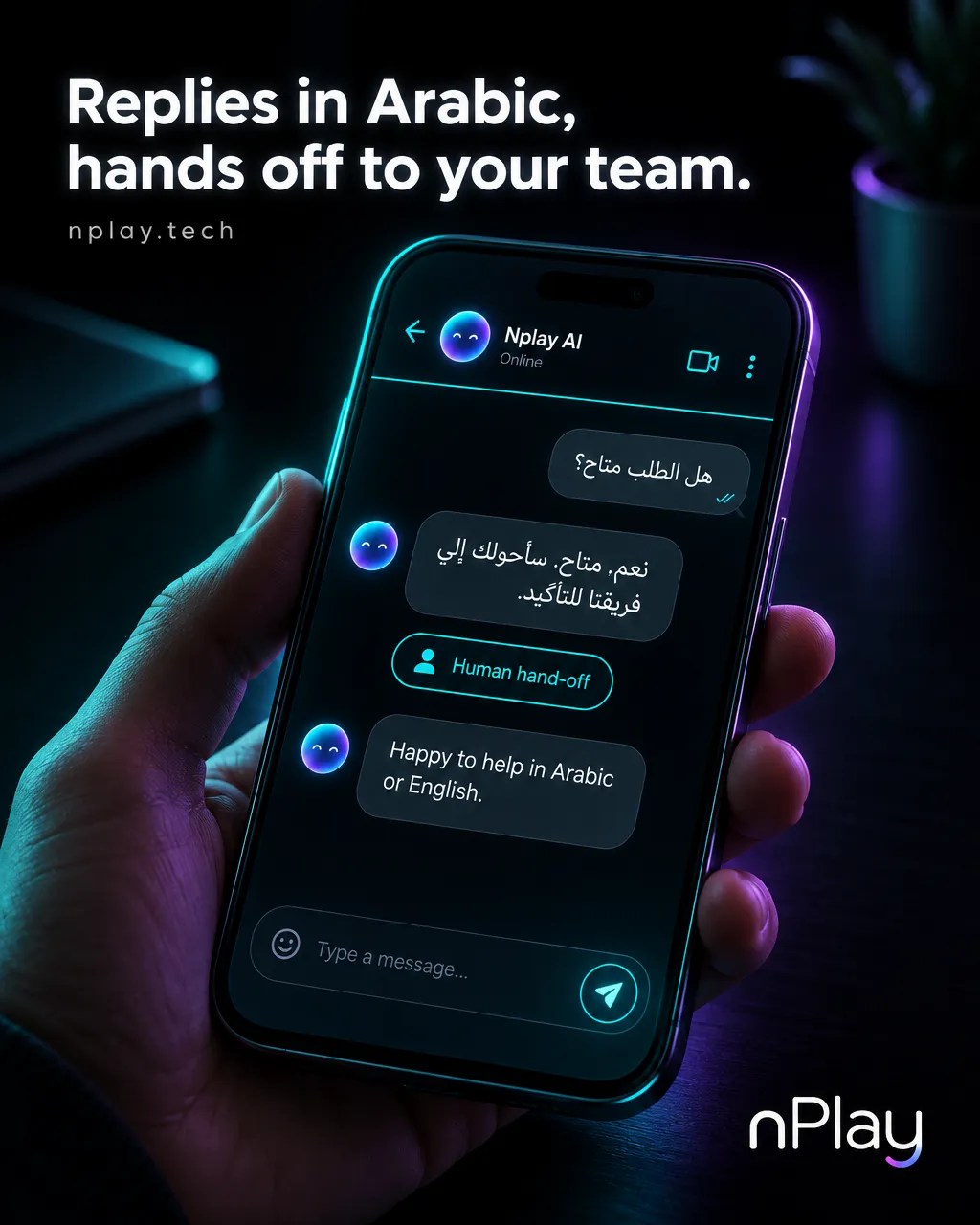
    A WhatsApp AI agent for small business is a language model that reads the customer’s message, finds the answer in a knowledge base you control, and replies in the same chat. When it is unsure, it hands the conversation to a person with a summary. It is not a decision-maker. It is a fast, polite first responder that never forgets your opening hours.

    If you want the wider picture first, read how agents differ from chatbots and plain automation. If you are ready to choose, the seven processes below are where we usually begin, in Amman and in Riyadh.

    Seven first processes

    What a small business can hand to the agent first

    Each of these is repetitive, rules-based and high-volume, and each has a clear moment where a person takes over.

    1

    Frequently asked questions

    Delivery areas, payment methods, what is included, how a service works. The agent answers from your approved text and says so when the answer is not there.

    2

    Opening hours and location

    Hours, holidays, the branch map and parking notes. Simple, constant and perfect for a first launch, because a wrong answer is easy to spot and fix.

    3

    Appointment requests

    The agent collects name, service and preferred day, then passes a clean request to reception for confirmation. Writing straight into a calendar can wait for a later phase.

    4

    Quote requests

    It asks the questions your sales team always asks, such as item, size, quantity, delivery area and photos, then sends one summary instead of ten scattered messages.

    5

    Order status

    With read-only access to your order system or a shared sheet, it tells the customer where the order stands. If the record is missing or odd, it hands over.

    6

    Lead qualification

    For a new enquiry it finds out what the person wants, for when and in which city, then tags the lead so your team calls the warm ones first.

    7

    After-hours capture

    At night and on days off it acknowledges the message, answers what it can and records the rest for the morning, so no enquiry waits unseen.

    What it could look like in a real chat

    Illustrative scenario one. A dental clinic in Amman receives a message late in the evening asking whether a treatment is offered and whether there is a slot next week. The agent greets the patient in Arabic, answers from the approved service list, collects a name and a preferred day, and explains that reception will confirm in the morning. A summary lands in the shared inbox. If the patient asks whether a symptom is serious, the agent does not advise. It hands over to staff.

    Illustrative scenario two. A furniture shop in Riyadh gets a request for a quote on a made-to-measure item. The agent asks for dimensions, the delivery district and a photo of the space, then sends the sales team one structured note. A price exception, or a customer who wants to negotiate, goes straight to a salesperson.

    Both scenarios contain no figures on purpose. The point is the shape of the work: the agent gathers and answers, the person decides.

    At a glance

    What each process needs and when a person steps in

    First processWhat the agent doesWhat it needs from youA person takes over when
    FAQsAnswers from your approved textA short, current list of questions and answersThe question is not covered or the customer is upset
    Hours and locationGives hours, holidays and directionsAccurate hours, holiday dates and a pinned locationA change is not yet in the knowledge base
    Appointment requestsCollects details and passes a requestServices, working days and a person who confirmsUrgent cases, changes to a confirmed visit
    Quote requestsAsks your standard questions and summarisesYour intake questions and a named salespersonCustomer asks for a price exception or custom terms
    Order statusReads the record and explains itRead-only access to orders and clear status wordingRecord is missing, late or disputed
    Lead qualificationAsks about need, timing and city, then tagsYour definition of a good leadLead is high value or asks for a call
    After-hours captureAcknowledges, answers and logs for morningOpening hours and a morning owner for the inboxAnything marked urgent by the customer
    Before day one

    What to prepare so a WhatsApp AI agent for small business starts well

    A good launch depends on a few ordinary documents, not on technology.

    • A knowledge base: the real answers, in your words, for the questions customers ask most. A handful of good answers beats a long list of vague ones.
    • Written escalation rules: which topics always go to a person, and what the agent must say when it hands over.
    • One owner for the inbox, with a backup, so a hand-off never sits unseen.
    • The languages and tone you want: Arabic, English or both, formal or friendly. We cover this in our note on Arabic dialects and AI agents.
    • A clean WhatsApp Business setup. Business messaging rules and message templates apply, and we set the agent up within them.
    • A sample of real past conversations with personal details removed, so we can test with the way your customers actually write.
    Keep these human

    What not to automate first

    • Complaints and anything where the customer is angry. A person should read these first.
    • Refunds, payment disputes and anything that moves money.
    • Medical, legal or financial advice. The agent can book and inform, not advise.
    • Price exceptions, discounts and custom terms.
    • Processes you have not yet written down. If your own team answers the same question different ways, fix that before an agent repeats all of them.
    • Anything involving sensitive personal data that you have not decided how to store.
    How we run it

    From one process to a team of agents

    1. Map the one process

      We write down the questions, the answers, the systems involved and the exact point where a person takes over.

    2. Connect the knowledge

      We load your approved answers and, if useful, connect read-only access to your CRM, ERP or order sheet.

    3. Test with real conversations

      We run past messages through the agent, in Arabic and English, and you read every answer before customers do.

    4. Launch with a human in the loop

      Every hand-off goes to your named owner with a summary. Conversations are logged so you can review what the agent said.

    5. Measure, then expand

      You watch how many conversations the agent closes and how many it hands over. When the first process is stable, we add the second.

    FAQ

    Questions small-business owners ask

    Do I need a special WhatsApp account?

    A business agent normally runs on a WhatsApp Business account connected through business messaging. Messaging rules, templates and customer opt-in apply, and we set everything up within them. We confirm the right account type during the brief.

    Will it answer in Arabic and in English?

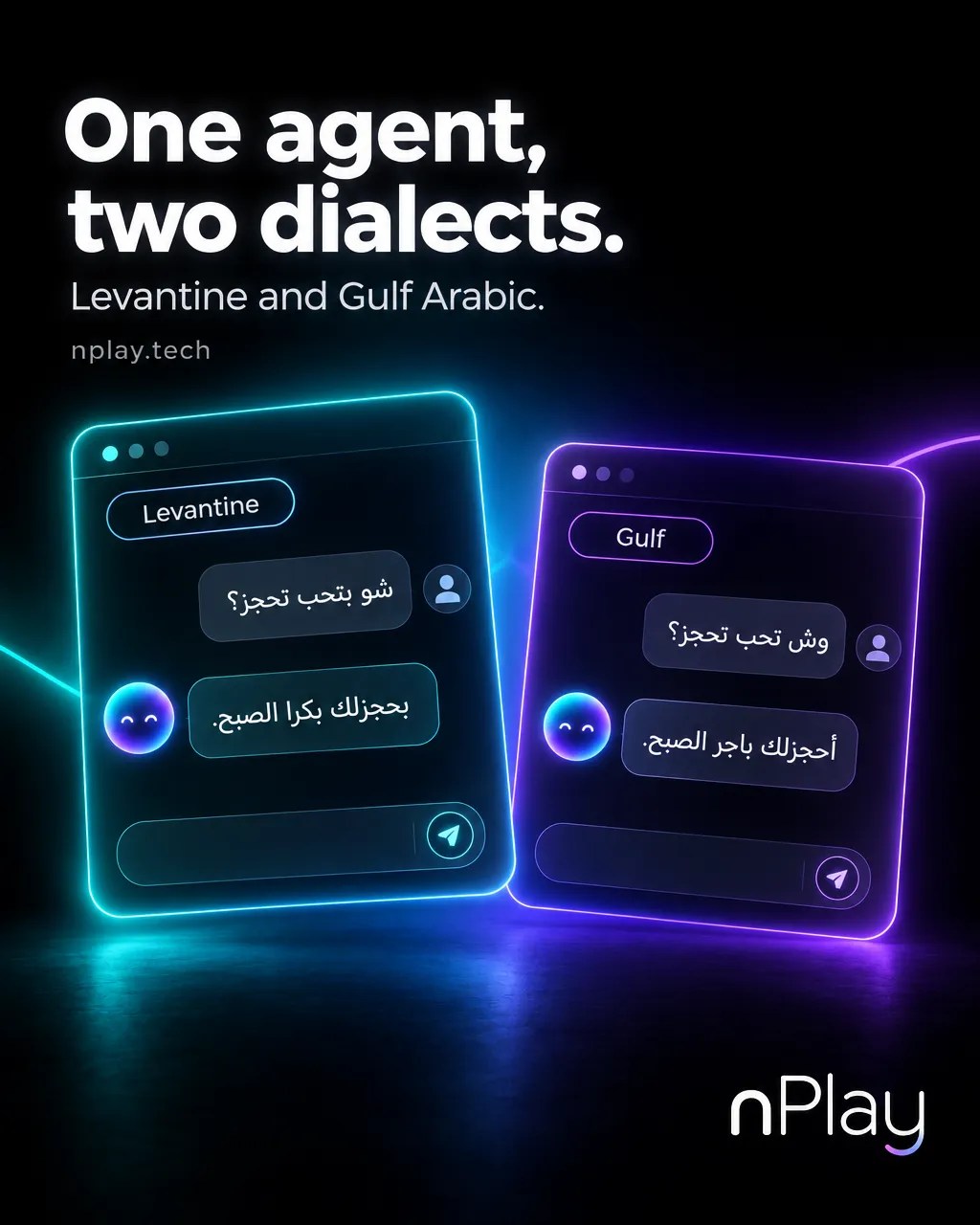
    Yes. Arabic, in Modern Standard and Gulf and Levantine dialect, and English are both first-class in our design. We test with your own customers’ messages instead of promising every dialect.

    What happens when the agent does not know the answer?

    It says so, offers a person, and passes your team a short summary of what the customer asked. It should never guess a price, a date or a policy.

    Can it connect to my CRM or accounting system?

    Yes, through APIs, usually read-only at first. Many small businesses start with a shared sheet or no integration at all and add the CRM or ERP link once the first process is stable.

    Further reading: NIST AI Risk Management Framework

    Quick questions about whatsapp ai agent for small

    Who is whatsapp ai agent for small for? Companies and institutions that want a clearer, faster experience for their customers and visitors.

    How long does whatsapp ai agent for small take? It depends on the size of the project and the content needed. We confirm the timeline after a short discovery call.

    How do I start with whatsapp ai agent for small? Contact the Nplay team in Amman or Riyadh and we will suggest a clear first step.

    Does whatsapp ai agent for small work in Arabic and English? Yes. We prepare the content in both languages from day one.

    One AI agent that answers in two dialects, by Nplay
    One AI agent that answers in two dialects, by Nplay
    AI agents for customer service by Nplay
    AI agents for customer service by Nplay
  • Why Saudi Arabia is the market for immersive tech right now

    Why Saudi Arabia is the market for immersive tech right now

    Hologram technology saudi arabia: a practical guide from Nplay. This article covers what matters about hologram technology saudi arabia, from the first idea to delivery.

    Investing in hologram technology? Saudi Arabia’s events and retail scene is one of the busiest in the region. We deliver holograms, VR training and digital twins from Riyadh and Amman, and we are asked regularly why we put so much of our effort into Saudi Arabia. The honest answer is arithmetic. Tourism spending, the events market, digital transformation budgets and metaverse investment in the Kingdom are all large and all growing, according to research cited in Nplay’s market brief. This post sets out the figures with their sources, explains what they mean for hologram technology in Saudi Arabia, VR training simulators and digital twins for giga projects, and describes how we work there.

    Why Saudi Arabia is the market for immersive tech right now

    Four numbers that explain our diary

    A company our size cannot be everywhere, so we choose markets by asking where the buyers, the budgets and the appetite for something new are all present at once. In 2026 that is Saudi Arabia, and four figures from our market brief show why.

    Tourism. The Kingdom recorded 60 million tourists and USD 38.13 billion in tourism spending in the first half of 2024, according to figures from the Minister of Tourism cited in our brief, with a national target of 100 million tourists a year by 2030 and investments in tourism projects put at USD 800 billion. Every visitor centre, heritage site and airport in that programme is a candidate for a hologram guide or a virtual tour.

    Events. The Saudi events management market was estimated at USD 2.38 billion in 2024 by Mordor Intelligence, as cited in the brief. Events are where holograms, AI presenters and virtual exhibition platforms are bought first.

    Digital transformation. Research and Markets, cited in the brief, put the Saudi digital transformation market at USD 18.4 billion in 2023, and MarketsandMarkets gives the global segment a 24.1 per cent compound annual growth rate. Digital twins and VR training sit inside that spend.

    Metaverse. Statista, cited in the brief, estimated the Saudi metaverse market at USD 23.0 billion in 2024; PwC expects the metaverse to add USD 15 billion to GCC economies by 2030, with Saudi Arabia taking about USD 7.6 billion — more than half.

    We are a vendor quoting figures that flatter our market, so we will be careful with them. But the direction is not in doubt.

    The figures

    Saudi Arabia in numbers

    $38.13BTourism spending in the first half of 2024, with 60 million tourists in the same periodMinister of Tourism figures, cited in Nplay’s market brief
    $2.38BSaudi Arabia events management market, 2024Mordor Intelligence, cited in Nplay’s market brief
    $18.4BSaudi Arabia digital transformation market, 2023Research and Markets, cited in Nplay’s market brief
    $23.0BSaudi Arabia metaverse market, 2024Statista, cited in Nplay’s market brief

    The technologies themselves are compounding

    The Saudi figures describe demand. The technology forecasts describe supply catching up with it, and they matter because a buyer wants to know that what they install this year will still be current in three.

    Our market brief cites Grand View Research on virtual reality growing from USD 13.63 billion in 2023 to USD 79.36 billion by 2030, a 27.5 per cent compound annual rate; Allied Market Research on the hologram market growing from USD 3.50 billion to USD 13.63 billion over the same period at 21.49 per cent; and Allied Market Research again on virtual tours at 27.9 per cent a year. Virtual events, per Grand View Research, grow at 18.8 per cent. The brief’s own summary is that the immersive sectors we work in exceed 11 per cent average growth, with the fastest close to 28 per cent.

    Two demographic facts from the same research make Saudi Arabia a better fit than the global average. Sixty-five per cent of the population is under 35, which is the cohort that treats a 3D browser experience or a talking hologram as normal rather than novel. And the Kingdom accounts for 51 per cent of GCC metaverse investment, ahead of the UAE at 22 per cent — the money for immersive projects is disproportionately here.

    We wrote about the metaverse side of this in our post on Saudi Arabia and Vision 2030. This post is about the practical consequence: what a company in Riyadh should buy first.

    Markets

    Market figures cited in Nplay’s brief, with sources

    MarketFigurePeriodSource (as cited in Nplay’s brief)
    Saudi tourism spendingUSD 38.13B · 60M touristsH1 2024Minister of Tourism
    Saudi tourism project investmentUSD 800BAnnounced programmeNplay market brief
    Saudi events managementUSD 2.38B2024Mordor Intelligence
    Saudi digital transformationUSD 18.4B2023Research and Markets
    Saudi metaverse marketUSD 23.0B2024Statista
    GCC metaverse contribution by 2030USD 15B (Saudi ≈ USD 7.6B)2030PwC
    Global VRUSD 13.63B → 79.36B (27.5% CAGR)2023–2030Grand View Research
    Global hologramUSD 3.50B → 13.63B (21.49% CAGR)2023–2030Allied Market Research
    Global virtual tours27.9% CAGR2023–2030Allied Market Research
    Digital transformation growth24.1% CAGRForecastMarketsandMarkets

    Why the buyers are ready, not just the budgets

    Numbers describe capacity. What makes a market is willingness, and our Saudi kick-off assessment listed the reasons we found it here. The Kingdom is “witnessing remarkable progress and development across diverse sectors”; government “prioritizes innovation and actively supports it” and “allocates significant budgets for innovation and digital transformation”; and, importantly for us, the market “lacks a sufficient number of companies specializing in innovative transformation”. Demand outruns local supply.

    There is also a structural fact that shaped our company: Saudi Arabia allows Jordanian companies to register with full ownership. Jordan’s IT sector is strong and its workforce skilled, but the home market is small and competitive, with no large-scale public IT companies and limited access to capital. So we develop in Amman and deliver in Riyadh. The engineering, the 3D studio and the platform work happen where the talent is; the sales, installation and support happen where the projects are.

    The buyers themselves have changed. Five years ago a hologram was a launch-night novelty. Today procurement teams at tourism authorities, developers and universities ask about content pipelines, uptime and analytics — the questions of someone who intends to run the thing for three years. That shift from spectacle to operations is the clearest sign that a market has arrived.

    Three things Saudi buyers are actually commissioning

    Across our enquiries in Riyadh, three categories recur, and each ties back to one of the figures above.

    Hologram technology for tourism and events. A life-size Halo Box with an AI avatar at a visitor centre, a launch or an exhibition stand, speaking Arabic and English from the client’s own knowledge base. The tourism and events figures are why; the fact that the box ships complete and needs only power and internet is how. Our post on AI holograms for Saudi events covers the event side in detail.

    VR training simulators. Industrial, medical and safety training where the real equipment is expensive or dangerous. A VR training simulator in Saudi Arabia is bought by the training department, not the marketing department, and it is judged on hours of safe practice per trainee. The digital transformation budget is where it sits.

    Digital twins for giga projects and facilities. Developments that do not yet exist need to be sold, planned and later operated. A digital twin serves all three: a virtual showroom before construction, a planning model during it, and a facilities-management twin afterwards. The scale of the Kingdom’s development programme makes this the category with the longest runway.

    Behind all three sits the same platform work — 3D content, avatars, cloud management — which is why a client who starts with one usually ends up with two.

    Riyadh for delivery, Amman for building

    Our approach in the Kingdom follows the plan we set ourselves: find the right partner in each industry, build a product ecosystem for that industry rather than selling isolated gadgets, earn credibility with delivered projects and case studies, and keep development capacity in Amman so that market feedback turns into product changes quickly.

    In practice that means a client in Riyadh deals with a local team for scoping, installation, training and support, while the 3D studio and the platform engineers in Amman do the building. Demos are run on real hardware, with the client’s own content, before anyone signs. And we price to make a first project easy — a rental, a pilot, a single site — because in this market the second project is where the relationship is decided.

    If you are weighing an immersive project in Saudi Arabia this year, our advice is to ignore the trillion-dollar forecasts and ask a smaller question: which one project, in one location, would pay back within a season? In this market, in 2026, there are several honest answers. We would be glad to help you find yours.

    FAQ

    Hologram technology Saudi Arabia: frequently asked questions

    Where do the Saudi market figures come from?

    From research houses and official statements cited in Nplay’s market brief: the Minister of Tourism for tourism spending and visitor numbers, Mordor Intelligence for events, Research and Markets for digital transformation, Statista for the metaverse market and PwC for the GCC contribution by 2030.

    Does Nplay have a presence in Saudi Arabia?

    Yes. We deliver, install and support projects from Riyadh, with engineering and the 3D studio in Amman. Demos are available in both cities.

    Which immersive project should a Saudi company start with?

    The one with a measurable outcome in one season: a hologram at a visitor centre or event, a VR training module for dangerous equipment, or a digital twin of a development that needs to be sold before it is built.

    Are these forecasts reliable?

    They are directions, not promises. Different research houses define markets differently and revise them yearly. We quote them with their sources and recommend that buyers judge by a measured pilot rather than by any forecast, including ours.

    Further reading: Holography (Wikipedia)

    Quick questions about hologram technology saudi arabia

    Who is hologram technology saudi arabia for? Companies and institutions that want a clearer, faster experience for their customers and visitors.

    How long does hologram technology saudi arabia take? It depends on the size of the project and the content needed. We confirm the timeline after a short discovery call.

    How do I start with hologram technology saudi arabia? Contact the Nplay team in Amman or Riyadh and we will suggest a clear first step.

    Does hologram technology saudi arabia work in Arabic and English? Yes. We prepare the content in both languages from day one.

    hologram technology saudi arabia: Holographic display in a mall atrium by Nplay
    Holographic display in a mall atrium by Nplay
    Hologram display box showcase by Nplay
    Hologram display box showcase by Nplay
    Life-size hologram museum guide by Nplay in Jordan
    Life-size hologram museum guide by Nplay in Jordan
  • XR platform for universities Jordan: a nine-point buyer’s checklist

    XR platform for universities Jordan: a nine-point buyer’s checklist

    Xr platform for universities jordan: a practical guide from Nplay. This article covers what matters about xr platform for universities jordan, from the first idea to delivery.

    A university does not buy a 3D and XR teaching platform once and forget it; it lives with the decision for years. This checklist gives nine questions to put to any supplier, from ownership and licences to the LMS, analytics for deans and the pilot. We use the MIHWAR prototype, built by our team for a Jordanian university, as one worked example of answering each, including what it does not do yet.

    XR platform for universities Jordan: a nine-point buyer's checklist

    Why an XR platform is a procurement decision, not a demo

    Choosing an XR platform for universities Jordan and the Gulf can still rely on in five years mostly comes down to what happens after the demo. Demos show the best model in the catalogue. They rarely show who owns it, who checked it, which course module it serves, or what happens to your students’ work when the contract ends.

    The nine questions below are the ones we would ask from the buyer’s side of the table, and they apply to any supplier, including us. We show how MIHWAR answers each. MIHWAR (Nplay for Interactive Solutions, Amman) is “the 3D and XR teaching platform the university owns”: a working prototype prepared for a Jordanian university, not a deployed service. We say where its answers stop.

    The checklist

    Nine questions, and how one platform answers them

    QuestionWhat to look forHow MIHWAR answers
    1. Ownership and exportNamed owner, open format, export on demandNamed owner on every asset; glTF in the university’s own storage
    2. Licence declarationA licence recorded on every assetDeclared licence beside every owner
    3. Coverage by moduleAn auditable module list per collegePlanning target of about 660 assets across eleven colleges
    4. Review workflowNamed academic reviewer, queue, publish stepFour production routes, one academic review gate
    5. Devices and WebXROne scene on every deviceBrowser, headset over WebXR, phone AR, Unity or Unreal
    6. LMS linkA plain statement of what is connectedProgress would come from the LMS in a real deployment; not connected in the prototype
    7. Analytics for deansCoverage, contribution, outcomesPlanned for months 7 to 12
    8. Roadmap honestyNow, planned and research kept apartFour tiers, the last not costed or promised
    9. Pilot firstA trial a lecturer can run aloneBrowser, 22-stop tutorial, about six minutes

    Ownership, export and the licence declaration

    Start here, because everything else depends on it. A per-seat subscription library gives access, not ownership: when the subscription stops, the access stops. Ask where each file lives, in what format and who can open it without the supplier. Open formats such as glTF matter because any 3D tool can read them. We set out the economics in university-owned 3D library vs per-seat subscription.

    Then ask about licences. Every asset should carry a declared licence and a named owner, so a lecturer knows whether a model can be shown at an open day or shared with another college. In MIHWAR every model, scene and 360° capture carries both.

    Student contribution adds one more question. MIHWAR’s student marketplace idea, a way for students to earn from models they contribute, is a proposal for the university’s legal office only. It touches intellectual property, student contracts and tax, we expect it to change in review, and we promise no earnings. Settle student intellectual property before the first upload.

    Coverage mapped to modules, and a review workflow that scales

    Catalogue size is the number suppliers advertise and buyers should distrust. Ask for three numbers instead: how many of your modules are mapped, how many assets carry a defensible licence, and how many an academic in the owning college has checked. MIHWAR’s planning target is about 660 assets, described as covering every practical module in eleven colleges: a number a university can reach, audit and own.

    Coverage needs production routes. MIHWAR has four: student coursework, campus capture, AI-assisted generation and commissioned modelling, all through the same academic review gate. A student uploads, an academic reviews, and the asset joins the library. Because the library grows by coursework rather than by purchase order, cost per module falls each year instead of recurring. See student-built 3D content for a university library.

    Ask whether the platform handles places as well as objects. A lecturer can capture a ward, a hangar or a dig site on a consumer 360° camera and add numbered teaching hotspots; see 360° captures with teaching hotspots.

    For AI generation, ask whether a human decides after the draft. In MIHWAR’s AI Studio a draft model comes back in under a minute and a human decides whether it is fit for students. In the prototype the geometry is synthesised in the browser as a stand-in for a provider call; the review gate, licence declaration and flow are real. Status: generation live, review gate live, provider calls specified. Detail in AI 3D generation and the review gate.

    Devices and WebXR reach, the LMS link and analytics for deans

    Devices. Ask for the same content on every device. MIHWAR runs one scene in a browser with no install, in a headset over WebXR, on a phone in AR from the same URL, and in Unity or Unreal as glTF plus a scene manifest. WebXR reaches what a headset’s browser can reach; native headset breadth is year 2 research, not promised. See one scene, four ways out.

    The LMS. Ask exactly what is connected. In the prototype the student home shows tasks set by instructors, such as contributing a model or building an experience from three library models. Course progress would come from the LMS in a real deployment; the prototype does not connect to one.

    Deans. Deans need coverage per module, contribution per college and attempt outcomes. In MIHWAR these are scheduled for months 7 to 12. If a supplier shows a dashboard, ask whether it is live data or a design.

    Question 8

    Roadmap honesty: working now, planned, and research

    TierWhat it coversStatus
    Working nowTen capabilities, including the model viewer, 360° hotspots, level builder, review queue and exportTry it today
    Months 1 to 6Eight planned itemsPlanned
    Months 7 to 12Seven items, including lecturer-led multi-user sessions, an Unreal SDK plugin, AI generation behind the review gate, a public API and analytics for deansPlanned
    Year 2 onwardsFive research items, including native headset breadth beyond WebXR and cross-institution library sharingNot costed, not promised
    Stated limits

    What the MIHWAR prototype does not do yet

    • The 3D models are indicative rather than teaching-grade.
    • The 360° captures are painted rather than photographed.
    • Four stages of the ingest pipeline are represented rather than executed.
    • The developer REST endpoints are design, not deployment.
    • It is a prototype: no deployment, contract, users or results are claimed.

    Pilot first, then decide

    A supplier who states its limits is easier to trust, and a pilot turns trust into evidence. The best test of an XR platform for universities Jordan lecturers will use is one a lecturer can run without IT help. MIHWAR’s guided tutorial has 22 stops, takes about six minutes and covers three roles: student, instructor and university.

    Then pilot one college and one set of practical modules. Decide beforehand what you will measure, such as modules mapped, assets reviewed and time from upload to publication, and what result would make you stop. The same questions apply across the Gulf, and to our campus use case. To put them to us, write to info@nplay.tech or request a conversation.

    FAQ

    XR platform for universities Jordan: frequently asked questions

    What should a university ask first when choosing an XR teaching platform?

    Who owns each asset, in which format, and whether the university can export everything if the contract ends.

    Is a bigger asset library always better?

    No. What counts is how many assets map to your course modules, carry a defensible licence and were checked by an academic in the owning college.

    Do students need headsets?

    Not with a browser-first platform. MIHWAR runs in a browser with no install, in a headset over WebXR, and on a phone in AR from the same URL.

    Is MIHWAR available now?

    It is a working prototype built by Nplay and prepared for a Jordanian university, not a deployed service. Write to info@nplay.tech to discuss a pilot.

    Further reading: Extended reality (Wikipedia)

    Quick questions about xr platform for universities jordan

    Who is xr platform for universities jordan for? Companies and institutions that want a clearer, faster experience for their customers and visitors.

    How long does xr platform for universities jordan take? It depends on the size of the project and the content needed. We confirm the timeline after a short discovery call.

    How do I start with xr platform for universities jordan? Contact the Nplay team in Amman or Riyadh and we will suggest a clear first step.

    Does xr platform for universities jordan work in Arabic and English? Yes. We prepare the content in both languages from day one.

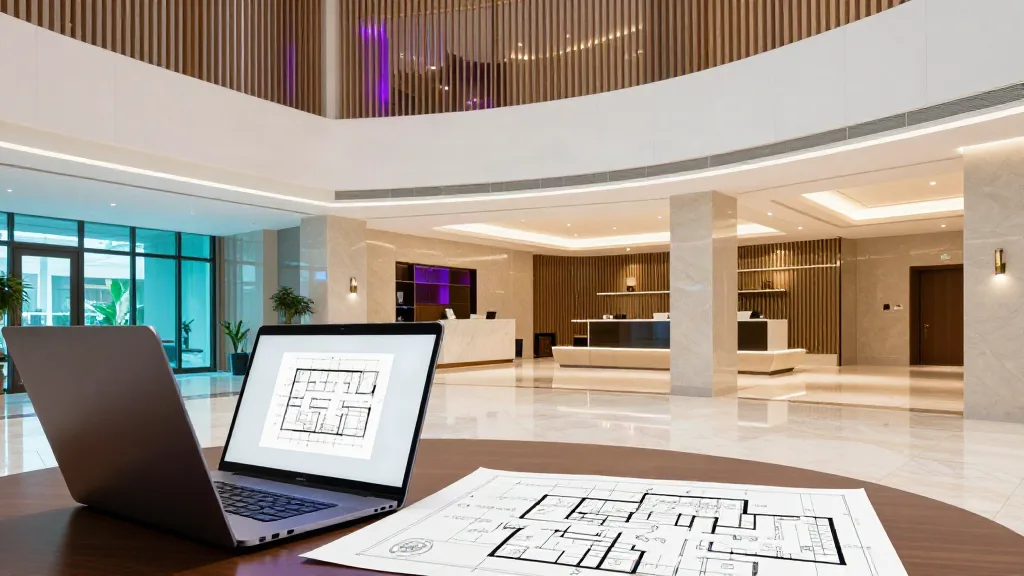
    3D virtual tours for properties and showrooms by Nplay
    3D virtual tours for properties and showrooms by Nplay
    3D real estate model by Nplay
    3D real estate model by Nplay
    3D city model digital twin by Nplay
    3D city model digital twin by Nplay
  • Holograms Since 2018: Why Saudi Arabia’s Events Boom Needs a Digital Presenter

    Holograms Since 2018: Why Saudi Arabia’s Events Boom Needs a Digital Presenter

    AI holograms for Saudi events: a practical guide from Nplay. This article covers what matters about AI holograms for Saudi events, from the first idea to delivery.

    Eight Years Before It Was a Trend

    Holographic presenters look like a very current idea, but Nplay has been building them since 2018 – long before hologram technology became a standard line item on an exhibition budget. That heritage matters now because Saudi Arabia and the wider GCC are in the middle of an entertainment and events expansion built directly into Vision 2030: megacities like Qiddiya are being developed specifically around entertainment, sports, culture and gaming, and that is driving an exhibition, launch and conference calendar that keeps growing across the region.

    Holograms Since 2018: Why Saudi Arabia's Events Boom Needs a Digital Presenter

    Nplay is not affiliated with Qiddiya or any other giga-project – the point is simply that the market they represent, live events built to impress an audience, is exactly what a holographic presenter is built for.

    What an AI Hologram Presenter Delivers

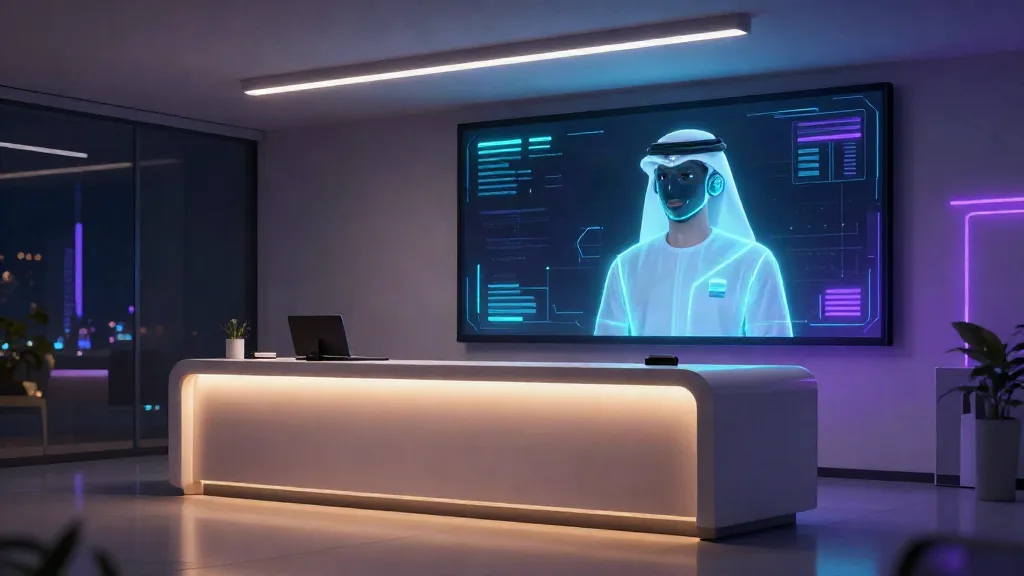
    Nplay’s hologram is a life-size holographic figure designed for lobbies, exhibitions and product launches, commanding enough to anchor a stand without a human presenter standing there all day. It runs the same conversational AI as Nplay’s AI Receptionist, so it answers real questions with real answers instead of a looping script. Characters can be fully custom – a brand ambassador, a historical figure for a museum exhibit, or a digital twin of an actual presenter’s likeness and voice.

    It works in two modes: Show Mode for scheduled, narrated presentations, and Interactive Mode for on-demand conversation with visitors who want to ask their own questions. Every script, character design and bilingual voice is produced in-house through Nplay’s content studio, and the whole setup is available either for rental, for a single event, or as a permanent installation.

    One Brain, Two Bodies

    Because the hologram and the AI Receptionist share the same underlying AI, an organization can deploy both from a single knowledge base – a receptionist kiosk at the entrance and a holographic presenter on the main stage, both trained once and both answering consistently in Arabic and English.

    Rental for a Weekend, or a Fixture for Good

    Not every use case needs a permanent installation. A single conference or product launch can rent the hologram for the event; a flagship showroom or corporate lobby can make it permanent. Either way, the character, script and voice are built specifically for that organization, not pulled from a stock library.

    Built for a Region That Keeps Announcing the Next Event

    As Saudi Arabia and the GCC’s exhibition, retail and entertainment calendar keeps expanding, the organizations that stand out are the ones whose first impression does not look like everyone else’s booth. Eight years into building holograms, Nplay can help you make that impression.

    Further reading: Holography (Wikipedia)

    Quick questions about AI holograms for Saudi events

    Who is AI holograms for Saudi events for? Companies and institutions that want a clearer, faster experience for their customers and visitors.

    How long does AI holograms for Saudi events take? It depends on the size of the project and the content needed. We confirm the timeline after a short discovery call.

    Holographic display in a mall atrium by Nplay
    Holographic display in a mall atrium by Nplay
    Hologram display box showcase by Nplay
    Hologram display box showcase by Nplay
    Life-size hologram museum guide by Nplay in Jordan
    Life-size hologram museum guide by Nplay in Jordan

    In short, AI holograms for Saudi events works best when it starts from a clear goal. Nplay plans AI holograms for Saudi events around your audience, your space and your budget.

  • AI + Immersive Tech: The New Marketing Stack for 2026

    AI + Immersive Tech: The New Marketing Stack for 2026

    Attention is the currency

    Feeds are saturated. The brands winning attention in 2026 practice AI immersive marketing — combining AI for speed and scale with immersive experiences for depth. AI produces a hundred variations overnight; a hologram or VR activation makes people stop and feel.

    AI + Immersive Tech: The New Marketing Stack for 2026

    The AI immersive marketing stack we deploy at Nplay

    • AI-powered graphic and video design for always-fresh content
    • Multilingual campaigns — Arabic, English, Chinese — tuned per market
    • Immersive activations: holograms, VR corners, interactive walls
    • Data loops: what the installation learns feeds the next campaign

    Measure what matters

    Impressions are vanity; dwell time, shares and qualified leads are sanity. Immersive activations routinely deliver dwell times of minutes — not seconds — and the AI layer converts that attention into retargetable audiences.

    Further reading: NIST AI Risk Management Framework

    One AI agent that answers in two dialects, by Nplay
    One AI agent that answers in two dialects, by Nplay
    AI agents for customer service by Nplay
    AI agents for customer service by Nplay
    AI immersive marketing: AI agent handing a conversation to the team, by Nplay
    AI agent handing a conversation to the team, by Nplay
  • The Reception Desk That Never Closes: Arabic AI for Saudi Arabia’s Service Economy

    The Reception Desk That Never Closes: Arabic AI for Saudi Arabia’s Service Economy

    A Region Redesigning Its Front Door

    Saudi Arabia’s Vision 2030 program has pushed the Kingdom into one of the fastest periods of service-sector expansion anywhere in the world – new government service centers, retail destinations, healthcare facilities and hospitality brands, most of them opening bilingual, most of them expected to perform from day one. Across the wider GCC, the same pattern holds: research from MarkNtel Advisors puts the region’s augmented and virtual reality market on a roughly 39 percent compound annual growth rate through 2028, with healthcare, education, retail and entertainment named as the sectors pulling that growth hardest. Front-of-house technology is part of that wave, and it starts with the first thing every visitor meets: the reception desk.

    The Reception Desk That Never Closes: Arabic AI for Saudi Arabia's Service Economy

    The problem is that most reception desks were not built for this pace. A single receptionist can greet one visitor at a time, works fixed hours, and has no memory of what the last thousand visitors actually asked. Nplay built an Arabic AI receptionist to close that gap.

    What an Arabic AI Receptionist Actually Does

    This is not a chatbot bolted onto a lobby screen. Nplay’s AI receptionist is a digital human that holds natural conversations in Arabic and English, switching languages automatically as a visitor switches. It is trained on the specific organization it represents – services, locations, FAQs and live data pulled in through integrations – so answers are accurate rather than generic. It runs on screens, touch kiosks or the web, and can be projected as a full AI Hologram for a more physical presence at an entrance or exhibition stand.

    Two details make it useful beyond the greeting. First, visitor analytics: every conversation becomes data on what people ask, when and where, insight a human front desk never captured. Second, human handover: when a request needs a person, the AI escalates it by call or ticket instead of leaving a visitor stuck talking to a machine.

    Why Saudi Arabia and the GCC Specifically

    Vision 2030’s giga-projects – NEOM, Qiddiya, Red Sea Global – are not Nplay engagements, and this article makes no claim that they are. What they are is the clearest public evidence of the scale Saudi Arabia is building at, and the reason bilingual, always-on visitor experience has moved from a nice-to-have to an expectation across the Kingdom’s service economy. A hospital in Jeddah, a mall in Riyadh, a government service center anywhere in the GCC now competes on the same first impression as a giga-project welcome center, and an Arabic-first AI receptionist is one of the more direct ways to meet that bar without adding headcount.

    One Brain, Two Bodies

    Nplay’s AI receptionist and its AI Hologram presenter share the same conversational AI backend – the same trained knowledge, the same bilingual voice intelligence, just displayed differently. A visitor center might run the receptionist on a touch kiosk at the door and the hologram on stage for an event, both drawing on the same brain. That shared foundation is also why the avatars themselves are brandable: appearance, uniform, voice and personality styled to match the organization they represent, not a generic off-the-shelf character.

    Getting Started

    An Arabic AI receptionist is not a replacement for your team, it is a way to make sure no visitor – in Arabic or English, at 9am or 9pm – meets an empty desk. If you are opening a new site in Saudi Arabia or elsewhere in the GCC and want to see what it looks like for your organization, Nplay can walk you through it.

    Further reading: NIST AI Risk Management Framework

    Quick questions about Arabic AI receptionist

    Who is Arabic AI receptionist for? Companies and institutions that want a clearer, faster experience for their customers and visitors.

    How long does Arabic AI receptionist take? It depends on the size of the project and the content needed. We confirm the timeline after a short discovery call.

    One AI agent that answers in two dialects, by Nplay
    One AI agent that answers in two dialects, by Nplay
    AI agents for customer service by Nplay
    AI agents for customer service by Nplay
    Arabic AI receptionist: AI agent handing a conversation to the team, by Nplay
    AI agent handing a conversation to the team, by Nplay
  • Sell It Before It’s Built: Digital Twins for Saudi Arabia’s Development Boom

    Sell It Before It’s Built: Digital Twins for Saudi Arabia’s Development Boom

    Digital twins: a practical guide from Nplay. This article covers what matters about digital twins, from the first idea to delivery.

    A Region Building Faster Than Buyers Can Visit

    Saudi Arabia’s Vision 2030 giga-projects – NEOM, Qiddiya, Red Sea Global – are not Nplay engagements. They are mentioned here only because they are the clearest public evidence of the scale and speed the Kingdom is building at, and because the way those projects are increasingly measured tells you something useful: analysts now track them by operating GDP, meaning signed tenants, operating hotels, paid admissions and private financing, rather than by construction announcements alone. That is a market built on selling space before it is finished, and that same pressure now sits on every developer, retailer and hospitality brand across Saudi Arabia and the wider GCC, not just the headline projects.

    Sell It Before It's Built: Digital Twins for Saudi Arabia's Development Boom

    The industry-wide answer to how you sell something that does not exist yet is the digital twin.

    What a Digital Twin Actually Is

    Not a render, not a fly-through video – a digital twin is a virtual showroom of your actual space, factory or product line that customers and stakeholders can explore themselves, in a browser or in VR, before they ever visit. Nplay builds these as accurate 3D replicas of campuses and venues, with product configurators that let buyers explore colors, options and specs on a living model rather than a brochure. Tours can be guided and narrated or left free for self-exploration, bilingual as standard – a detail that matters everywhere in the GCC, not only Saudi Arabia.

    From Browser to Boardroom to Headset

    A digital twin only earns its place if it does more than look good. Nplay connects each one to real sales infrastructure – enquiry forms, booking flows and catalogue links – so the twin actively sells rather than just shows. It also runs beyond the browser: the same model works in a VR headset, and inside Nplay’s own Arabic metaverse for events and commerce, so a single build serves a sales office, a trade show booth and an online buyer at the same time.

    The Data a Physical Showroom Cannot Give You

    Every visit to a digital twin is measurable – which units get explored, which configurations get compared, where visitors spend their time. That is analytics no physical showroom has ever been able to offer a developer, and it is the kind of evidence-based feedback loop that fits a market increasingly judged on real operating numbers rather than announcements.

    The Number Behind the Trend

    Regional demand backs this up directly: MarkNtel Advisors puts the GCC’s augmented and virtual reality market at roughly a 39 percent compound annual growth rate between 2023 and 2028, spanning the UAE, Saudi Arabia, Qatar, Kuwait, Bahrain and Oman, with construction named as one of the sectors adopting earliest in Saudi Arabia specifically. Digital twins sit squarely inside that curve.

    Building for the Same Wave

    You do not need a giga-project budget to use giga-project tools. If you are bringing a development, retail concept or product line to market anywhere in Riyadh, Saudi Arabia or the GCC and want buyers to experience it before it is finished, Nplay can build the twin.

    Further reading: Digital Twin Consortium

    Quick questions about digital twins

    Who is digital twins for? Companies and institutions that want a clearer, faster experience for their customers and visitors.

    How long does digital twins take? It depends on the size of the project and the content needed. We confirm the timeline after a short discovery call.

    3D virtual tours for properties and showrooms by Nplay
    3D virtual tours for properties and showrooms by Nplay
    3D city model digital twin by Nplay
    3D city model digital twin by Nplay

    In short, digital twins works best when it starts from a clear goal.

  • Discover the Hidden Details: The Story Behind the Nplay Brand

    Discover the Hidden Details: The Story Behind the Nplay Brand

    The Nplay brand story: the magnifying glass

    The Nplay brand story starts the same way every project does: looking closer. Our brand mark — a curious character behind a magnifying glass — is a promise: we discover the solutions hidden in details that others walk past.

    Discover the Hidden Details: The Story Behind the Nplay Brand

    Read. Inspect. Write.

    Our method mirrors the three poses of our brand character: read the market and the brief deeply; inspect every assumption with the magnifying glass; then write the solution — in design, in code, in strategy.

    When Tech is blended with Art

    Details are where technology meets emotion. A hologram that rotates a half-second slower. An interface in Arabic that feels native, not translated. A market-entry deck that speaks the buyer’s dialect. These details are invisible when done right — and unmistakable when missing.

    That’s the Nplay vibe: light, precise, curious — and always looking closer.

    Further reading: Extended reality (Wikipedia)

  • The Future of Virtual Reality (VR): Transforming Business, Experience, and Reality

    The Future of Virtual Reality (VR): Transforming Business, Experience, and Reality

    What is Virtual Reality (VR)?

    Virtual Reality (VR) is a technology that immerses users in a fully digital environment using specialized devices such as VR headsets and sensors — and this shift from screens to space is what defines the future of virtual reality. Unlike traditional screens, VR allows users to experience, interact, and move inside a digital world as if it were real.

    The Future of Virtual Reality (VR): Transforming Business, Experience, and Reality

    From gaming to business applications, VR is no longer just entertainment—it’s becoming a powerful tool for industries worldwide.


    Why VR is More Than Just Technology

    Virtual Reality is not just about visuals. It’s about experience transformation.

    Instead of explaining a concept, VR allows you to:

    • Walk inside a building before it’s built
    • Experience a product before buying
    • Train employees in a risk-free environment
    • Engage customers emotionally and interactively

    This shift from “telling” to “experiencing” is what makes VR one of the most powerful technologies today.


    Key Applications of Virtual Reality in Business

    1. Architecture & Real Estate

    VR allows clients to explore projects in 3D before construction begins. This reduces errors, improves decision-making, and enhances client confidence.

    2. Training & Simulation

    Industries such as healthcare, aviation, and manufacturing use VR to simulate real-life scenarios safely and efficiently.

    3. Marketing & Brand Experience

    Companies are using VR to create immersive brand experiences that leave a lasting impression. Instead of ads, users live the story.

    4. Events & Exhibitions

    Interactive VR environments transform exhibitions into memorable experiences—something your company already focuses on through immersive solutions


    How VR is Changing Customer Behavior

    Modern users don’t want static content anymore. They want:

    • Interaction
    • Personalization
    • Immersion

    VR delivers all three.

    A customer who experiences your product in VR is far more likely to trust, remember, and purchase compared to traditional marketing methods.


    The Business Advantage of VR

    Companies adopting VR early gain a strong competitive edge:

    • Higher engagement rates
    • Increased conversion rates
    • Stronger brand positioning
    • Better communication of complex ideas

    For companies entering new markets, VR combined with localization strategies becomes even more powerful, aligning experiences with cultural expectations


    Challenges of VR (And How to Overcome Them)

    Let’s be realistic—VR is powerful, but not plug-and-play.

    Common challenges:

    • High initial cost
    • Content development complexity
    • User adoption barriers

    But here’s the truth:
    Companies that treat VR as a long-term strategic investment, not a short-term tool, are the ones winning.


    The Future of VR: From Tool to Ecosystem

    We are moving toward a future where VR becomes part of daily life:

    • Digital twins of buildings
    • Virtual offices and collaboration spaces
    • Metaverse-based commerce
    • AI-powered immersive environments

    This is where companies like yours have a real advantage—combining VR + AI + business development creates a full ecosystem, not just a service.


    Final Thoughts

    Virtual Reality is no longer optional for forward-thinking companies.

    It is becoming a core layer of communication, experience, and business development.

    The question is no longer:

    “Should we use VR?”

    But:

    “How fast can we integrate it into our strategy?”

    Further reading: Virtual reality (Wikipedia)

    Quick questions about future of virtual reality

    Who is future of virtual reality for? Companies and institutions that want a clearer, faster experience for their customers and visitors.

    How long does future of virtual reality take? It depends on the size of the project and the content needed. We confirm the timeline after a short discovery call.

    How do I start with future of virtual reality? Contact the Nplay team in Amman or Riyadh and we will suggest a clear first step.

    Does future of virtual reality work in Arabic and English? Yes. We prepare the content in both languages from day one.

    Virtual 3D event space built by Nplay
    Virtual 3D event space built by Nplay
    VR training for your team, by Nplay
    VR training for your team, by Nplay
    VR training demo by Nplay at an exhibition
    VR training demo by Nplay at an exhibition

    In short, future of virtual reality works best when it starts from a clear goal. Nplay plans future of virtual reality around your audience, your space and your budget.