Key takeaways
- Buying parts from different suppliers creates gadgets that do not talk to each other.
- The real asset is your 3D content. Build it once and reuse it everywhere.
- One ecosystem covers the website, the showroom, the hologram, signage and sales tablets.
- One partner owns the outcome, so you do not manage five vendors.
- It is a one-time foundation you keep extending, not a series of disconnected purchases.
The problem with buying piece by piece
- The hologram content was made in a format your website cannot use.
- The screen supplier does not make content, so you pay a third party.
- Nobody connects it to your website, CRM or sales team.
- When something changes, you update it in five places, or not at all.
You spent real money and got a collection of gadgets. The customer still cannot explore your product online, and your team still sends PDFs.
What the ecosystem includes
- 3D content of your products and spaces, built once in open formats.
- An immersive website where visitors rotate products and walk through spaces.
- A virtual showroom customers visit from anywhere, with a sales person if they want one.
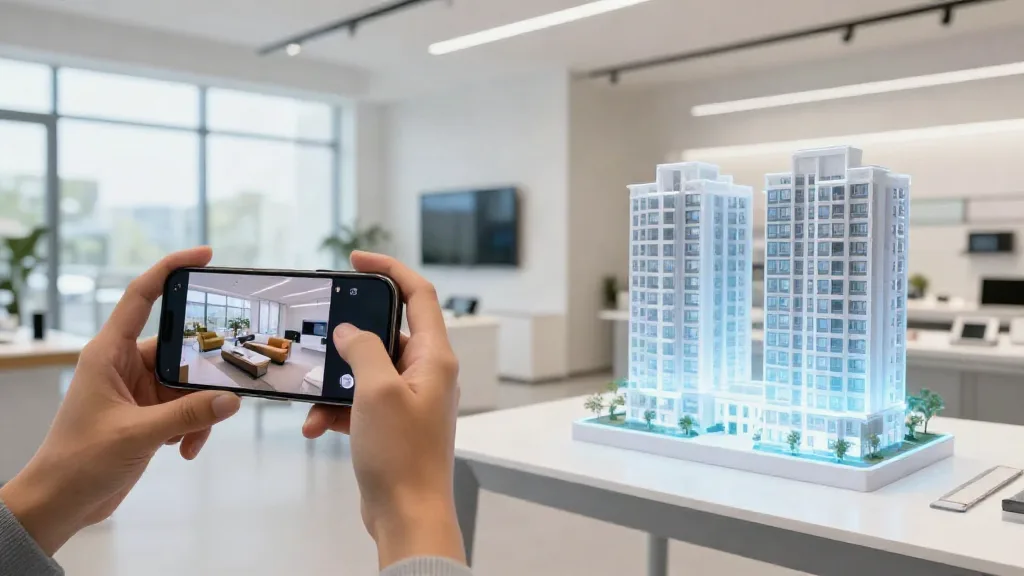
- Physical touchpoints: hologram displays, screens and interactive kiosks in your shop, stand or lobby.
- Sales tools: the same models on a tablet in a meeting, or in a 3D virtual tour link sent on WhatsApp.
Why one virtual showroom ecosystem costs less over time
The expensive part of immersive technology is not the screen. It is the content and the integration. In an ecosystem you pay for each 3D model once. Open formats such as glTF let the same model run on the web, in the showroom and on display hardware.
Every new channel then costs a fraction of the first one, because the foundation already exists. That is the difference between an investment and an expense.
One partner, one outcome
When five vendors each deliver a part, nobody is responsible for the result. When one partner designs the whole system, the questions change from "is the screen working?" to "are customers understanding the product and buying faster?"
We have worked with brands across different industries and source hardware directly from manufacturers, so we can choose the right device for each touchpoint instead of selling the one we have in stock.
How to start
1. List the products or spaces customers struggle to see. 2. Build the 3D content for those first. 3. Launch them on your website and in a virtual showroom. 4. Add the physical touchpoints that make sense: a hologram at the entrance, screens on the stand. 5. Measure and extend.
Read why a hologram display is now a business need, or tell us what you sell and we will sketch the ecosystem with you.
Further reading: glTF, the open 3D format (Khronos Group) · Virtual tour (Wikipedia)
Virtual showroom: frequently asked questions
What is a virtual showroom?
An online space where customers explore your products or spaces in 3D from any device, often with a sales person available. In an ecosystem it shares the same 3D content as your website and physical displays.
Why not just buy a hologram display?
You can, if you only need one attraction. If you want customers to understand and buy, the content should also live on your website, in a showroom and in sales meetings, which is what an ecosystem gives you.
Is an ecosystem more expensive?
The first step costs about the same as a serious single project. The savings come later, because each new channel reuses the same 3D content instead of starting from zero.
Can we add parts over time?
Yes. Most companies start with 3D content and a website or showroom, then add holograms, kiosks or signage as they see results.
Keep exploring immersive technology
3D content studio3D virtual toursHologram servicesHologram display is a business needInteractive kiosks