
Ai agents vs chatbots: a practical guide from Nplay. This article covers what matters about ai agents vs chatbots, from the first idea to delivery.
Table of contents
Suppliers use “chatbot”, “automation” and “AI agent” as if they meant the same thing. They do not, and buying the wrong one costs time and trust. This guide compares the three, gives you questions that point to the right tool and walks through an illustrative example. We build all three kinds of system, so we have no reason to push the most advanced one. Our AI agents service starts with this same choice.

Three tools that get confused
Automation is a fixed sequence: when a form is submitted, create a record, send an email, notify a team. It is fast, cheap to run and predictable, and it fails the moment something arrives that the rules did not expect.
A chatbot holds a conversation. Older ones follow scripts and menus; newer ones use language models to answer free-text questions from a knowledge base. Either way, its main job is to reply. Many cannot do anything in your systems afterwards.
An AI agent is given a goal and some tools. It decides which step to take next, looks things up, acts in your systems and hands over to a person when its guardrails say so. That flexibility is the point of AI agents vs chatbots: an agent can finish the job, not just discuss it. For a fuller definition, read our guide to AI agents for business.
The three side by side
| Aspect | Automation | Chatbot | AI agent |
|---|---|---|---|
| Main job | Run fixed steps | Answer questions | Complete a goal using tools |
| Handles unexpected input | Poorly; it stops or errors | Partly; it may answer or fall back | Reasonably; it adapts, and hands over when unsure |
| Acts in your systems | Yes, by design | Often not | Yes, within granted permissions |
| Predictability | Very high | Medium to high | Medium; controlled by guardrails and testing |
| Setup effort | Low to medium | Low to medium | Medium to high; needs knowledge, access and testing |
| Running oversight | Low | Medium | Higher, especially early on |
| Best for | Stable, repeated steps | Common questions with known answers | Variable work across several systems |
| Main risk | Breaks quietly on exceptions | Frustrates users when it cannot act | Too much freedom or a wrong answer stated confidently |
Seven questions that point to the right tool
Answer them for one process at a time. Mostly “no” to the first two and “yes” to the rest suggests an agent.
- Are the steps always the same, in the same order? If yes, start with automation.
- Is the whole job just answering a question from existing content? If yes, a chatbot may be enough.
- Does the path change depending on what the customer says or what the data shows?
- Does finishing the job require actions in other systems, such as a CRM, ERP or helpdesk?
- Can you describe the rules, exceptions and limits in writing?
- Is a mistake recoverable, and is there a person who can review or approve?
- Do customers write in Arabic, English or both, in free text and on messaging apps?
An illustrative example: a furniture showroom
This is an illustrative scenario, not a client project and not a result. Imagine a furniture showroom in Amman that receives enquiries by WhatsApp and through its website.
Automation handles the fixed part: when a web form arrives, it creates a record in the CRM and sends a confirmation. It never needs to think, so it should not use an agent.
A chatbot could answer common questions: opening hours, delivery areas, care instructions. If that were the only need, it would be enough.
The showroom also wants to check stock, suggest alternatives, book a viewing and log the lead with the right salesperson. The path differs for every customer, and it touches inventory, calendar and CRM. That is where an agent earns its place, with limits: it may offer available slots and record notes, but a salesperson approves any discount. Questions about pricing exceptions go straight to a person. The three tools each do the part they are suited to.
How the three work together
We rarely build one tool alone. These are the combinations we see most.
Automation around an agent
Fixed rules trigger the agent and record its output, such as creating a ticket, while the agent handles the variable middle.
Chatbot that escalates to an agent
A simple front end answers common questions and passes anything that needs an action to an agent with the conversation attached.
Agent that hands to a person
The agent prepares the case, including the customer history and a drafted reply, and a team member decides and sends.
Voice front end
Calls are answered by a voice agent and routed into the same backend as chat. See Arabic voice AI agents for customer calls in the GCC.
What choosing wrongly costs
We do not quote prices here, because they depend on the scope. The cost of a wrong choice is easier to describe, and it is not the same in each direction.
Too little: automation applied to variable work breaks on exceptions, and staff spend time repairing what it missed. A chatbot that cannot act makes customers repeat themselves to a person, which can be worse than no chatbot. Teams then conclude that “AI does not work” when the tool simply did not match the job.
Too much: an agent used for a fixed, repeated step adds testing and oversight you do not need. An agent with broad permissions and few guardrails can take actions that nobody approved. The fix is the same in both cases: match the tool to the process, then grant the least freedom that finishes the job.
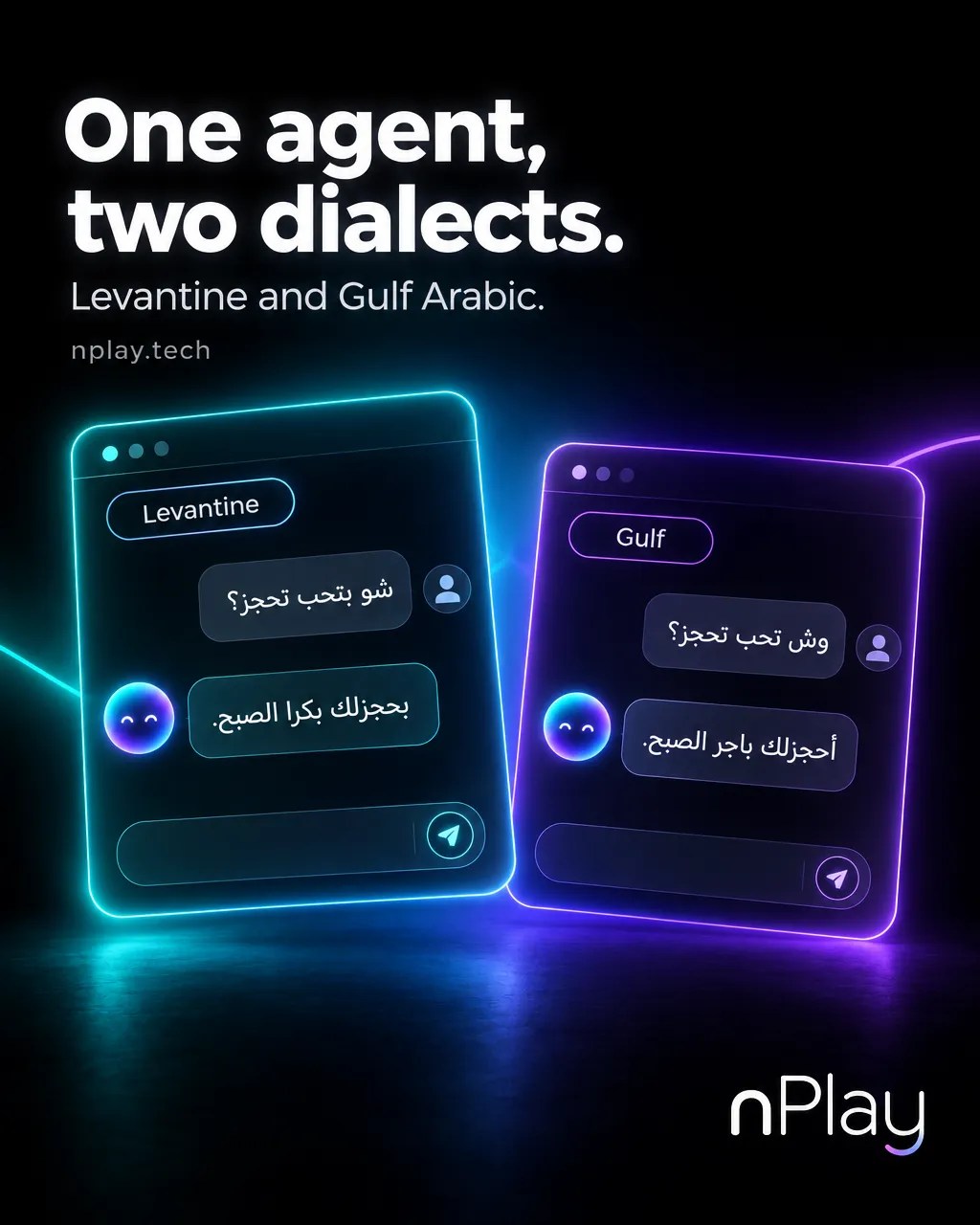
For an AI chatbot Arabic or bilingual setup, add language to the test. A tool that answers well in English but mishandles dialect or mixed messages is the wrong choice for customers in Jordan or the Gulf, however advanced it looks. Our note on controls is in AI agent ROI, guardrails and governance.
AI agents vs chatbots: frequently asked questions
Is an AI agent always better than a chatbot?
No. If customers only need answers and the content is stable, a chatbot on a well-kept knowledge base can be the simpler and safer choice. An agent is worth the extra effort when the job needs actions and variable steps.
Do we need an agent if we already have automation?
Not necessarily. Keep the automation for fixed steps. Add an agent only where rules keep failing on exceptions and people are doing manual look-ups across systems.
Can these tools work in Arabic?
Yes, and Arabic should be tested as a first-class language, including dialect and mixed Arabic and English. We describe our approach in AI receptionists in Arabic across the GCC.
Can you help us decide before we build anything?
Yes. We start by mapping one process and recommending the lightest tool that fits, which is sometimes plain automation. See the AI agents service for how we work.
Further reading: NIST AI Risk Management Framework
Quick questions about ai agents vs chatbots
Who is ai agents vs chatbots for? Companies and institutions that want a clearer, faster experience for their customers and visitors.
How long does ai agents vs chatbots take? It depends on the size of the project and the content needed. We confirm the timeline after a short discovery call.
How do I start with ai agents vs chatbots? Contact the Nplay team in Amman or Riyadh and we will suggest a clear first step.
Does ai agents vs chatbots work in Arabic and English? Yes. We prepare the content in both languages from day one.

In short, ai agents vs chatbots works best when it starts from a clear goal. Nplay plans ai agents vs chatbots around your audience, your space and your budget. If you are comparing options for ai agents vs chatbots, ask for a live demo before you decide. We are happy to answer any question about ai agents vs chatbots.
Leave a Reply